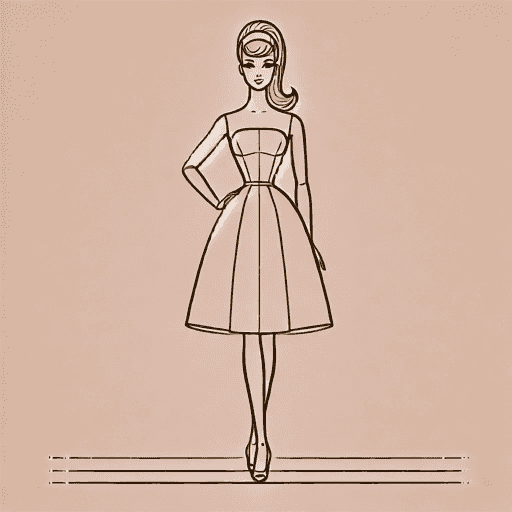
Let's Call Her Barbie
64 pages • 2-hour read
Renée RosenLet's Call Her Barbie
A modern alternative to SparkNotes and CliffsNotes, SuperSummary offers high-quality Study Guides with detailed chapter summaries and analysis of major themes, characters, and more.
Part 1, Chapters 10-19Chapter Summaries & Analyses
Content Warning: This section of the guide contains discussions of mental illness, death by suicide, substance use, illness and death, cursing, sexual content, termination or pregnancy loss, and gender discrimination.
Part 1: “Thinking Small”
Part 1, Chapter 10 Summary: “Earning Her Keep”
As Ruth leaves work, she notices Stevie still at her desk and respects her work ethic. Ruth reflects on her childhood, practically raised in her sister, Sarah’s, drugstore. Since Sarah and her husband, Louie, could not afford a babysitter, Ruth worked there from age 10. Never wanting to be a burden, she learned early that being useful meant people would keep her around. She initially planned to open her own drugstore, then considered law school, but at 19 she vacationed in Los Angeles and fell in love with the city. She took a typing job at Paramount Pictures, and soon married Elliot, despite Sarah’s concern that she was too young.
At home, Ruth finds Barbara reading fashion magazines and Elliot watching television. When Ruth says hello, Barbara storms off. In Barbara’s room, Ruth walks on eggshells, reflecting on their strained relationship. She remembers her own painful childhood, when her mother, Ida Mosko, gave her away to Sarah, leaving Ruth with a lifelong need to prove her worth.
Barbara accuses Ruth of never being home and caring more about the doll than her own daughter. As Ruth leaves, she notices a Bild Lilli doll on Barbara’s shelf and feels anxious, realizing Barbie resembles it and she never secured a licensing agreement. Ruth accidentally calls Barbara “Barbie,” infuriating her daughter. That night, Ruth reflects on her choices and realizes she does see Barbie as the idealized version of Barbara.
Part 1, Chapter 11 Summary: “Avoidance Behavior”
Jack returns from Japan and notices that Ginger has lightened her hair and lost weight. Jack knows the master molds are nearly ready, but the Japanese factory, KBK, will shut down for rice harvesting for a month or more. In the weekly Barbie status meeting, with 247 days until Toy Fair, Ruth reviews the timeline and berates the team for delays. Jack studies Stevie, intrigued that she shows no interest in him. Charlotte and Stevie present new outfit designs, and Jack observes the seamless partnership between Ruth and Charlotte, feeling somewhat excluded. When Ruth asks for his update, Jack announces the rice-harvest shutdown. Ruth explodes. Jack stands his ground, feeling he is performing for Stevie. Elliot intervenes, proposing KBK work extra shifts after the harvest to stay on schedule.
Driving home, Stevie reflects on the meeting, finding herself thinking about Jack despite herself. Her roommate, Vivian, discusses her exciting internship at a design house and their former classmate, Bob Mackie, now a successful costume sketch artist. Stevie feels envious, knowing her own promising work is for doll clothes and shrouded in secrecy.
Jack attends group psychotherapy with his wife. He reflects on feeling he is a poor husband and father, acknowledging his infidelities and his preoccupation with Stevie as a form of self-validation. Jack believes that he has a form of mental illness, as he experiences extreme emotional highs and lows. He concludes that his intense focus on work, especially Barbie, is his escape from other tormented thoughts.
Part 1, Chapter 12 Summary: “The Living Laboratory”
On the drive home from a poker game, Elliot convinces Ruth to hire marketing psychologist Ernest Dichter to conduct market research for Barbie. A week later, Dichter asks Ruth to explain what makes Barbie unique. Ruth gives a passionate speech about Barbie empowering little girls to imagine their futures. Dichter proposes conducting “Living Laboratories”—research focus groups—with mothers and daughters. These are expensive but Ruth agrees.
Ruth, Elliot, Charlotte, and Jack observe from behind a two-way mirror as girls are presented with Barbie. After some squabbling over outfits, the girls play. Their feedback is overwhelmingly positive, confirming Ruth’s belief in the doll’s appeal. The following week, Dichter interviews mothers. They react with disgust, calling Barbie too sexual and inappropriate and using judgmental language. Ruth is devastated, fearing the project is doomed. When one mother praises the doll’s glamour and wishes her daughter would dress more like Barbie, other mothers begin discussing how the doll could teach their daughters better grooming to help them “catch a husband” (110).
Dichter explains that the mothers’ primary concern is their daughters’ marriage prospect and proposes marketing Barbie as a tool to teach girls style and grooming. By convincing mothers Barbie will help their daughters “catch a husband,” (110) they will secure approval. Ruth realizes they must sell Barbie not to the girls, but to their mothers.
Part 1, Chapter 13 Summary: “Something Borrowed, Something New”
Based on the market research, Ruth and Charlotte instruct Stevie to design a wedding dress for Barbie’s launch. Ruth says this is just to get mothers’ buy-in: Barbie will remain an independent, modern woman. Stevie begins sketching, working from a dress she designed for her own wedding to Russell, who abandoned her when she was pregnant. Jack stops by, and they feel mutually attracted.
At home, Ruth confronts Barbara about her poor grades. Barbara announces she is not going to college and plans to marry her boyfriend, Allen. The next day Ruth criticizes Stevie’s wedding gown presentation for lacking accessories, though the meeting was only about the dress. Stevie tries to defend herself, and Jack tells Ruth to back off. Ruth storms out.
After the meeting, Jack takes Stevie to lunch, where they drink martinis and banter. Their flirtation becomes serious attraction. Flustered, Stevie excuses herself to the ladies’ room, reminding herself that Jack is her married boss. She is nervous and quiet on the drive back, unable to stop thinking about this.
Part 1, Chapter 14 Summary: “The Juggling Act”
Ruth calls Stevie to her office to deliver a veiled apology. She tells Stevie she reminds her of herself when young and offers advice on resilience and perseverance. They are interrupted by a call from Barbara, who argues about being driven by a chauffeur instead of walking with friends. Stevie overhears and admires Ruth as a role model for juggling career and family. Ruth tells Stevie she will do very well at Mattel.
Later that week, Stevie and Charlotte present the full wedding accessory set, and Ruth is pleased. After work, Stevie’s car breaks down. Jack appears, diagnoses the problem, and declares the car is not worth fixing. He drives her to a Volkswagen dealership. Stevie explains she cannot get a loan without a male co-signer and is too proud to ask her father. Jack offers to co-sign, claiming it is a business necessity. After a fun test drive, Jack co-signs for a cherry red convertible. As he hands Stevie the keys, his fingers linger on hers. When she tells him she will not sleep with him because of the car, Jack assures her there are no strings attached.
Part 1, Chapter 15 Summary: “Put Her on Ice”
Eight and a half weeks before the Toy Fair, Elliot is horrified when Ruth proposes a $125,000 television advertising budget for Barbie. Ruth defends the plan by reminding him of their previous success advertising the Burp Gun on The Mickey Mouse Club, which turned it into a bestseller and put Mattel on the map.
At a soundstage in Burbank, Ruth and Elliot oversee the filming of the Barbie commercial. The intense heat from the studio spotlights melts the dolls, ruining take after take. Elliot, unable to watch the disaster, leaves. The agency representative warns Ruth they will go into overtime, and Ruth insists the agency will absorb the cost. Ruth gets an idea while taking a Coca-Cola from an ice chest. She instructs the crew to store the dolls on ice between takes. The stylists wrap the dolls in plastic and plunge them into the ice chest, working quickly to film each take before re-icing the dolls, completing the commercial successfully.
Part 1, Chapter 16 Summary: “Lovesick”
It is 1959. When Ruth arrives home, Barbara and Allen announce that they are getting married in June. While Elliot manages a polite response, Ruth cannot hide her disapproval. She aggressively questions Allen about his finances and ability to support Barbara. Barbara storms out in tears. Elliot advises Ruth to apologize, warning that she will push Barbara closer to Allen. Ruth reflects that her daughter is turning 18 soon, which she thinks is too young for marriage. She realizes her frustration at putting Barbie in a wedding dress stems from her inability to control Barbara’s decision.
Elliot reminds Ruth that Sarah also disapproved of him and thought Ruth was too young to marry. Ruth recalls Sarah’s objections but reflects that she had met Elliot at 16 and knew he was right for her: She needed a husband secure enough to let her take charge. Ruth feels that Barbara is softer and more impressionable and is rushing into marriage for the wrong reasons.
Part 1, Chapter 17 Summary: “Toy Fair”
The Mattel team flies to New York for the Toy Fair, feeling triumphant. They spend two days setting up, keeping Barbie secret from competitors. On March 9, 1959, they unveil Barbie in her own dedicated room, featuring three showcase dolls in a zebra-striped swimsuit, the “Gay Parisienne” outfit, and the “Wedding Day Set” (138).
The first buyer, Jimmy Lowe, is confused and disapproving, stating the doll looks like a woman, not a toy. Subsequent buyers echo his sentiment. When Lowthar Kieso, the head buyer for Sears, Roebuck, and Company, arrives, Ruth is hopeful but he also rejects Barbie, calling her inappropriate for children. Without Sears, no toy stands a chance.
The team is in shock. Jack reports the buzz on the floor is that Mattel has a doll that looks like a “hooker.” Devastated, Ruth breaks down in her hotel room. Elliot suggests they cut their losses and cancel the television ad campaign. Ruth vehemently refuses, seeing the ads as their last hope. They agree to go ahead on the understanding that they will end the Barbie project if the campaign fails.
Part 1, Chapter 18 Summary: “One Card Left to Play”
News of Barbie’s failure at the Toy Fair spreads through Mattel, creating concern. Charlotte puts on a brave face, telling Stevie that new doll projects are in the works. Stevie fears losing the financial independence she has come to enjoy. Jack falls into a severe depression, calling in sick for four days and sleeping constantly. After his wife and assistant fail to rouse him, they call Ruth. Ruth visits Jack to convince him to return to work. Jack tells her he has nothing left inside him, saying his mind has “locked him in a torture chamber” (148).
On the fifth day, Jack’s therapist, Dr. Greene, makes a house call and diagnoses Jack with “manic depression”—(now called bipolar disorder)—which can run in families. Jack recalls his uncle had the condition but insists he does not. Angered by the diagnosis, Jack fires Dr. Greene and, to prove him wrong, forces himself back to work.
Part 1, Chapter 19 Summary: “But Mommy, Why?”
The atmosphere at Mattel remains grim through March 1959. Ruth gives unconvincing pep talks while Charlotte and Stevie idle. Jack develops a new idea for a talking doll, “Chatty Cathy”, who will speak phrases when a string is pulled. He slowly regains his energy and applies for a patent for the voice box.
In June, the Barbie television commercial debuts during The Mickey Mouse Club. Ruth watches alone in her office. Across the country, children see the ad and beg their mothers for the doll, only to be refused; their repeated pleas become a familiar refrain. For a week, no new orders arrive, and Ruth grows more despondent.
Ruth’s despair is compounded by Barbara’s wedding, which she views as a mistake. After the ceremony and the departure of out-of-town guests, Ruth falls into a depression, staying in bed until the next afternoon. While grieving for both Barbie and Barbara, she realizes Barbie was meant to connect with girls in a way she has failed to connect with her own daughter.
Ruth forces herself to the office and hears a celebration in Jack’s office. Elliot brings her into a surprise gathering where Elliot and Jack explain that the phones have been ringing nonstop with orders for Barbie. Mattel cannot fill them fast enough. Ruth weeps with relief in Elliot’s arms.
Part 1, Chapters 10-19 Analysis
This section of the narrative further develops the theme of Female Vision and Success in a Male-Dominated Industry through the experiences of its protagonist. Ruth’s drive is more firmly established as a psychological imperative born from childhood abandonment and a resulting need to “earn her keep” (80). The flashbacks to her early life in her sister’s drugstore provides crucial character motivation for her choices, based on the early belief that usefulness is a prerequisite for personal value and acceptance. The novel shows this ethic fueling her push for Barbie against the dismissive male consensus at Mattel and the patriarchal norms of the 1950s, especially by mentoring younger women in times of difficulty. Ruth advises Stevie that to succeed, a woman must “change [her] plan, maybe change [her] approach, but [she doesn’t] dare ever [to] give up” (119), articulating a philosophy of resilience which reflects Ruth’s own journey and her hope for Barbie’s cultural influence.
Rosen examines Ruth’s inner conflict around competing female roles and choices by creating a parallel between Rosen’s work and own identity and her relationship with her daughter. This parallel centers around the dual crisis of the Living Laboratories and Barbara’s wedding. The need for Ruth to adopt a strategy of persuading mothers to buy Barbie to teach their daughters grooming skills to “catch a husband” (110) becomes a cruel irony in relation to Ruth’s concern at Barbara’s choice to marry so young.
The increasingly fractious relationship between mother and daughter expands the theme of The Personal Costs of Professional Commitment, demonstrating how Ruth’s focus on ideals of female independence, encapsulated by Barbie, impinges on her ability to recognize her daughter’s different life choices. The novel makes this explicit, as the doll, intended as a tool of imaginative empowerment for girls, is recognized as the reversal of Ruth’s lack of control over her daughter. When Ruth realizes “she thinks of Barbie as the young lady she wishes her Barbara to be,” (89) The doll explicitly becomes a projection of Ruth’s thwarted maternal desires. In Chapter 19, Ruth feels she has used Barbie as a proxy to “fix what she couldn't fix with Barbara,” (153) and deliberately leans in to using Barbie as a way to overcome her own sense of failure in modeling independence to her daughter. This frames the success of Barbie as a form of personal redemption for Ruth, raising the emotional stakes of the narrative.
Similarly, this theme extends to Jack, whose obsession with the Barbie project is seen as both a symptom and a cause of his depressive period. His struggles with dyslexia and bipolar disorder are presented seriously as core components of his identity, reaching into all aspects of his professional and personal life. Presenting Jack as a highly likeable and empathetic character in the first half of the book, the novel portrays his struggles with compassionate and personal language, such as when he describes himself as “locked […] inside a torture chamber” created by his own mind (148). The narrative has already linked Jack’s work ethic to his mental illness, calling the Barbie project his “only respite.” While the apparent failure of the Barbie launch therefore precipitates the immediate mental crisis, he also continues to use the project as a way to avoid dealing with his personal difficulties. This, this novel suggests, will take an increasing toll on himself and his family, recalling his self-confessed “avoidance behavior” and foreshadowing his lifelong mental health problems as the novel progresses, leading to the breakdown of his professional and personal relationships, and his eventual death by suicide.
The narrative structure of this section employs escalating tension as the Toy Fair approaches, amplifying the pressure with each obstacle: the shutdown of the Japanese factory, the melting of the dolls during the commercial shoot, and Ruth’s mounting stress over Barbara’s impending marriage. When these crises culminate in the apparent failure at the Toy Fair, this serves as dramatic anti-climax for the narrative. This carefully constructed narrative valley makes the final plot reversal—the revelation that the TV ad campaign has created a consumer frenzy—a moment of increased relief, leading the narrative into its central apex, at the height of success for Ruth as Barbie’s creator.

Unlock all 64 pages of this Study Guide
Get in-depth, chapter-by-chapter summaries and analysis from our literary experts.
- Grasp challenging concepts with clear, comprehensive explanations
- Revisit key plot points and ideas without rereading the book
- Share impressive insights in classes and book clubs