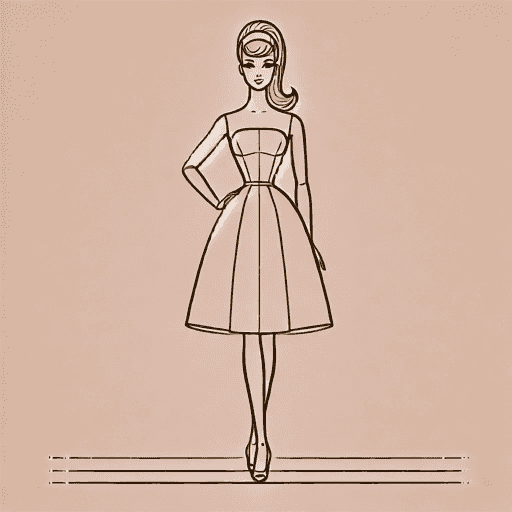
Let's Call Her Barbie
64 pages • 2-hour read
Renée RosenLet's Call Her Barbie
A modern alternative to SparkNotes and CliffsNotes, SuperSummary offers high-quality Study Guides with detailed chapter summaries and analysis of major themes, characters, and more.
Part 2Chapter Summaries & Analyses
Content Warning: This section of the guide contains discussions of mental illness, disordered eating, substance use, illness and death, cursing, sexual content, antigay bias, termination or pregnancy loss, and gender discrimination.
Part 2: “Perfect Is the Enemy of the Good”
Part 2, Chapter 20 Summary: “Peacocks on Parade”
In January 1960, Ruth Handler works while Mattel undergoes major construction to accommodate explosive growth. Breaking her New Year’s resolution to quit smoking, she nervously checks the latest sales report, fearing Barbie’s success might be a fluke. She is relieved to find they sold 46,874 dolls in the past month, up from December. She plans to increase production to 100,000 units monthly by year’s end.
Jack Ryan and Ruth conduct interviews to seek entrepreneurial candidates they deem “Mattel Material.” They hire Bernard Loomis, who proposes a Barbie comic book, radio show, and viewfinder reel, as vice president of sales and marketing. Steven Lewis becomes head toy sculptor. In total, they will hire 200 employees for Barbie alone.
Jack’s royalty agreement has made him extremely wealthy. He buys custom suits, abstract art, and three cars. He surprises his wife, Barbara, by driving her to a mock-Tudor mansion in Bel Air that he bought for $235,000 without consulting her. She is furious.
Stevie Klein, now earning more, moves into a larger apartment at Ogden Arms. When she showed Barbie to her parents and friend Vivian, her parents were dismissive, but Vivian was impressed.
Part 2, Chapter 21 Summary: “My Barbie’s Lonely”
Ruth finds ways to drive continuing sales. With Bernie Loomis, she visits stores to track outfit sales and secures licensing agreements for Barbie-themed merchandise. When Hoover Vacuum salesmen pitch a Barbie-sized vacuum, Ruth dismisses them, declaring “Barbie doesn’t do rough housework” (167). Jack shows her “Miss Seventeen,” doll from competitor Louis Marx, which they consider low quality.
Ruth reads a fan letter from a girl saying her Barbie wants a boyfriend. Despite boy dolls being taboo, Ruth sees potential, discussing it with Elliot and Jack. They agree to go ahead, naming the doll Ken after the Handlers’ son. When they tell their children, Barbara is mortified, fearing people will think she’s dating her brother, but Ken seems indifferent.
The Ken doll is fast-tracked. Ruth wins an argument that Ken must be taller than Barbie. They then discuss his anatomy. When Ruth insists Ken needs genitalia, Jack sketches an extremely well-endowed version, making Ruth laugh. She tells him to tone it down significantly so Charlotte and Stevie can design clothes for him.
Part 2, Chapter 22 Summary: “Original Creations”
In 1961, Henry Pursell, Mattel’s general counsel, informs Ruth, Elliot, and Jack that Louis Marx and Company is suing Mattel for copyright infringement. Louis Marx, who now licenses Bild Lilli, claims Mattel copied the hip joint construction and that Barbie isn’t an original creation. Ruth decides to countersue, arguing Louis Marx copied Barbie with Miss Seventeen. They agree to keep the lawsuit out of the press to avoid linking Barbie to Bild Lili, who was originally a highly sexualized, adult doll. Ruth convinces herself Barbie is an original creation, reasoning that everything is inspired by something. As a precaution, Mattel tweaks Barbie’s appearance and hardware.
With Charlotte Johnson in Japan working on Ken’s wardrobe, Stevie has taken a lead role and spends more time with Jack. Working late together, Stevie sketches a strapless dress but dismisses it as impractical. Jack transforms the design, suggesting black sequins and dramatic details. Together they create a torch singer look and their creative collaboration generates energy between them. Jack leans in to kiss Stevie, but she pushes him back. He apologizes, leaving her feeling regretful.
Part 2, Chapter 23 Summary: “It’s All about the Breasts”
In the shower, Ruth discovers a lump in her right breast and remembers her sister, Sarah, dying of cancer at 55. Almost a week later in the office, Ruth stares at a pink memo slip from Dr. Rekers saying to call right away. She hasn’t told Elliot about the lump or the needle biopsy she had earlier that week. As Ruth prepares to call, she reflects on her lifelong preoccupation with breasts, from her own girlhood to Barbie’s design. She calls Dr. Rekers at home, anxious. He tells her the biopsy came back benign. Relieved, she promises to quit smoking.
Barbara appears, furious that Ruth has forgotten their shopping date. She accuses Ruth of always putting work first. In the next office, Stevie and Jack overhear the confrontation. Stevie reflects that Barbara doesn’t appreciate what a trailblazer Ruth is. While listening, Stevie finds herself studying Jack and wondering what it would be like to kiss him. Barbara shouts that she wishes Ruth had never seen Barbie.
Part 2, Chapter 24 Summary: “Someone Else’s Toothbrush”
Stevie and Jack work late on Ken’s “Terry Togs” outfit. Jack clears blueprints off the couch, revealing plans to turn his home into “a castle.” Jack and Stevie kiss and then have sex in his office. The next morning, Stevie declares it a one-time fling but, two days later, it happens again. Jack asks for a real date. Stevie sets two conditions: She must be his only woman, and he must wear condoms. Jack agrees to exclusivity and reveals he’s had a vasectomy, assuring her he’s disease-free and has an understanding with his wife Barbara.
Their affair intensifies over two weeks. On her first visit to “the Castle,” Jack shows her the 16,000-square-foot mansion, revealing many features are Hollywood props to save money. That night, they jokingly call each other soulmates. At the office, employees pose Barbie and Ken dolls in sexual positions to tease them. When Stevie arrives at Jack’s office, he locks the door and they have sex.
Part 2, Chapter 25 Summary: “Salt and Pepper”
The Ken doll is a massive hit at the Toy Fair.
Stevie worries Jack is becoming interested in a new secretary and fears their affair is nearing its end.
Ruth comes home to find Elliot talking to Ken behind a closed door. She enters despite his request for privacy and sees Ken has been crying. Elliot explains they made a mistake naming the doll after Ken: Kids at school bully Ken, calling him a “fairy” and saying he’s dating his sister. By fall 1961, 17-year-old Ken gets a girlfriend, Suzie, to deflect the bullies. Ken knows he doesn’t really want a girlfriend as he is attracted to boys. Feeling fearful of his sexual identity and what it may mean for him, he hides his true desires.
Part 2, Chapter 26 Summary: “Finding the Muse”
On a Saturday date, Stevie waits for Jack. She encounters former classmate Marta Krass, who works for designers Jax and Bob Mackie. Both express bewilderment that Stevie designs doll clothes. Humiliated when Jack is 30 minutes late, Stevie leaves. At home, feeling like a failure, she resolves to create a portfolio to get a job at a real fashion house. She struggles with creative block, finding everything derivative. Frustrated, she reflects that she has more creative control at Mattel than her classmates have at fashion houses. This shift in perspective inspires her and she easily creates a sophisticated black-and-white outfit for Barbie, feeling genuinely happy. She recognizes Barbie is her muse.
The following week, Stevie arrives at the Castle and sees Jack’s wife. Barbara, and their daughters, Ann and Diana, for the first time. This makes her feel like a trespasser. All the electricity she felt for Jack is gone and, that night, she breaks up with him. He takes it very hard, getting drunk and begging her to stay. Back home, Stevie cries but knows she did the right thing.
Part 2, Chapter 27 Summary: “New Projects in the Works”
In a Barbie meeting, Jack sits awkwardly next to Stevie for the first time since their breakup. Ruth proposes a new idea, Barbie’s Dream House, arguing an independent woman should have her own home. Bernie Loomis argues it’s unrealistic because women don’t qualify for mortgages without a male signatory. Ruth angrily pushes back, declaring Barbie won’t be limited by society’s rules, and orders them to start work on the Dream House.
Jack sees his psychiatrist, Dr. Klemes, requesting refills of his diet pills. He lies about work being fine, though he’s obsessing about Stevie and feeling creatively blocked on the Dream House. Recently, he found his secretary, Ginger, sobbing because her younger sister was getting married and she had no date. To make her stop crying, he offers to take her to the wedding and gives her some diet pills.
On a Sunday, Stevie confronts Jack at the office, demanding they work professionally together. He claims she broke his heart and she retorts only his ego is broken. They laugh, hug, and clear the air to become friends. Weeks later, they work late happily on the Dream House. Stevie questions why there’s no kitchen. Jack replies that Barbie, like Stevie, doesn’t cook.
Part 2, Chapter 28 Summary: “Babies Having Babies”
In 1962, Barbara visits her parents’ grand, new home and announces she is pregnant. Ruth is overjoyed at becoming a grandmother and bonds with Barbara by sharing stories of her own difficult pregnancy. Barbara asks if she’ll be a good mother and Ruth reassures her, recalling how Barbara was “a natural” with baby Ken. For the first time in months, Barbara seems relaxed with her mother.
Part 2, Chapter 29 Summary: “The Sisterhood”
In 1963, Charlotte Johnson introduces three new Barbie fashion designers: Dee Pryor, Ellen Watson, and Carol Spencer. Charlotte bluntly tells them only the best designs will be produced, creating some wariness. Despite the competition, the four women form a sisterhood, working and spending time together. They support each other through work successes and failures. Stevie, feeling threatened, asserts her seniority by giving them passive-aggressive advice.
Part 2, Chapter 30 Summary: “Tweaks and Transformations”
Ginger is out for two weeks for an unspecified medical procedure. Jack, who paid for her procedure—a nose job—is lost without her and realizes how much he depends on her. He asks Stevie to review a report but is too ashamed to admit he needs help reading it. Two weeks later, Ginger returns with a bandaged nose and bruised eyes. After healing, her nose is noticeably different. She has also lost 23 pounds using diet pills Jack gave her. Stevie feels heartbroken for Ginger, who is desperate for Jack’s love. When Ginger gets bangs, lightens her hair, and wears a high ponytail, everyone realizes she’s trying to look like Barbie.
Part 2, Chapter 31 Summary: “Welcome to the Castle”
Jack enlists Ginger’s help throwing a housewarming at the Castle. The party is a success, and Jack discovers he loves entertaining. He begins hosting two or three large parties a week, charging $20 cover and offering marijuana after dark. A group of UCLA surfer boys who crashed a party now live at the Castle, working as staff in exchange for room and board.
Jack’s wife, Barbara, and their daughters never attend, staying in their separate wing. Ginger acts as hostess and is territorial with other women. Jack’s drinking escalates, and he enjoys the chaos as guests damage furniture. Late at night, a woman falls into the pool. Others, including Jack, strip down and jump in, reigniting the party.
Part 2, Chapter 32 Summary: “Don’t You Do What Your Big Sister Done”
Ruth, now a grandmother to Cheryl, worries about Barbara, who is depressed and overwhelmed by motherhood. Ruth offers help but is never available. Ken marries Suzie right after high school to escape his unhappiness about the Ken doll and his own sexuality.
Fan mail pours in asking when Barbie will marry and have a baby. Ruth instructs staff to respond that Barbie isn’t ready to settle down and focuses on giving Barbie more careers. Bernie Loomis argues that marriage is traditional and Ruth responds that turning Barbie into a housewife would limit future revenue streams. Steven Lewis notes they still need to address widespread criticism that Barbie is “selfish” for not being a wife and mother. One evening, Ruth finds Stevie reading fan mail. Stevie expresses fear that marriage for a woman means giving up one’s identity. Ruth tells Stevie about Sarah, who owned a drugstore and taught Ruth independence. As she talks, Ruth realizes the perfect solution to the criticism: Barbie can have a younger sister to care for. The baby is called “Skipper.”
Part 2, Chapter 33 Summary: “Going Public”
In November 1963, Ruth, Elliot, and Henry Pursell are in New York to take Mattel public. When they meet with underwriters at the Harrington, a men-only club, Ruth is prevented from entering. Elliot insists the meeting cannot happen without her and she is allowed in although she has to agree to sneak through the kitchen to the service elevator. Ruth feels angry.
In the meeting, the bankers say her seat is for the head of finance, she replies she is Mattel’s head of finance. After they finish speaking, Ruth peppers them with rapid-fire questions, leaving no doubt who’s in charge. She rides down in the main elevator with the men. In the lobby, club members are gathered around a television. A man informs Ruth that President Kennedy is dead.
Part 2, Chapter 34 Summary: “Points of Articulation”
In early 1964, Mattel’s initial public offering succeeds and the lawsuit with Louis Marx and Mattel’s countersuit are both dismissed with no damages. Ruth discovers another benign lump in her breast and tries unsuccessfully to quit smoking through hypnosis. She notes Mattel’s stock is nearing $40 a share and that the new Midge doll—Barbie’s best friend—is performing well. To address fan mail about Midge being a third wheel, they have created a boyfriend for her: the Allan doll, spelled with an “a” to pacify Barbara, who objected to her husband, Allen’s, name being used.
Jack shows Stevie a prototype of Hasbro’s GI Joe, impressed by its articulation and saying they need to make Barbie more like this. He has sources at Hasbro but Stevie warns him not to give away trade secrets during pillow talk. At a gallery opening later, she sees a couple in love, making her wish for real love.
Part 2, Chapter 35 Summary: “Your Girl’s in Trouble”
Ruth and Elliot have dinner with their financial advisor, Bob Mitchell. He praises their success but warns stockholders will expect sustained growth and recommends Seymour Rosenberg, a mergers and acquisitions specialist.
Rosenberg bluntly warns Ruth and Elliot that the women’s liberation movement is targeting Barbie. Ruth finds this hard to believe, as Barbie is more popular than ever. Jack has recently developed Twist ‘n Turn Barbie and a Barbie with bendable legs. Rosenberg promises to help take Mattel to the next level. At home, Ruth and Elliot debate hiring him. Ruth worries that, without aggressive growth, Mattel will fizzle out. She argues this is their chance to make Mattel one of the greatest companies in history, and they hire Rosenberg as executive vice president and give him a board seat. Elliot becomes chairman, and Ruth is named president.
Part 2 Analysis
This section reaches the novel’s high point of professional success for Ruth, chronicling Mattel’s explosive growth and using the company’s expansion to explore the complexities of identity, ambition, and the challenges of creating a culturally significant toy. The doll’s success is used by Rosen to show the characters confronting the gap between their public personas and private realities. Ruth’s professional triumph is matched by personal difficulties, a dynamic central to the theme of The Personal Costs of Professional Commitment. As she steers Barbie’s ascent, her relationships with her children, Barbara and Ken, deteriorate proportionately. The narrative continues to juxtapose Ruth’s protection of Barbie’s independence with her inability to connect with her own daughter, tension which is deflected by Ruth’s creation of the Skipper doll, a decision inspired by Ruth’s memory of her nurturing older sister. As Ruth creates increasing numbers of dolls representing real family members, the novel traces how Ruth’s corporate and personal identities have merged. Although this correspondence is historically accurate, the novel’s treatment imbues this with a fictional symbolism, suggesting that Ruth is increasingly displacing her challenging family relationships with the dolls that she can design and control. In parallel, Ken, Barbara, and Allen’s pushback against this trend represents—both literally and metaphorically—the deterioration of the family’s bonds and happiness as the Barbie empire progresses.
Rosen uses Jack Ryan to explore the dangers of professional success, especially for someone presented as experiencing low self-esteem and unresolved mental illness. His immense wealth increasingly fuels a hedonistic lifestyle symbolized by his Bel Air mansion, “the Castle.” This structure, with its Hollywood prop drawbridge and turrets, serves as a metaphor for Jack’s carefully constructed but hollow identity. His creativity, once channeled productively into toy design, now finds expression in elaborate parties that provide an audience who “adore him” and distract from his “dread […] of walking into a quiet house (229). His well-meant but damaging influence on his secretary and mistress, Ginger, especially her physical alterations, reveals a desire to mold a person into an idealized image, mirroring his work on the Barbie doll. Stevie, Rosen’s revealing fictional character, encapsulates this when she states, “‘Your ego is what’s broken, not your heart’” (214), revealing that Jack’s profligacy and womanizing are symptoms of insecurity and unhappiness.
The conscious process of shaping a cultural phenomenon illustrates the theme of Influencing Female Identity Through Play and Toys which gathers significance in this central section. The novel further explores the complexity of Ruth’s mission to not simply sell a doll but to socially-engineer a movement of female independence. Ruth’s declaration that “Barbie doesn’t vacuum. She doesn’t do rough housework. Ever” (167) is a key moment here. While it re-establishes Barbie as an aspirational figure free from the domestic drudgery of prevailing gender roles, it also highlights Ruth’s own increasing privilege and distance from real-life necessities, in which most women—including those with careers—do not have home help. The creation of the Dream House—a fantasy home for a single woman who, as Bernie Loomis points out, would not qualify for a mortgage—further illustrates this ambiguity. The discussion both highlights the sexist standards of the day to the modern reader and emphasizes Ruth’s unusual position in her own home, where she leads on decision-making. Ruth’s doubling-down on a career-focused Barbie reveals her own personal investment in this manufactured ideal, leading to the realization that the doll “has also come to symbolize something far greater than their paychecks” (234). In showing Ruth continuing to reject marriage and domesticity as one of the many options available to Barbie, the novel asks why Ruth—who has both career and family—should deny this to Barbie. This ambivalence echoes Ruth’s criticism of Barbara’s life choices, although this mirrors her own happy early marriage, and the double-standard of her delight in her granddaughter, the direct result of Barbara’s focus on family. Although Let’s Call Her Barbie does show Ruth engaging in self-reflection, it also allows for limits to her self-awareness, supporting the novel’s intersection with wider controversy around Barbie as a cultural phenomenon.
These chapters use Ruth’s experiences to expose the structural barriers faced by women in 1960s corporate America, developing the theme of Female Vision and Success in a Male-Dominated Industry. The scene at the men-only Harrington Club serves as a synecdoche for this struggle. Despite being the president of the company she co-founded, Ruth is denied entry and relegated to the service elevator, a literal and symbolic marginalization. Her defiance in taking the main elevator on her way out marks a personal victory against this oppressive system. This externalized conflict is mirrored by the internal struggles of other female characters. Stevie defends her career designing doll clothes against the condescension of former classmates, exposing a hierarchy which rests on entrenched assumptions of gender values. In contrast to these challenges, the formation of a “sisterhood” among the new female designers, who support each other despite being placed in direct competition, illustrates a new strategy for navigating a male-majority professional environment. The generational gap between Stevie and this “sisterhood,” her feelings of discomfort and exclusion, and her authoritarian response is part of the novel’s feminist critique, presenting two contrasting attitudes: that of female collaboration and that of protective female seniority.
The motif of physical transformation and bodily anxiety increasingly links the characters’ personal struggles to the artificial perfection of the doll they create, helping the novel to ask questions about physical appearance and identity. Ginger’s arc, in which she uses diet pills and undergoes plastic surgery to physically emulate Barbie for Jack’s affection, illustrates the icon’s potentially damaging influence. Her story is a dark reflection of the aspirational fantasy Mattel markets, showing the human cost of an unattainable ideal. Ruth’s breast cancer scares tie her directly to the doll’s most controversial feature: her breasts. Ruth’s fear of a mastectomy is explicitly explored as a threat to her sense of female identity and value, prompting her to consider her approach to Barbie’s breasts. Similarly, the bullying Ken Handler endures as a result of the doll is focused on his body and—as an extension of this—his sexual identity. In each case, the real body is shown to be a site of conflict where manufactured ideals conflict with real human vulnerability.

Unlock all 64 pages of this Study Guide
Get in-depth, chapter-by-chapter summaries and analysis from our literary experts.
- Grasp challenging concepts with clear, comprehensive explanations
- Revisit key plot points and ideas without rereading the book
- Share impressive insights in classes and book clubs