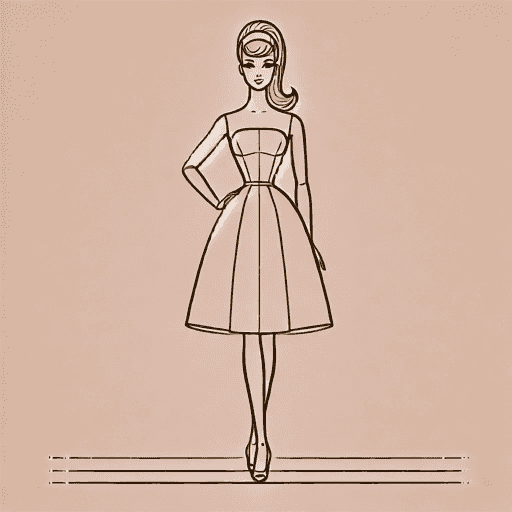
Let's Call Her Barbie
64 pages • 2-hour read
Renée RosenLet's Call Her Barbie
A modern alternative to SparkNotes and CliffsNotes, SuperSummary offers high-quality Study Guides with detailed chapter summaries and analysis of major themes, characters, and more.
Part 4Chapter Summaries & Analyses
Content Warning: This section of the guide contains discussions of mental illness, disordered eating, death by suicide, substance use, illness and death, cursing, sexual content, sexual harassment, gender discrimination, and religious discrimination.
Part 4: “Fall of the Dominoes”
Part 4, Chapter 45 Summary: “Im-pul-siv-i-ty Strikes Again”
In 1970, Jack’s father dies on Christmas Day, freeing Jack to pursue divorce. Barbara and the girls move out the day after the funeral.
Jack discovers the Esquire feature is now on newsstands. Unable to read it himself, he has Ginger read it aloud. Instead of attacking Ruth as intended, the article portrays Jack as a ridiculous playboy in absurd staged photos, mortifying him. Ginger tries to reassure him, but Ruth barges in holding the magazine. She berates Jack for dragging Barbie into his lifestyle, threatening to sue if sales are hurt, and notes that the National Organization for Women (NOW), is already attacking Barbie. Ruth’s insults trigger Jack’s childhood shame about his dyslexia, reminding him of his mother calling him a “clown” and an “idiot.” After Ruth leaves, Jack takes a Valium with scotch, even though it is still morning.
Ginger sobs in the ladies’ room, obsessing over reaching the magical weight printed on Barbie’s toy scale. She desperately wants Jack to notice her the way he notices other women, but he never makes the first move.
Part 4, Chapter 46 Summary: “They Got It All”
Ruth discovers another lump in her breast. She undergoes exploratory surgery but wakes to find the doctors have performed an emergency mastectomy. She recuperates at the Malibu Beach house. Ken flies in from New York, and Barbara visits daily with her children. Everyone pretends it’s a family reunion, avoiding the word “cancer.”
Ruth struggles with her changed body and refuses to let Elliot see her undressed. Barbara helps her bathe, and they shop for prosthetics, finding the options available are ugly and uncomfortable. Ruth jokes about designing better prosthetics herself, and the two women bond over the absurdity, laughing until they cry. This moment draws them closer than they’ve ever been. Ruth reflects on how Barbara is a far better mother than she was, acknowledging that she missed spending more time with Barbara.
Part 4, Chapter 47 Summary: “The Coffee Klatch”
Stevie meets Simon Richards, a handsome new lawyer in Mattel’s legal department. They feel an immediate spark. Jack interrupts, pulling Simon into work talk until the connection dissipates. Later, Elliot joins Jack, Stevie, Patsy, and Ginger for lunch. They discuss Janis Joplin’s recent death and Jack’s drug use. Stevie asks about Ruth’s prolonged absence, officially with pneumonia, sensing something isn’t right. She asks Jack when Ruth is returning and he calls Ruth a “ball-breaker.” Stevie defends Ruth, explaining that women in business must be forceful to be taken seriously. She changes the subject to Simon, and Jack grows jealous when he realizes Stevie is interested. Stevie reassures Jack he’ll never lose her, but Jack feels this is already happening.
Part 4, Chapter 48 Summary: “Not So Ruthless Anymore”
In 1971, Ruth returns to work after six months. After her illness, she’s gained some weight, gone gray overnight, and feels she’s lost her edge. During a planning meeting, Rosenberg dismisses her questions and tells her to leave if she doesn’t like his approach. Ruth retreats to her office and cries, realizing she’s no longer “Ruthless Ruth.” Determined to reclaim her power, Ruth discovers Jack’s contract is up for renewal. She restructures it drastically, limiting his royalties to patented products, nearly $2 million less per period. Despite warnings from legal and Elliot, Ruth proceeds, with Rosenberg’s support.
Jack is devastated when Ginger reads him the new terms but, out of spite, he signs rather than quit. He takes two Valium with bourbon. Emotionally wrecked, Jack kisses Ginger for the first time. Feeling guilty, Ruth goes to Jack’s office to talk but hears him having sex with Ginger and storms away. Later, Ruth discovers Rosenberg looking up a female employee’s skirt and kicks him hard enough to send him flying.
Part 4, Chapter 49 Summary: “The Three Way”
After months of mutual interest, Simon finally asks Stevie for coffee, explaining he waited because of workplace romance concerns. Their first date lasts four hours, followed by a movie and dinner. Their romance develops for three months before Simon stays over for the first time. Unlike Jack, Simon is tender, devoted, and uses protection without being asked. Stevie feels complete happiness, able to balance both career and relationship.
Stevie tells Jack about Simon, who feigns acceptance before plunging into the pool fully clothed in distress. Later, after Stevie brings Jack home from rehab for his substance use, Stevie finds Ginger sobbing in the ladies’ room over her feelings for Jack. Ruth comes in.
Part 4, Chapter 50 Summary: “Who’s to Blame?”
Mattel’s accounting firm presents a quarterly statement showing a $30 million loss, shocking the leadership. Immediately after, Ruth learns Ginger has died of a heart attack, aged 36, as a result of severe weight loss. At the funeral, Jack spirals and, when Stevie drives him home, he tries to kiss her. She refuses and he breaks down completely. Stevie stays with him at the Castle until he falls asleep, terrified by his deteriorating state.
Barbie’s sales plummet for the first time since 1959. Feminists protest at the Toy Fair, and NOW distributes leaflets condemning Barbie. The team brainstorms ideas desperately: Burn Your Bra Barbie, Protest Barbie. Stevie argues the problem isn’t Barbie but society’s treatment of women. They flatten Barbie’s high-heel-shaped feet, but sales continue to fall.
Part 4, Chapter 51 Summary: “Top-Heavy and Flat-Footed”
In 1972, Jack returns to work after a psychiatric hospitalization to find that Barcus has made poor design choices in his absence, such as enlarging Barbie’s breasts. Jack struggles with his mental health and is prescribed lithium for bipolar disorder. He hates the side effects and flushes it down the toilet after a month.
Part 4, Chapter 52 Summary: “A Little Favor”
Stevie enjoys Sundays with Simon, sleeping in and having coffee in bed before visiting her parents. Stanley Klein, who never connected with Stevie, bonds with Simon over sports, chess, and male conversation. One Sunday, Stevie’s former classmate, Marta Krass, calls asking to meet for lunch. Marta reveals she was fired and has been job hunting unsuccessfully. She asks Stevie for a job at Mattel designing Barbie clothes.
Stevie realizes her position is now coveted among designers. What she once felt embarrassed about has become prestigious. Marta’s request proves Stevie has earned recognition as a legitimate fashion designer. The narrator notes this won’t be the last request—soon major designers like Oscar de la Renta, Christian Dior, and Bob Mackie will want to dress Barbie.
Part 4, Chapter 53 Summary: “Bill and Hold”
In early 1973, Ruth wears a form-fitting cashmere sweater for the first time since her mastectomy, wearing a new custom prosthetic breast beneath. She sees an encouraging press release about strong fourth-quarter earnings after two devastating years. That evening, three executives from Mattel arrive at the Handlers’ home. They reveal the press release contained misleading projections based on falsified bill-and-hold orders.
Rosenberg has implemented a bill-and-hold strategy—writing orders but storing merchandise instead of shipping—which is legal. However, someone then directed the sales force to offer cancellations and returns while keeping those orders on the books as revenue, which is illegal. Examples show Sears’s order dropping from $600,000 to $65,000, yet Mattel claimed the full amount. Over $14 million in fraudulent orders have been reported. Ruth tries to reach Rosenberg, but he’s vanished. She orders his office locks changed and has security prepared to escort him out.
Part 4, Chapter 54 Summary: “The Whistleblower”
The corrected press release causes Mattel’s stock to nosedive and triggers multiple lawsuits. Simon is working late on the investigation when Patsy arrives with damaging information. She reveals Rosenberg inflated financial records starting in January 1971 to save a merger. She describes finding doctored invoices, “Do Not Mail” folders, two sets of books, and at least one forged customer signature. Simon asks if Ruth knew. Patsy says Elliot definitely didn’t, but questions how Ruth could be unaware.
The board holds a special meeting after Price Waterhouse conducts a secret audit and finds extensive fraud dating to 1971, and the Securities and Exchange Commission (SEC) is alerted. At the meeting, new SEC-appointed board members demand Ruth step down as president. Despite her protests, the board votes to make Art Spear CEO, demoting Ruth to co-chair with Elliot. Ruth walks to the cafeteria and buys cigarettes from the vending machine.
Part 4, Chapter 55 Summary: “The Glue Factory”
Ruth feels useless as Art Spear and others hold meetings without her, making her feel like an “old mare heading for the glue factory” (364). Her identity has always been defined by Mattel, and without her work, she’s lost. She can’t resign during the SEC investigation but must appear normal and keep coming to work. She passes time reviewing forecasts, reading Barbie hate mail, playing bridge, and having weekly lunches with Barbara.
David informs her that Jack is suing Mattel for $25 million in lost royalties. Furious, Ruth storms into Jack’s office. They scream at each other about the contract. When Jack calls her a “greedy huckster and a felon,” (368) Ruth calls security and orders him removed from the building. Jack throws his credentials on the desk and storms out.
Part 4, Chapter 56 Summary: “Twist My Arm”
Word spreads quickly about Jack’s departure, though no one knows if he was fired or resigned. Ruth lets people assume she fired him to maintain authority. Jack meets with lawyers, then returns to the Castle to reengineer his Mercedes, working into the night with cocaine and bourbon while his new girlfriend, Audrey, watches. His psychiatrist Dr. Klemes would consider this a “manic episode,” but Jack has canceled his appointments.
Stevie worries about Jack but Simon objects to her helping him, arguing Jack needs professional help. They argue about Stevie’s inability to give up on Jack. Meanwhile, morale at Mattel plummets. New management implements burdensome administrative practices. Barbie faces continued attacks from feminists and artists. Despite Ruth’s objections, Barcus presents “Growing Up Skipper,” a doll that simulates puberty by growing pubic hair and breasts when its arm is twisted.
Part 4, Chapter 57 Summary: “On Being Insubordinate”
In 1975, Stevie struggles with her role at Mattel. Without Ruth leading, men now run Barbie, and “Growing Up Skipper” exemplifies everything that is wrong with their approach. She recalls confronting the designer, Lewis, the day after the doll’s introduction, calling it degrading. He dismissed her, accusing women of being overly emotional, and threatened her job, reminding her that Jack can’t protect her anymore. Stevie nearly quit but fears unemployment. Other designers commiserate privately, feeling like hypocrites.
Stevie contemplates calling in sick but forces herself to work, determined to advocate for discontinuing “Growing Up Skipper.” She visits Ruth for support but finds her diminished. Ruth tells Stevie to look out for herself and not “go down with the ship” (380). Days later, Patsy reports Jack is missing. Stevie tracks him to Las Vegas, where he has lost $20,000 gambling and married Zsa Zsa Gabor after spending $12,000 on a ring. When Stevie visits, Zsa Zsa demands he never see Stevie again. Driving away, Stevie realizes she can’t save Jack, Ruth, or Mattel, but she can save herself. She resigns.
Part 4, Chapter 58 Summary: “Falling into Place”
Bob Mackie invites Stevie to lunch at Scandia after hearing about her resignation. He asks about her plans and she admits she’s restless and ready to jump back in. Bob reveals he needs a new designer for his celebrity clients and offers her the job. Stevie is stunned. Bob has become one of the world’s most celebrated designers, dressing Diana Ross, Mitzi Gaynor, and countless others. Stevie realizes this is a once-in-a-lifetime opportunity, just like Mattel was 17 years ago. All the chaos in her life is settling into place. She accepts. Charlotte was right: Barbie gave her the credentials to write her own ticket.
Meanwhile, Ruth gets fitted for a new prosthetic breast and critiques Peyton Massey’s latest Barbie design, suggesting improvements. She proposes they partner to mass-produce affordable prosthetic breasts. When Peyton objects that each woman’s body is unique, Ruth counters that she figured out Barbie’s breasts and can figure out this. She envisions Peyton as her new Jack Ryan, seeing a path beyond Mattel for the first time since the SEC investigation.
Part 4, Chapter 59 Summary: “The Second Act”
In 1976, Ruth presents her brand of prosthetic breasts, Nearly Me, to Neiman Marcus buyers in Dallas. Wearing a royal blue Oscar de la Renta pantsuit, she reflects that she fought for both mass-produced prosthetic breasts and Barbie, despite the odds.
Ruth considers Barbie’s legacy: Helping girls envision becoming doctors, lawyers and astronauts by resetting expectations, despite criticism from both sides. The girls who played with the original Barbie 20 years ago are now grown women who might develop breast cancer. Ruth feels she once knew what those girls wanted and now knows what these women need. As she opens her sample case, Ruth recognizes this as important work, a new chapter where she can help women “feel whole again” (389).
Part 4, Chapter 60 Summary: “Take Your Toys and Go Home”
The narrator summarizes the later lives of the characters from the present day.
Barbie remains wildly popular, with three dolls sold every second. Ruth Handler was convicted of financial fraud and sentenced to community service and a fine. In 1976, she founded the Ruthton Corporation, producing Nearly Me prosthetic breasts, which became a multimillion-dollar company, still operating today. Ruth died in 2002, aged 85.
Jack Ryan divorced Zsa Zsa after one year and married three more times. His lawsuit settled for $10 million. In 1991, aged 64, he ended his own life, having suffered a stroke two years previously. Elliot Handler resigned in 1975, spent retirement painting and with family, and passed away in 2012 at 95. Charlotte Johnson retired in 1980 after a dementia diagnosis and died in 1997 at 80. Seymour Rosenberg was convicted of conspiracy and fraud. Ken Handler died in 1994, aged 50. Barbara Handler Segal formed a linen business and is now retired at 84. Bob Mackie became a longtime Barbie designer starting in 1980, creating nearly 50 collectible dolls. Stevie Klein married Simon Richards and fulfilled her dream of becoming a fashion designer.
Part 4 Analysis
The novel’s final section charts the intertwined collapses of its two central characters, Ruth and Jack, to reach the culmination of The Personal Costs of Professional Commitment. As Mattel faces external pressures and disgrace and Ruth and Jack’s fraught partnership completely disintegrates, the novel continues to present them as parallel reflections of the Barbie project they created. Jack’s downward spiral is characterized by unchecked substance abuse and “manic” behavior, an expressions of childhood trauma triggered when Ruth dismisses him as a “clown” and an “idiot,” echoing his mother’s insults. His inability to cope with diminished power at Mattel manifests as a self-destructive pursuit of hedonism. Ruth’s decline affects both her physical and professional identity: The loss of her breast, a symbol of femininity, is mirrored by the loss of her professional power, which she had wielded with an assertive force. Her attempt to reclaim power by slashing Jack’s royalties is a strategic move born from the same ruthlessness that enabled her initial success, but it backfires, further isolating her. The corporate environment she once dominated turns against her, and a lawyer’s advice that she “can’t afford to appear guilty” (365) underscores her precarious position in the ensuing SEC investigation. Both Ruth and Jack are exiled from the empire they built, a shared fate that reveals the cost of intense professional demands on the individual, but one that also continues to link them as parallel creators of the Barbie legacy.
These chapters also bring the theme of Female Vision and Success in a Male-Dominated Industry to its conclusion. Ruth’s “diminished” return to work after her mastectomy serves as an illustration of the extent to which female professional authority rests on physical appearance. Her physical transformation—weight gain, gray hair, and clothes which conceal her mastectomy—is made explicit as a perceived loss of her “edge,” in both her own mind and that of her rivals. Her mastectomy leaves Ruth feeling vulnerable, and her male colleagues exploit this to usurp her authority, intertwining and compounding this dual loss of power. The introduction of the “Growing Up Skipper” doll, conceived and pushed through by male leadership, serves as a symbol of this new era, characterized in the novel as one of loss and decline from the heyday of Ruth and Barbie. This doll, which sprouts breasts with the twist of an arm, represents a masculine, absurdist perspective of female puberty, portrayed as a betrayal of Barbie’s original aim of female empowerment. This shift suggests a creative and moral decline at Mattel without Ruth’s guidance, as does the departure of Stevie which it precipitates.
These events are complicated by the theme of Influencing Female Identity Through Play and Toys. As the feminist movement gains cultural momentum in the 1970s, the novel shows Barbie becoming a primary target, condemned for her unrealistic physique and consumerist ethos focused on clothes and accessories. The company’s response—first enlarging Barbie’s breasts, then flattening her feet—reveals a disconnect from the real cultural conversation, treating a complex ideological critique of Barbie’s holistic meaning as problem of design feature. This crisis is personified by the tragic trajectory of Ginger’s character arc, a device enabled by Rosen’s creation of this fictional figure. Ginger’s death from a heart attack at 36, a consequence of her obsession with embodying the Barbie ideal to win Jack’s affection, serves as a critique of effects of Barbie as an unattainable fantasy role-model. As Ginger exemplifies the impossible standards Barbie represents, the narrative links Ginger’s personal tragedy to the internal decay at Mattel and the cultural backlash against Barbie to create a sense of moral uncertainty and decline.
The novel’s conclusion offers Ruth a new legacy and identity through her “second act,” mass-producing realistic and comfortable prosthetic breasts for mastectomy survivors, based on her own experience. Having built a fortune on a plastic, idealized female form, Ruth finds renewed personal and professional by creating a product that can help women feel “whole again” after a traumatic loss. Her pitch, “I figured out how to make Barbie’s boobs, I can sure as hell figure out how to make yours” (387), signals a renewal of “Ruthless Ruth,” with her characteristic determination and bravado. This arc contrasts sharply with the brief description of Jack’s fate, encapsulated by Rosen as a succession of broken marriages, ill health, and death by suicide. This juxtaposition provides a final exploration of the creators’ legacies: While Ruth finds a way to transform her visionary talent into a restorative purpose, Jack apparently continues to be consumed by the unmanageable impulses that fueled his creativity. The Epilogue’s factual recitation of the characters’ real-life fates in a non-fiction narrative voice reminds the reader that the book is an historical novel, rooted in real events and wider cultural phenomena.

Unlock all 64 pages of this Study Guide
Get in-depth, chapter-by-chapter summaries and analysis from our literary experts.
- Grasp challenging concepts with clear, comprehensive explanations
- Revisit key plot points and ideas without rereading the book
- Share impressive insights in classes and book clubs