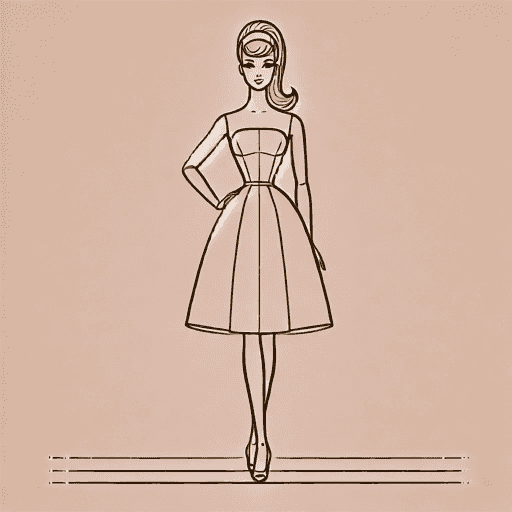
Let's Call Her Barbie
64 pages • 2-hour read
Renée RosenLet's Call Her Barbie
A modern alternative to SparkNotes and CliffsNotes, SuperSummary offers high-quality Study Guides with detailed chapter summaries and analysis of major themes, characters, and more.
Symbols & Motifs
Content Warning: This section of the guide contains discussions of mental illness, substance use, illness and death, sexual harassment, and gender discrimination.
The Bild Lilli Doll
The German Bild Lilli doll is a symbol that catalyzes the novel’s plot and themes representing the complex and controversial origins of Barbie’s creative inspiration. Based on a suggestive 1950s comic strip in the German Bild newspaper which cast Lilli as a woman who made her way through life through seduction, the doll was designed as a novelty gift for men. This is reflected when Ruth unveils Bild Lilli, as the engineers’ lewd reaction and her explanation that it is a “gag gift” (7) for men establishes Lilli as unlikely, sexual source material for a child’s doll. These sexualized origins will come to haunt Barbie and Mattel throughout the narrative, symbolizing the tension between Ruth’s visionary ambition and the risqué connotations of female adult-figured dolls. By grounding Ruth’s challenging idea in the problematic object which inspired Barbie, Bild Lilli immediately encapsulates the controversy that will surround Barbie, centered on age-appropriateness, sexualization, the regressive physical portrayal of women, and commercialization.
Breasts
The symbol of breasts is used by Rosen to express the novel’s concerns with female identity and sexuality, and the conflict which often surrounds these ideas. Barbie’s breasts are shown to be the primary focus of the controversy and derision that she often attracts. The all-male engineering team immediately dismisses the idea of an adult-figure doll because, as Jack Ryan crudely observes, “she’s got tits” (6). During market research, mothers deem the doll’s figure “[d]isgusting” (107), revealing the wider societal resistance to a doll that reflects real female maturity. Here, breasts are symbolic of the ways adult femininity is traditionally considered either threatening and inappropriate, and/or sexuality provocative, both within the children’s toy market and in wider social interactions. The breasts are symbolic on a double level as their use in the novel as a synecdoche, or shorthand, for female identity and sexuality also reflects the ways in which breasts are used in the real world to define or control women and womanhood. The novel’s focus on Barbie’s breasts therefore symbolizes male-centric preoccupation with breasts as sexual objects and the female experience of reductive objectification.
Ruth’s fierce defense of the requirement for anatomical breasts also becomes a proxy battle for her own identity, legitimacy and creative authority, symbolizing the challenge she faces, and the theme of Female Vision and Success in a Male-Dominated Industry. As it progresses, the novel translates the symbol of breasts to Ruth’s own body, reflecting Ruth Handler’s real experience as a breast cancer survivor. Through the novel’s treatment of her mastectomy and recovery, breasts become symbolic of female experience, vulnerability, and self-identity. Breasts come to symbolize the narrative correlation between the design of plastic breasts for commercialized child’s play and of post-operative prosthetics, highlighting their numerous and contested meanings.
The Castle
The Castle is Jack Ryan’s Bel Air mansion. This functions as a symbol of his internal state, linking to the theme of The Personal Costs of Professional Commitment. Bought as an outward expression of his wealth and success, the Castle is a literal and figurative sign of Jack’s need for external validation. In depicting him buying it without consulting his wife, Barbara, causing further strife, the house becomes symbolic of his failing relationships and regularly misjudged, if well-meaning, decisions. The mansion’s theatrical mock-Tudor features, some built from Hollywood prop materials, symbolize the parts of Jack’s life which are a carefully constructed façade, particularly his sadness and sense of isolation, and his struggles with unsupported dyslexia, or “word blindness,” and bipolar disorder. As a parallel for Jack’s mental state, the Castle’s location for wild parties reflects his increasingly self-destructive hedonism and need to feel “adored” and fill the “empty void” of his loneliness with a constant stream of people and noise. The novel also explicitly draws a parallel between Jack and his difficult childhood home, stating, “Jack often feels like he is that house, so appealing on the outside […] but on the inside, a mess” (39), linking Jack’s approach to his home with the childhood trauma that underlies his lifelong search for happiness and inner peace.

Unlock the meaning behind every key symbol & motif
See how recurring imagery, objects, and ideas shape the narrative.
- Explore how the author builds meaning through symbolism
- Understand what symbols & motifs represent in the text
- Connect recurring ideas to themes, characters, and events