The Director
55 pages • 1-hour read
Daniel Kehlmann, Transl. Ross BenjaminThe Director
A modern alternative to SparkNotes and CliffsNotes, SuperSummary offers high-quality Study Guides with detailed chapter summaries and analysis of major themes, characters, and more.
Symbols & Motifs
Content Warning: This section of the guide includes discussion of racism, religious discrimination, and death.
The Molander Case
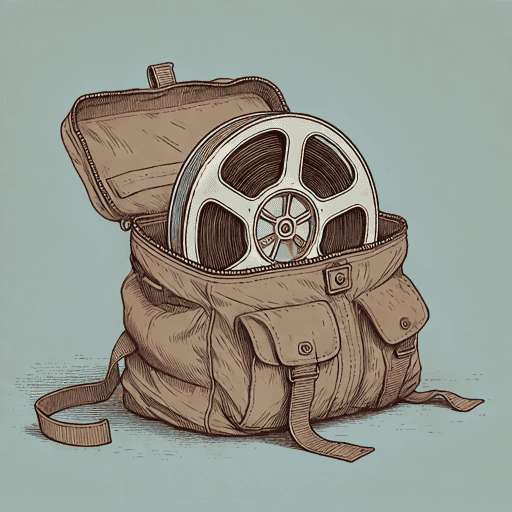
The Molander Case, the lost film Pabst shoots in the final days of the war, is the novel’s central symbol, representing the ultimate fusion of artistic ambition and moral corruption. The film itself, a supposed masterpiece, is irrevocably tainted by its horrific creation using concentration camp prisoners as extras. As a symbolic object, it embodies the core theme of The Moral Compromises of Artistic Ambition, showing how the pursuit of a perfect creation can become the justification for complicity in profound evil. For Pabst, the project is the culmination of his Faustian bargain, a work of art whose very existence is a testament to his collaboration with the Nazi regime. For Franz Wilzek, however, the physical film cans he secretly possesses are a manifestation of repressed historical trauma and personal guilt. The film’s status as lost mirrors the willful erasure of difficult histories, both personal and collective. It also suggests that the abandonment of one’s principles is never justified; Pabst sacrifices everything from his moral integrity to his family’s well-being to create the film, but in the end is left with nothing. The Molander Case is a tangible ghost, a physical record of a crime proving that the products of a corrupt system can never be truly pure or separated from their origin.
Light and Shadow
The interplay of light and shadow is a recurring motif that functions as the novel’s primary visual and moral metaphor, explicitly referenced in the original German title, Lichtspiel (“play of light”). On one level, the motif relates directly to the cinematic arts, where projected light creates images out of the shadows on celluloid. In this respect, light and shadow are used metaphorically to illustrate how characters use self-deception and illusion to make their reality bearable. Jakob, for example, learns to reduce living things to “just color and shadow,” allowing him to “think away the inside” and make killing easier (195).
The novel thus establishes a tension between the “light” of artistic creation and the “shadow” of ethical corruption. G. W. Pabst’s tragedy is his belief that he can operate in the pure, illuminating beam of his artistic vision while ignoring the political darkness that surrounds and enables him. He chases the light of the camera, deluding himself that it can exist separately from the shadows of the Nazi regime. The motif captures Pabst’s inner state, as described by Wilzek: “[O]n set he laughed a lot, but when the lights went out, he often looked emptied out. Like a costume that no one is wearing” (12). This image reveals that the artistic “light” is a performance; in the shadows, away from the camera, his moral emptiness is exposed. Kehlmann uses this motif to argue that light and shadow are inseparable; creating art within a system of evil does not bring light into darkness but rather makes one part of the shadow play.
Caves and Depths
Caves and depths function as a symbol of G. W. Pabst’s psychological and moral entrapment following his collaboration with the Nazi regime. The moment Pabst learns that war has been declared and he cannot return to the United States, he feels trapped, as if he is “lying on the bottom of a deep ocean” (117), unable to resurface. As the novel progresses and Pabst makes greater moral concessions, he uses the idea of entrapment as an excuse for his actions, claiming that he ended up back in Austria due to a series of unfortunate chances, even as he digs himself deeper into his metaphorical hole of moral ambiguity.
The symbolism of caves and depths is explored further through Trude Pabst’s screenplay, Mysterious Depths, about a speleologist who becomes lost underground, a story that metastasizes into a metaphor for Pabst’s own condition. Having compromised his ethics for his art, Pabst finds himself in a spiritual abyss, unable to escape the consequences of his past choices or create meaningful work again. His obsession with the lost film, The Molander Case, is a symptom of this entrapment; he is metaphorically buried within the memory of his greatest compromise. The novel literalizes this state in a climactic scene where Trude leads Pabst deep into a real cave and confronts him with the reality of his situation: that his masterpiece is lost and he has to live with the consequences of all he sacrificed to make the film. The cave becomes the ultimate symbol of Pabst’s inescapable guilt and creative sterility. It is the dark, airless, interior space where he is finally forced to reckon with the truth that there is no exit from the moral depths into which he descended.

Unlock the meaning behind every key symbol & motif
See how recurring imagery, objects, and ideas shape the narrative.
- Explore how the author builds meaning through symbolism
- Understand what symbols & motifs represent in the text
- Connect recurring ideas to themes, characters, and events