The Director
The Director
A modern alternative to SparkNotes and CliffsNotes, SuperSummary offers high-quality Study Guides with detailed chapter summaries and analysis of major themes, characters, and more.
Summaries & Analyses
Author Insights
Quizzes
NEWReading Tools
Games
Themes
Content Warning: This portion of the guide includes discussion of graphic violence, religious discrimination, mental illness, emotional abuse, cursing, illness, animal death, and death.
The Moral Compromises of Artistic Ambition
In Daniel Kehlmann’s The Director, the pursuit of art emerges as an all-consuming, almost religious calling that leaves the artist vulnerable to moral compromise. As G. W. Pabst’s career unfolds, the novel shows how artistic ambition becomes a way to deny ethical responsibility and justify participation in systemic violence. Pabst describes directing as a nonnegotiable part of his life, and this hunger to make films pushes him into a series of concessions to the Nazi regime. Each compromise feels like a small necessity for the sake of his work, but these choices gradually erode the line between Pabst’s art and the cruel state that funds it, leaving the art itself bent toward inhumane ends.
Pabst’s first step toward collaboration with the Nazi regime grows out of his dispiriting months in Hollywood, where commercial pressures choke his creative freedom. Pabst doesn’t enjoy the same professional respect in Hollywood as he does in Europe, which bruises his ego; his failure to secure funding for his passion project and his frustration while directing the “flop” A Modern Hero sap his confidence. This loss of purpose shapes his decision to return to Europe at the moment the Nazis rise to power. Back in Germany, the Minister of Public Enlightenment and Propaganda promises Pabst any actor or budget if he will complete an “act of penance” and work for the Reich (147). Pabst resists at first, but fear of the consequences of refusing and the promise of limitless resources wear him down. He accepts the assignment to direct The Comedians and frames his choice as a way to keep making films while trivializing the political setting that now surrounds every part of his job.
Once inside the system, Pabst uses his focus on craft to quiet his unease. He tries to justify his involvement by stating the value of art; although it seems “unnecessary” to create when the world is in turmoil, later it will be “the only thing that mattered” (257). When asked to adapt a party-approved novel into a film, Pabst throws himself into reshaping it into a personal project he calls The Molander Case. His single-minded immersion in the film lets him ignore the war and the propaganda machine that funds him. However, this uneasy balance collapses during production. As Pabst grows increasingly desperate to finish the film, convinced he is creating a “masterpiece,” his moral compromises mount, finally culminating in pressuring the production manager to procure concentration camp prisoners as extras for the film’s climatic concert hall scene. In that moment, ambition overtakes any trace of conscience. The film he creates is “soiled,” made “bloody and dirty” from its ties to the exploitation around him (215). The work Pabst once saw as a refuge turns into a direct part of the brutality he tries so hard to ignore.
Self-Deception in Memory and Perception
In The Director, characters interact with their past and present in ways that protect themselves from situations that feel unbearable; they engage in acts of self-deception to survive the horrors they witness and participate in. Some characters, like Franz Wilzek, repress or reshape their memories to hide the guilt of complicity. Others, like Pabst, Trude, and Jakob, actively reframe their present reality, including their proximity to and participation in the horrors of the Reich.
Franz Wilzek, once Pabst’s assistant, embodies the idea of self-deception through the broken recollections that frame the novel. His struggle with the past shows how memory pushes aside or reshapes facts to keep trauma and guilt out of view. Wilzek’s history, tarnished by the work he participated in during the war, becomes a territory of denial and invention, where the truth lies hidden under years of self-deception. When the elderly Wilzek sits for a live television interview about his film career, his confused rambling is interrupted by a bout of furious lucidity when the host asks about The Molander Case. In a frantic, panicked attempt at protecting his self-denial, Wilzek shouts, “It wasn’t shot! It isn’t true, goddamnit, it doesn’t exist!” (13). However, this mention of the film is enough to reactivate Wilzek’s memory, illustrating the tension between the attempt to rewrite his life and the memory that refuses to disappear.
While Wilzek’s confused narration illustrates an attempt to reconcile trauma through reframing memory, other characters practice self-deception in real time, reshaping their reality to make it bearable. Pabst engages in self-deception by justifying his involvement with the Reich through emphasizing the value of art and his own right as a great artist to create. Desperate to gain “friends and allies” (162), Trude tells herself the book club of high-ranking party members’ wives isn’t “that bad” and forces herself to converse about a book she hated. Even Jakob, who has a fanatical devotion to the Reich, has to develop strategies to cope with the violence and devastation he encounters. When he has to kill a deer, he learns that living things are easier to kill when reduced to “just color and shadow” (195). He forces himself to become “someone else,” someone capable of the violence, and “think away the inside” of the thing he has to harm (195).
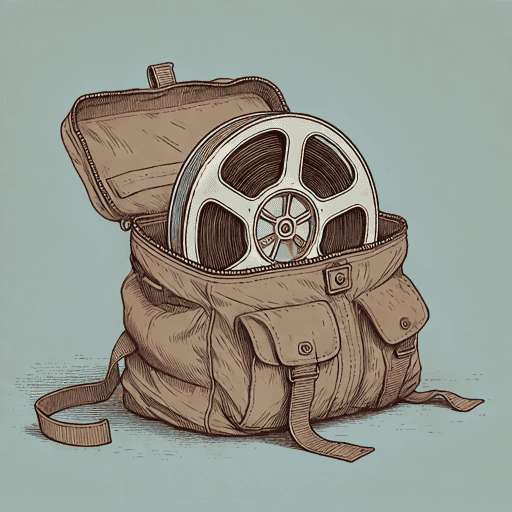
Despite these attempts at self-preservation through reframing the past and present, the final chapter illustrates the futility of denying reality. Returning from the television interview, Wilzek finds an old army rucksack in his closet containing the seven missing film cans of The Molander Case. The cans represent the lasting weight of his secret, an undeniable physical reminder of the truth he has kept sealed away.
The Blurred Line Between Survival and Complicity
The Director portrays a range of choices made by artists and ordinary citizens living under a totalitarian regime. These choices fall across a wide middle ground rather than into tidy categories, illustrating how the line between survival and complicity under such circumstances is not always clear. Pabst’s decisions, along with the choices made by those around him, reveal a space where self-preservation mixes with participation in a criminal state and leads to actions that do not fit simple labels.
Pabst’s stalled work in Hollywood drives him to return to the Reich, where he has the chance to make serious films again. If he does not agree, government officials imply that he will face arrest and imprisonment in a concentration camp, suggesting that capitulation is a requirement for survival. However, Pabst’s situation is complicated by the fact that he voluntarily returned to annexed Austria despite the known danger. Pabst claims he is not there “by choice” but was “trapped” after Jerzabek knocked him off the ladder, but Trude accuses him of enjoying the prestige and resources that he has making films in Germany and of never intending to return to the United States. Pabst’s first concession leads to more, and he accepts state funding and oversight, binding him to the system he once hoped to skirt. His path contrasts with the fate of the screenwriter Kurt Heuser, whose arrest by the Gestapo after what appears to be his refusal to write propaganda shows the danger of any open break with the regime.
Other artists in the novel shape their own uneasy arrangements with the government to keep themselves and their loved ones safe. The actor Heinz Rühmann, for example, describes how he shields his Jewish wife by staging a sham divorce and arranging her marriage to a Swedish colleague, an arrangement government officials approve. His plan is neither an act of open resistance nor a simple betrayal. It is a way to protect his work and his family in a system built to endanger them.
Even Jakob, who becomes ideologically aligned with the Reich, is motivated by his own survival in the initial stages of adaptation to his new reality. As a boy who has lived and attended schools around the world, he understands social acceptance as a matter of life and death and acts accordingly, fighting a boy to gain his classmates’ respect even though he feels the urge to cry with remorse afterward. Whether or not characters are explicitly ideologically aligned with the regimen, the places in which they chose to capitulate are largely based on their own self-interest, whether that be artistic freedom, social standing, or personal safety, or a complex combination of factors.

Unlock every key theme and why it matters
Get in-depth breakdowns of the book’s main ideas and how they connect and evolve.
- Explore how themes develop throughout the text
- Connect themes to characters, events, and symbols
- Support essays and discussions with thematic evidence