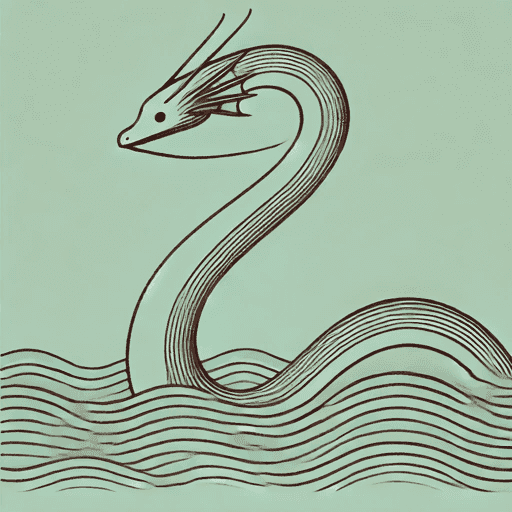
North! Or Be Eaten
67 pages • 2-hour read
Andrew PetersonNorth! Or Be Eaten
A modern alternative to SparkNotes and CliffsNotes, SuperSummary offers high-quality Study Guides with detailed chapter summaries and analysis of major themes, characters, and more.
Important Quotes
Content Warning: This section of the guide includes discussion of physical abuse, emotional abuse, and child abuse.
“But those days had passed away as sure as the summer, and whether he liked it or not, home was no longer the cottage. It wasn’t Peet’s tree house, either. He wasn’t sure he had a home anymore.”
(Chapter 1, Page 4)
In this moment of internal reflection, Janner’s sense of displacement is established as a central emotional conflict. By using a simile to compare the loss of Janner’s past life to the passing of the summer season, the author frames the boy’s homesickness as an irreversible phenomenon. In this light, the family’s journey north fuels their search for a new sense of belonging and identity in the absence of a fixed home.
“A team of black horses stood harnessed to the Black Carriage. But it wasn’t the Black Carriage Oskar had seen […] This carriage was longer and sleeker, and was, to Oskar’s horror, more frightening to behold than the other. Instead of one chamber, there were several horizontal compartments just big enough for a man, as if the carriage were a wagon bearing a stack of iron coffins turned on their sides.”
(Chapter 3, Pages 17-18)
Through Oskar’s perspective, the novel reintroduces the Black Carriage, which serves as a key symbol of Gnag’s oppressive regime. The narrative employs morbid imagery, comparing the carriage’s compartments to “a stack of iron coffins,” and by invoking the trappings of death, the author makes it clear that Gnag’s actions deliberately strip individuals of the very freedom and identity that make life worth living.
“‘Tink, don’t just stand there!’ Janner shouted. ‘You heard what Grandpa said! Cut a hole in the ceiling! If you’re a king, then act like one!’”
(Chapter 8, Page 35)
This line of dialogue, spoken in a moment of extreme peril, crystallizes the central conflict between the two brothers and addresses the theme of Forging a New Identity Amid Adversity. Janner’s frustrated command reveals the immense pressure of his own role as Throne Warden, for he struggles to uphold his duties, but he also understands the importance of urging Tink to confront the responsibilities of his own royal title. The imperative to “act like” a king suggests that such a role can only be realized if it becomes a performative identity. Tink cannot merely claim to be a king; he must be worthy of the title through courageous action.
“‘Grandpa,’ Leeli said. ‘I can see the sea from here, and it’s not dark at all. It’s wide and terrible and beautiful. We’re supposed to go that way. […] it makes me want to sing.’”
(Chapter 11, Page 49)
Leeli’s perception of the sea contrasts with Podo’s as-yet-unexplained terror of the deeps, and her compulsion to “sing” foreshadows her unique magical talents as the Song Maiden. The oxymoronic description of the sea as simultaneously “terrible and beautiful” conveys a sense of the sublime, framing the ocean itself as a powerful, near-divine force. Leeli’s urge to sing also establishes a mystical relationship between her music and the sea, hinting at the presence of destiny and ancient power.
“He saw in his mind the way Peet the Sock Man had soared through the air into the rockroach gully with that fierce look in his blood-shot eyes. Protect. Protect. Protect.”
(Chapter 12, Page 54)
This passage marks a pivotal moment in Janner’s character development as he internalizes the core duty of a Throne Warden by recalling Artham’s example. The repetition of the single imperative “Protect” transforms Artham’s purpose into Janner’s own mantra, cementing his decision to stand and fight. The bolded text typographically emphasizes this mental shift, signaling Janner’s conscious acceptance of his identity and his commitment to The Power of Sacrificial Love.
“Janner saw a change in Nugget’s face at the last jab from a Fang spear, a tired but contented look that made him believe the brave dog would fall to the sea happy, knowing he had saved Leeli from harm one last time.”
(Chapter 14, Page 64)
In this moment of crisis, the narrative personifies Nugget by focusing on his facial expression, emotions, and courageous sacrifice for Leeli’s sake. Through Janner’s perspective, the dog gains complex human emotions—contentment and happiness in death—and his sacrifice is portrayed as the ultimate expression of devotion. This act exemplifies the power of sacrificial love, establishing a standard of heroism that the human characters must later strive to meet.
“We have been watching, waiting for him. He sailed across the sea, and he is near you, child. We can smell him.”
(Chapter 16, Page 70)
The sea dragon’s telepathic warning uses ominous syntax to establish a sense of ancient and powerful forces at play in the world. The shift from the visual to the olfactory renders the unseen presence a primal threat, and the use of the first-person plural heightens the tension of the family’s flight. This moment introduces a key piece of foreshadowing while also creating a conflict between the mystical truth that Janner perceives and Podo’s cynical dismissal of it.
“No, when a king forgets who he is, he looks for himself in the rubble of conquered cities. He is haunted by a bottomless pit in his soul, and he will pour the blood of nations into it until the pit swallows the man himself.”
(Chapter 19, Page 84)
In this scene, Oskar engages in a grim critique of the psychology of tyrants, employing the metaphor of the “bottomless pit in his soul” to define the corrupting nature of unrestrained power. This philosophical statement is designed to explain the self-consuming evil of Gnag by contrasting it with the selfless love that binds the Igiby family. By articulating the psychological void that drives such a villain, the passage argues that true identity and leadership cannot be derived from conquest, but from self-knowledge and humble service.
“‘I don’t want to be a king.’ Janner almost asked Tink what he meant but stopped himself. He knew exactly how his little brother felt. ‘It’s okay. I don’t much want to be a Throne Warden either.’”
(Chapter 21, Page 95)
This quiet exchange reveals the immense psychological weight of the brothers’ inherited identities. Their shared confession highlights the stresses involved in Forging a New Identity Amid Adversity, for at this point in the story, they see their titles as burdens, not sources of pride. The simple, direct language underscores their youth and vulnerability, creating a contrast between their personal desires and the epic destinies that they will soon be forced to confront.
“‘D-draw what blade?’ Tink asked with a smile that worked its way through all the terror on his face. […] ‘This blade?’ Tink produced a dagger from his sleeve and held its point just below Claxton’s ear.”
(Chapter 24, Page 112)
This scene marks a pivotal moment in Tink’s development, showcasing his cleverness and bravery in a moment of extreme peril. The contrast between his seeming terror and his calculated actions illustrates his embrace of Courage as a Conscious Choice. By turning Claxton’s own threat back on him with a question, Tink executes a dramatic reversal, seizing control of the situation through wit and daring.
“Well, it’s just…wherever you take us, be it the Ice Prairies or the belly of a gargan rockroach, these children should know who they are. At all costs, they should remember who they are.”
(Chapter 28, Page 134)
In the midst of an argument with Podo about the relevance of the newly translated First Book, Oskar Reteep challenges Podo’s single-minded focus on physical survival, championing instead the preservation of the children’s unique heritage and identity. The phrase “At all costs” elevates this ideal into a moral imperative, and he stresses that the children’s knowledge of their past is essential to their current struggle of Forging a New Identity Amid Adversity.
“To be sure, Sneem, thou fiend, the Florid Sword hath run you through like unto a bolt of iron lightning piercing the watery depths of the Mighty Blapp, may she run wide and muddy all the days of mine own life! Flayed by my blade! Aha!”
(Chapter 31, Page 147)
This quote marks the emphatic entrance of the Florid Sword, a mysterious vigilante who indulges in purple prose and melodrama. The man’s inflated, archaic diction and theatrical syntax provide a moment of comic relief amid the family’s desperate flight through Dugtown. By mixing an element of high adventure into the dark setting, the author establishes the Florid Sword as a whimsical but rebellious force that seeks to overcome the oppressive, humorless Fang regime.
“Tink gave Janner a seething look. ‘I said, “I don’t want to be king.” And don’t call me Tink anymore. My name is Kalmar.’”
(Chapter 33, Page 162)
During a heated argument after he and his brother are separated from their family, Tink rejects his childhood name and claims his royal one. Paradoxically, by demanding to be called by his kingly name of Kalmar, he is pushing back against the duties that this name represents, and this moment illustrates the novel’s broader exploration of identity as a complex and often contradictory internal struggle.
“Very well, then. I’ll take these two. She’ll be here at dawn.”
(Chapter 36, Page 175)
With this statement, the cruel Overseer makes a trade with the desperate residents of Tilling Court, and his blasé approach to the enslavement of children encapsulates the novel’s depiction of systemic evil. The casual, transactional language reduces children to mere commodities, highlighting their complete dehumanization within this corrupt system. This moment makes it clear that Gnag’s tyranny is enabled in part by amoral humans who exploit the desperation of others.
“But Janner knew he was a Throne Warden, and that gave him a kind of freedom, even though he was, for the moment, captive.”
(Chapter 37, Page 180)
This line of internal monologue occurs as Janner is being indoctrinated into the Fork Factory. By finding a form of “freedom” amid his captivity, Janner demonstrates a core thematic argument: that one’s true identity transcends one’s physical circumstances. He clings steadfastly to his role as Throne Warden, asserting a deeper sense of purpose that the oppressive factory environment will never be able to erase.
“But he also knew he couldn’t stand another day at the paring station without doing something. He wasn’t a tool. He was the Throne Warden of Anniera, which meant that though they might capture him, he wouldn’t go quietly.”
(Chapter 40, Page 192)
This quote marks Janner’s conscious rejection of his captors’ dehumanizing label, and he utterly rejects the idea of being someone else’s “tool.” By reasserting his true title, “Throne Warden,” he finally succeeds at Forging a New Identity Amid Adversity. In this light, his escape attempt combines a practical bid for freedom with a more significant assertion of self.
“He was trapped in a place where all he had was himself, and though he’d never thought of himself as a bad person, every motive, thought, and action that paraded through the blackness told him otherwise.”
(Chapter 43, Page 208)
Set within the coffin, a symbol of death and captivity, this passage depicts Janner’s reckoning with a moment of forced and painful introspection. With the personification of his past actions as entities that “paraded through the blackness,” the novel suggests that this moral self-assessment has stripped away the last vestiges of Janner’s childish idealism. The psychological torment that he endures is a crucial stage in his maturation, for his identity is reshaped by his suffering and solitude.
“In his mind’s eye, Janner sensed a swirl of color and heat that spun like a water mill for a moment and then settled into an image. He saw his sister, as real as the double doors in front of him. […] But where was Tink? […] As if in answer, the image widened and he saw that his brother was in a cage.”
(Chapter 44, Pages 211-212)
This supernatural vision serves as a critical plot device, jarring Janner free from his despair and renewing his sense of purpose as a protector. The simile comparing the vision’s formation to a “water mill” suggests the presence of an almost mechanical certainty that overrides his human doubts. By juxtaposing the image of Leeli’s relative safety with Tink’s imprisonment, the vision creates a dual motivation of hope and fear that cements Janner’s resolve.
“‘Gnag no longer needs to send them to Dang, you see. He has moved his operation here and has made many…improvements.’ The wolf took a deep breath and smiled. ‘Ah, the cold air. Do you feel it? It’s good for a Grey Fang.’”
(Chapter 49, Page 240)
This dialogue reveals a crucial shift in the narrative’s conflict, escalating the threat to an imminent invasion. The word “improvements” is a sinister euphemism that underscores the motif of physical and metaphorical Transformation, while the Grey Fang’s appreciation for the cold subverts the established weakness of the Fangs. The quote effectively rewrites the rules of the world and raises the stakes for the family’s northward journey.
“She says if you’ll let her finish what Gnag started—let her turn you into a snick-buzzard or a falcon, wherever you got those talons—she’ll set these children free. […] She’s doing the children a great favor. Making them more than what they are. Giving them power and purpose.”
(Chapter 51, Page 251)
This passage presents Artham with a moral dilemma, engaging with the power of sacrificial love. The Grey Fang’s rationalization of the transformations as a “great favor” that grants “power and purpose” is an example of inverted morality. This dialogue forces Artham to confront the nature of his own identity and weigh the prospect of protecting others against that of losing his own selfhood.
“Nine years of slipping in and out of lower Skree, dodging Fangs and trolls at every turn, makes a man keep his secrets in his own head. […] You won’t find another fella more eager to get these Fangs out of Skree, nor a man more loyal to his land.”
(Chapter 53, Page 261)
In this introduction, Gammon’s claim of unimpeachable loyalty to Skree conceals his plan to betray the Igibys. This dialogue emphasizes the dangers of secrets and betrayal, presenting a world in which professed allegiances cannot be trusted and survival depends on concealing one’s true intentions.
“As soon as Artham laid eyes on the boy, he leapt to his feet. His head smashed into the top of the cage, but he didn’t care. He squawked and flapped and screamed, trying with all that was in him to cry the name, ‘Tink!’”
(Chapter 55, Page 272)
After he decides to surrender his identity in order to escape his painful past, Artham finds that his resolve is broken by the sight of Tink emerging from the Black Carriage. The physical violence of his reaction expresses his sudden shift from despair to fierce protectiveness. Tink’s arrival serves as the catalyst for Artham’s transformation, demonstrating that an act of sacrificial love becomes the mechanism for reclaiming one’s own identity.
“A surge of power ran hot through his bones. With one final shove, the cage splintered into pieces. […] As he did, two graceful wings unfolded from his back, the feathers damp and glistening. […] Though they were still sharp as knives, his talons had narrowed and lengthened enough that they felt more like hands and less like claws.”
(Chapter 59, Page 293)
This passage marks the climax of Artham’s arc. The splintering of the cage is a literal and symbolic act of liberation that shatters the broken persona of Peet the Sock Man and releases Artham Wingfeather. The physical details of his change, particularly as his talons become more like hands, illustrate the integration of his wild power with his humane, protective purpose.
He is near you, young ones. Beware. […] It wasn’t Gnag. It wasn’t Gammon. The dragon’s warning had been about Podo Helmer all along.”
(Chapter 62, Page 310)
Janner’s realization, conveyed through italicized internal monologue, reveals that the sea dragon’s telepathic warning was previously misinterpreted. Now, Janner understands that the dragons’ words concern Podo, and he must now reckon with a dark secret harbored within the family. This moment establishes the sea dragons as symbols of an ancient, unavoidable justice, for they are determined to make Podo answer for a past transgression that he has long concealed.
“That was the moment Janner truly became a Throne Warden. Without a thought, Janner tore off his coat and ran. His heart’s deepest instinct drove him forward and over the ship’s rail to save his brother.”
(Chapter 64, Page 322)
This statement marks the culmination of Janner’s character development, for he views the plunge into the icy sea as an unquestioned necessity that transcends the luxury of choice. In this moment, the role of Throne Warden has become a core part of his nature, and his actions embody Courage as a Conscious Choice and the power of sacrificial love.

Unlock every key quote and its meaning
Get 25 quotes with page numbers and clear analysis to help you reference, write, and discuss with confidence.
- Cite quotes accurately with exact page numbers
- Understand what each quote really means
- Strengthen your analysis in essays or discussions