North! Or Be Eaten
67 pages • 2-hour read
Andrew PetersonNorth! Or Be Eaten
A modern alternative to SparkNotes and CliffsNotes, SuperSummary offers high-quality Study Guides with detailed chapter summaries and analysis of major themes, characters, and more.
Themes
Content Warning: This section of the guide includes discussion of child death.
Forging a New Identity Amid Adversity
In North! Or Be Eaten, the children’s sense of personal identity is hard-won, emerging only as they endure intense hardships. Although Janner and Tink are made to inherit titles like “Throne Warden” or “High King,” respectively, these roles cannot truly define them until they make the active choice to accept these onerous mantles for themselves. As the family endures captivity, flight, and constant danger, these dire circumstances raise the question of whether the children’s prescribed roles hold any truth in their own minds.
In Janner’s journey, his duty collides with his personal longing for a simpler life. At first, he resents the expectations tied to the Throne Warden title and sees this role as a barrier to his own more peaceful ambitions. The Overseer tests the full extent of this resentment in the Fork Factory by trying to turn Janner into a “tool” for his own use, and Janner responds by engaging in several bold acts of resistance. When he gives the false name “Esben Flavogle,” he essentially denies the Overseer the power to erase him, and this small act lets him hold onto his most authentic self. Later, when Tink changes into a wolf-like creature and slips into the icy sea, Janner dives in without hesitation, and in that instant, he lives the truth of his title, embracing The Power of Sacrificial Love in a way that affirms his choice to accept his own royal identity.
By contrast, Tink’s path shows that the act of fleeing from one’s true role can hollow out the self. As Kalmar Wingfeather, the destined High King, Tink feels cornered by this imposed duty, and he is therefore drawn to what looks like freedom among the lawless Stranders, whose world offers an escape from a royal name he never wanted. His decision to leave his family and walk into the Strander camp arises from his deeper desire to shed his identity. However, this choice makes him vulnerable to capture by Claxton Weaver and to the Stone Keeper’s determination to transform him into a Grey Fang. His physical maiming thus becomes a manifestation of his inner identity crisis, and his feral, hostile behavior proves that he has cut himself off from who he is. Only after Janner reminds him of their shared history does Tink reclaim his name and begin stitching together his old self with the creature he has become.
Finally, Artham Wingfeather’s reclamation of his role as a winged guardian offers the book’s most vivid picture of a reforged identity. When Artham lives as Peet the Sock Man, his trauma splinters his sense of self, but his instinct to protect survives. Even in this diminished form, he shields the Igibys from Fangs and trolls, and at the end of the novel, his love for the imprisoned children pushes him to surrender to the Stone Keeper in hopes of saving them. This sacrifice starts his inner healing. When he breaks free of his cage, he regains a clear mind and reveals his wings, overcoming his past wounds and becoming someone stronger than he ever was. In this way, his story shows that a lost identity can take shape again when fear gives way to renewed purpose, and he serves as a shining example to the rest of his family.
Courage as a Conscious Choice
Fear follows the Wingfeather family throughout North! Or Be Eaten, shaping every move they make, and rather than negating the power of fear, the author posits that those who are truly courageous learn to act despite the fear that they feel. The novel presents bravery itself as a deliberate choice in the face of danger, and as the characters confront their own fears for the sake of saving one another, their daring escapes and last stands show the heroism that is required to protect others at the expense of one’s own well-being.
The family’s escape from Glipwood Forest establishes that in the world of the novel, fear is a constant stressor, and the family’s only viable option is to keep moving forward despite the foes closing in on all sides. Beset by Fangs, trolls, and a gargan rockroach, they meet each new threat by forcing down their panic and taking decisive action. During the gully scene, for example, Janner admits that he is “truly afraid,” and his fear is sharpened by the memory of Fang venom from the struggles described in the first book of the series. However, faced with the sight of monsters in the den, he does not allow his fear to stop him. When Podo pushes back the creatures to open a way out, Janner follows his order to get Leeli and Nugget to safety. The same pattern reappears at Miller’s Bridge, for even though Janner knows they have nowhere to run, he stands beside Podo and lifts his sword against the family’s foes. These moments show that courage is a choice made under pressure—not a static trait upon which one can always rely.
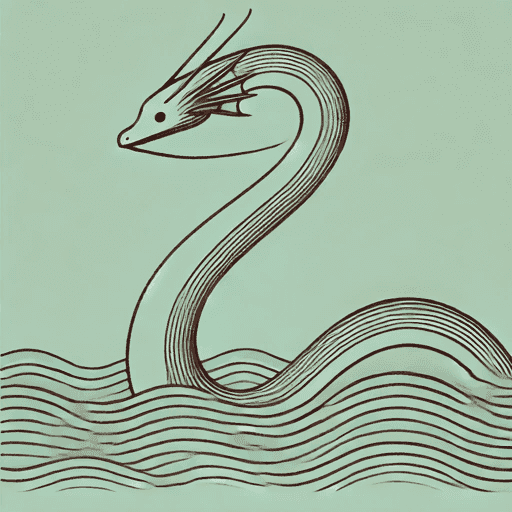
Podo’s story focuses on this idea, for despite his constant courage, the atrocities of his past as a pirate have left him with a fear of open water, due to the wrath of the sea dragons he once wronged. This dread first surfaces at Fingap Falls, for as Podo stares at the sea with an ashen face, his eyes shift “every which way but toward the sea” (49), and the fear weighs so heavily on him that he even argues that the family should give themselves up to the Fangs instead of facing the falls. Later, however, when sea dragons rise from the water and threaten his family, Podo chooses to act with courage despite his fear, stepping to the front of the ship and offering himself in their place, showing the highest form of courage in the novel.
The Power of Sacrificial Love
North! Or Be Eaten presents family bonds as the motive force that inspires many of the characters to engage in loving acts of self-sacrifice in order to save others. As the Igibys take steady risks taken to guard each other from harm, they endure intense moments of loss and danger that highlight the strength of their familial love and commitment. This pattern extends to every member of the family, even its pets, and Leeli’s dog Nugget thus becomes the first and most dramatic example of sacrificial love in action. At Miller’s Bridge, with a troll closing in, Nugget’s loyalty leads him to dart past Podo and crash into the troll, a move that saves the Igibys but shakes the bridge. As the old stones crumble, Nugget falls to his death alongside the troll, making a personal sacrifice based on instinct and devotion. The moment sets a standard for the rest of the book as the human characters go on to offer up their own safety to shield their loved ones.
This pattern reappears after the Stranders capture the family, for when Tink confronts Claxton Weaver and pulls off a reckless plan to steal the Claxtons’ pone, the object that marks his authority, the boy willingly endangers himself to save the other captives. Likewise, in the Phoob Islands, Artham Wingfeather makes a similar choice to save the children being turned into Grey Fangs. By offering himself to the Stone Keeper in exchange for the children’s freedom, he shows no regard for his own safety. In this way, both Tink and Artham reveal their readiness to prioritize the safety of those who are the most vulnerable.
Just as Tink shows his potential for strong, savvy leadership despite his gnawing doubts, Janner’s own path toward becoming a Throne Warden takes shape through a similar array of sacrifices. Podo sets the tone early, for just before the bridge collapses, he tells Janner, “Never stop fightin’ for ‘em, hear?” (63). Inspired by his grandfather’s brusque words, Janner holds to this charge, and as the story unfolds, he sheds his resentment over his role and seeks to embody its deepest ideals. When he saves the transformed Tink from the icy sea, he does not stop to measure cost or reward; he simply acts in his brother’s best interests. With this act, he demonstrates an extreme form of love that reflects a willingness to risk everything for someone else.

Unlock every key theme and why it matters
Get in-depth breakdowns of the book’s main ideas and how they connect and evolve.
- Explore how themes develop throughout the text
- Connect themes to characters, events, and symbols
- Support essays and discussions with thematic evidence