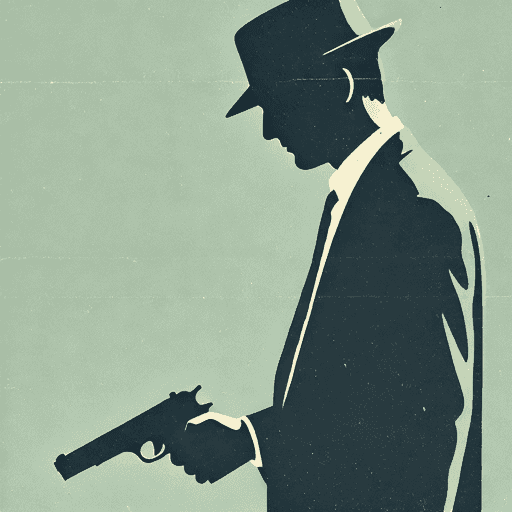
Orphan X
Orphan X
A modern alternative to SparkNotes and CliffsNotes, SuperSummary offers high-quality Study Guides with detailed chapter summaries and analysis of major themes, characters, and more.
Summaries & Analyses
Quizzes
NEWReading Tools
Important Quotes
Content Warning: This section of the guide includes discussion of physical abuse, sexual violence and death.
“‘I may not tell you everything right away,’ he adds in a tone that stops shy of apologetic, ‘but I will never lie to you.’ […]
‘Am I gonna get hurt?’ Jack drives on, looking dead ahead.
‘Sometimes,’ he says.”
(Prologue, Page 2)
In this exchange from the prologue, Jack establishes a foundational rule when introducing 12-year-old Evan. Jack’s promise to never lie, only to withhold information, frames their relationship as one built on trust, though not on full transparency, foreshadowing the harsh truths Evan will face. Jack’s one-word answer, “Sometimes,” is a stark confirmation of the violence inherent in the life for which Evan has been chosen, setting a tone of dispassionate realism and introducing the theme of The Struggle to Maintain Humanity When Forged Into a Tool of Violence.
“On occasion it gave Evan pause that the only living thing with which he shared his life was a wall.”
(Chapter 2, Page 14)
This moment of introspection occurs as Evan observes his vertical garden inside his armored penthouse, a space that serves as his place of isolation, informing the symbol of the fortress of solitude. The paradoxical statement highlights the profound loneliness at his core; his only “living” companion is a collection of plants on a wall, indicating his self-imposed separation from genuine human connection. This direct characterization reveals a flicker of longing beneath Evan’s hardened exterior, underscoring the psychological cost of his life and his struggle to reconcile his training with his innate human needs.
“I just don’t want her to be all broken like me.”
(Chapter 3, Page 26)
Morena Aguilar speaks these words about her younger sister, Carmen, articulating the core emotional stakes of Evan’s first mission in the novel, and illuminating his role as the Nowhere Man. The word “broken” serves as the key motivator, resonating with Evan’s own fractured past and defining his purpose as a protector of the vulnerable. Morena’s confession transforms the mission from a tactical problem into a moral imperative, galvanizing Evan’s commitment to intervene.
“‘Pain is inevitable,’ he says. ‘Suffering is optional.’”
(Chapter 6, Page 43)
Delivered by Jack during a flashback to Evan’s brutal training, this aphoristic statement encapsulates the core philosophy of the Orphan Program. It illustrates the psychological conditioning used to transform children into assassins by teaching them to dissociate from physical and emotional trauma. The line functions as a concise articulation of the theme of The Struggle to Maintain Humanity When Forged Into a Tool of Violence, revealing the mindset required to endure constant violence.
“He had never broken a Commandment and was not about to start now.”
(Chapter 10, Page 70)
This line of internal monologue appears just before Evan enters a meeting he suspects is a trap, reinforcing the significance of the Commandments motif. The statement establishes these rules not merely as guidelines but as a rigid personal code that provides moral and tactical structure to Evan’s chaotic existence. The definitive, declarative tone serves as a form of foreshadowing, building tension by implicitly suggesting that a future event will inevitably test this perfect record.
“That’s what you get for sending a man to do a woman’s job.”
(Chapter 12, Page 82)
Spoken by the assassin Candy McClure, this line uses irony to subvert gender stereotypes regarding the hitman character, while establishing her professional superiority. The quote directly contrasts with her earlier memory of male instructors giving her orders, reframing her role to an active, lethal agent. It characterizes Candy as hyper-competent and contemptuous of those she deems her inferiors, defining her as a key antagonist.
“‘Our challenge?’ Jack folds his cloth napkin, wipes a smudge of Alfredo from the edge of his plate. Then he looks directly into Evan’s eyes. ‘Feed both.’”
(Chapter 16, Page 104)
Jack delivers this line after Evan recounts the Cherokee legend of two wolves, one representing cruelty and the other compassion. The use of intertextuality emphasizes the protagonist’s internal conflict. By altering the traditional moral of the story, Jack establishes the central philosophy Evan must live by. This revision argues that to be an effective weapon and remain human, Evan cannot simply choose compassion over cruelty but must instead nourish and control both natures, encapsulating the theme of The Struggle to Maintain Humanity When Forged Into a Tool of Violence.
“You can’t be perfect unless you’re alone, and then guess what? You’re alone. So you’re still not perfect.”
(Chapter 17, Page 110)
Mia’s words offer a direct critique of the isolated, hyper-controlled life Evan has built for himself. Her statement articulates a core thematic paradox: the rigidly controlled world Evan achieves through solitude is itself an imperfection because it precludes the messy but necessary element of human connection. The line highlights the psychological cost of his existence and forces him to confront the limitations of a life governed solely by discipline and focus.
“Jack’s good hand drops to his belt, and there is a clank, and then his service pistol is up between them. He aims it at Evan. ‘Go.’ […] Jack’s gaze is steady, focused. ‘Have I ever lied to you?’”
(Chapter 21, Page 135)
In this flashback, a mortally wounded Jack forces Evan to flee an ambush by turning his own weapon on him. Jack’s question invokes the foundational promise he made to Evan as a child, using their bond of trust as a weapon to ensure Evan’s survival. This moment is the climax of their relationship, demonstrating that Jack’s paternal love towards Evan and his desire to liberate him from the very program that created him.
“He wore radio-frequency-identification-tagged press-on nails to type and send messages literally out of thin air. There was no end to the beauty tech products in Top Dog’s bag o’ tricks.”
(Chapter 23, Page 143)
This description of the antagonist Danny Slatcher’s equipment establishes the novel’s exploration of advanced technology and surveillance. The juxtaposition of “beauty tech products” with espionage work creates a jarring, modern aesthetic for the villains. This authorial choice illustrates The Fragility of Anonymity in a Technologically Advanced World by showing that Evan’s enemies possess capabilities that rival his own, framing their conflict as a high-tech arms race.
“The technology, developed by the biopharmaceutical industry, had been pirated from a Phase II drug designed to regulate diabetes. […] The variation Evan had acquired conveyed instead the GPS bearings of its carrier. If not replenished, it broke down in the body and passed from the system within several days.”
(Chapter 24, Page 162)
This passage exemplifies the theme of The Fragility of Anonymity in a Technologically Advanced World by showcasing the sophisticated, invasive tools used in modern espionage. The technology’s origin—repurposed from the biopharmaceutical industry—illustrates how benign innovations can be co-opted for surveillance, blurring ethical lines. Evan’s use of this covert GPS tracker against his own client reveals the world of distrust and suspicion Evan navigates, and establishes that survival within it is highly dependent on digital and technological skills.
“What he saw cut his excitement off at the knees. Redacted file. Two words that carried a host of implications. Not to mention complications. […] Danny Slatcher was not a two-bit gun for hire. Or a high-end hit man for the mob. He was something much more lethal.”
(Chapter 26, Page 171)
The author uses terse, impactful syntax to dramatize Evan’s discovery, signaling a major turning point in the conflict. The phrase “Redacted file” alludes to the elements of institutional power and corruption, indicating that Evan’s opponent operates with government sanction, pulling the narrative’s conflict away from organized crime and toward the corrupt state apparatus that created Evan. This realization confirms that Evan’s past is inescapable and that his enemy is a product of the same degenerate system.
“‘Which. Orphan. Are. You?’ […]
‘Some say the best. Until you. Now there seems to be some debate on that point, doesn’t there…’ A brief, savored pause. ‘…Orphan X?’”
(Chapter 28, Page 181)
This dialogue marks the shattering of Evan’s anonymity, emphasizing the novel’s central conflict. The antagonist’s use of the name “Orphan X” confirms that Evan has been identified by someone from within the clandestine program he escaped, transforming the mission from a professional contract into a personal confrontation with his own past. The staccato rhythm of Evan’s question contrasts with the antagonist’s taunting and prolonged response, heightening the tension and establishing a rivalry between the two highly trained government assets.
“All around them diners chatted and ate, their mouths moving soundlessly as music crashed in on Evan from the lake—time to say goodbye—and the deejay—just gonna stand there and watch me burn—[…] He was standing, hands on the glass, watching the tableau unfold across a stretch of sparkling water.”
(Chapter 32, Page 201)
The author constructs a scene of intense sensory imagery, juxtaposing the silent, visual drama of Slatcher stalking Morena with a cacophony described through fragmented pop-song lyrics. This use of auditory imagery creates a disorienting atmosphere that mirrors Evan’s state of heightened alert and frustration. The situational irony of the lyrics (“time to say goodbye,” “watch me burn”) comments on the life-or-death stakes Evan must navigate, emphasizing his isolation and helplessness despite being surrounded by a chaotic, oblivious crowd.
“He stood in the near-perfect silence of his condo, staring at the smudge mark, feeling something stir inside, an echo of some ancient battle fought within himself that he’d never known was being waged.”
(Chapter 35, Page 220)
Peter’s handprint on the refrigerator is symbolic of the traces of humanity into the sterile, controlled environment Evan inhabits. The ‘smudge mark’ represents the messy reality of domestic life, directly challenging Evan’s isolated existence and rigid adherence to his rules. This moment reveals his inner conflict—the “ancient battle” between his dehumanizing training and his latent capacity for empathy—encapsulating the theme of The Struggle to Maintain Humanity When Forged Into a Tool of Violence.
“Hiding a transmitter within the very wand designed to detect it was an unrivaled piece of tradecraft.”
(Chapter 37, Page 231)
After realizing that his opponents have been tracing him, Evan discovers that his own counter-surveillance technology was bugged. This sentence encapsulates the theme of The Fragility of Anonymity in a Technologically Advanced World, portraying the conflict as a sophisticated intelligence game where trust in one’s own tools becomes a vulnerability. The term “tradecraft” establishes a sense of professional parity between Evan and his opponent, highlighting that both were forged in the same underground world, where distrust and suspicion are necessary for survival.
“We did what we had to do to get Evan where we needed him. Emotionally. We needed him reckless. Willing to take more risks.”
(Chapter 38, Page 241)
Speaking to Katrin, the antagonist reveals that her daughter’s supposed death was a fabrication designed to manipulate Evan. This quote directly states the enemy’s strategy: to turn Evan’s carefully controlled emotions into a tactical weakness. By targeting his humanity, the antagonists demonstrate that Evan’s greatest internal conflict, The Struggle to Maintain Humanity When Forged Into a Tool of Violence, is also his greatest vulnerability.
“Assessing the genuine in the everyday was his particular blind spot, as he had never lived in the everyday. Katrin did. And his inability to decipher the language of the everyday, to read her correctly, might prove to be the tear in the fabric that would unravel them both.”
(Chapter 42, Page 258)
In a moment of introspection, Evan acknowledges that his specialized training has left him incapable of navigating normal human interactions. The metaphor of a “tear in the fabric” serves as direct foreshadowing of Katrin’s betrayal, linking his operational failure to his emotional illiteracy. This passage identifies the central irony of Evan’s character: His expertise in detecting sophisticated forms of deception fails when confronted with what appears to be ordinary human desperation.
“‘People build trust, Evan,’ she said. ‘That’s how relationships work. That’s what they are.’ […] That was the curse of paranoia. It became a self-fueling engine, heating up the more it consumed.”
(Chapter 44, Page 274)
Following Evan’s rescue of her and Peter, Mia confronts him about the fallacy underpinning his life, articulating a core value of the social world he cannot access. The subsequent narrative thought uses a metaphor—“paranoia,” meaning the chaos that characterizes Evan’s world, as a “self-fueling engine”—to describe the psychological trap of his existence. This juxtaposition of dialogue and internal monologue highlights the thematic tension between his desire for connection and the isolating nature of his training.
“The realization was still rattling through him, making its way to his brain. Awareness hit, and he whipped around in time to see Katrin slip his own knife into his abdomen just beneath the ribs.”
(Chapter 46, Page 285)
This quote captures the antagonists’ key ambush against Evan. The author manipulates narrative pacing, using deliberately longer phrases (“rattling through him,” “making its way”) to slow the moment of comprehension, which contrasts sharply with the swift, shocking act of violence. The physical penetration of the stabbing mirrors the psychological breach Evan experiences by Danika’s elaborate betrayal; both are consequences of Evan’s manipulated empathy.
“Jack crouches, unties his shoe, yanks the lace free, and uses it to fasten the bundle. Then he unfolds his pocketknife, thumbs up the blade, and hammers it through the twigs. They crack uniformly at the midpoint. Jack grabs a single twig, lays it on the ground by itself, hands Evan the knife. ‘Have at it.’”
(Chapter 50, Page 297)
In this training flashback, Jack uses a physical metaphor to invert the classic “bundle of twigs” fable, teaching Evan that solitude can be a form of strength and survival. The solitary twig represents the tactical advantage of being an untethered, unpredictable individual. This lesson forms the foundation of Evan’s isolated existence and directly engages the theme of The Struggle to Maintain Humanity When Forged Into a Tool of Violence.
“‘It’s not because I owed you, Evan. It’s because I wanted you…’ She wet her lips. ‘Well. Maybe you’ll know what it means to need someone now.’”
(Chapter 50, Page 300)
Speaking to Evan after secretly cleaning his blood off the floor, Mia reveals her motivation was not transactional but an attempt to connect and teach him about interdependence. Her words and actions directly challenge the core of Evan’s training, which equates connection with vulnerability. This moment represents a significant breach of his emotional barriers, forcing him to confront a human need his entire life has been structured to deny.
“Who better to fill that role than a poker player, skilled at analyzing others, reading scenarios, bluffing for gain? Ultimately, Danika had summed it up best herself. You’re not playing your hand, she’d told him. You’re playing the other guy’s hand.”
(Chapter 52, Page 310)
This moment of anagnorisis occurs as Evan uncovers the depth of Danika’s deception against him. The internal monologue crystallizes how his enemies weaponized his own rigid moral code and psychological triggers. The poker analogy effectively frames the conflict not as a physical battle but mainly as one of psychological manipulation, where Evan’s predictability renders him exposed to threats rather than shielding him.
“The Tenth and most important Commandment looped in his head: Never let an innocent die. […] He had to force the words out. ‘I can’t help you.’”
(Chapter 56, Page 334)
Here, Evan makes the conscious decision to violate his most sacred rule, a pivotal turning point for his character. The internal conflict, emphasized by the narration referencing the looping Commandment in his mind, is framed as an act of self-preservation that marks a departure from his rigid, inherited moral framework. This moment demonstrates his evolution from an operative following a code to an individual making a complex, situational, and morally ambiguous choice.
“He removes the battery, then tosses the phone into the fireplace. The boy is at his side, sensing the shift in emotion. […] ‘Item seven?’ he asks.
‘Loss,’ the boy answers.”
(Epilogue, Page 354)
The novel’s final plot twist creates profound dramatic irony, revealing that Jack, whose death has defined Evan’s recent past, is alive and training a new orphan. The final word, “Loss,” is delivered by Jack’s new protégé as part of a memory test, yet it comments directly on the central, foundational loss Evan believes he has suffered. This twist recontextualizes the entire narrative, suggesting Jack’s “death” was another calculated deception rather than a sacrifice.

Unlock every key quote and its meaning
Get 25 quotes with page numbers and clear analysis to help you reference, write, and discuss with confidence.
- Cite quotes accurately with exact page numbers
- Understand what each quote really means
- Strengthen your analysis in essays or discussions