Prey
Prey
A modern alternative to SparkNotes and CliffsNotes, SuperSummary offers high-quality Study Guides with detailed chapter summaries and analysis of major themes, characters, and more.
Summaries & Analyses
Plot Summary
Background
Chapter Summaries & Analyses
Character List
NEWCharacter Analysis
Themes
Symbols & Motifs
Important Quotes
Essay Topics
Quizzes
NEWReading Tools
Games
Background
Scientific Context: The Potential Threat of Technology
Michael Crichton’s novels tend to present a threat to humanity that is typically of its own making. For instance, in Jurassic Park, it was the decision to bring the dinosaurs back. It was an exciting breakthrough until it became a disaster. In Prey, technology—and aggressively-evolving nanotechnology in particular—is the threat.
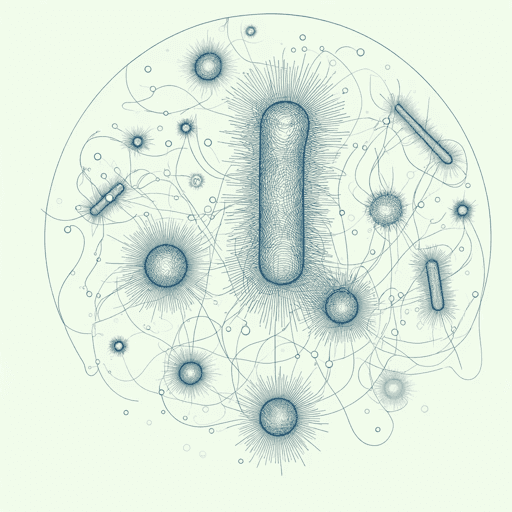
Nanotechnology refers to the work conducted with materials at the atomic or molecular level. The particles comprising the swarms in Prey are so small that it is difficult to comprehend their scale. As an example, a meter is approximately three feet and three inches long; in contrast, one nanometer is only a billionth of a meter. The swarms in the novel are visible from afar, which would require a number of nanoparticles that is nonsensical outside of a scientific framework. However, as incomprehensible as a nanoparticle may seem in visual terms, for the purposes of Prey, the reader need only remember that the particles are essentially computer programs that move around autonomously with various levels of goals and memory.
Crichton’s self-replicating machines, which one character refers to as a “mechanical plague” (176), are consistent with the “gray goo” apocalypse, a doomsday situation conceived of by engineer K. Eric Drexler in his 1986 nonfiction book about molecular nanotechnology, Engines of Creation. The “assemblers” referred to in Drexler’s book—as well as throughout Prey—have one purpose: to assemble materials according to their programming.
In Drexler’s theory, one of the primary tasks of an assembler is to make more assemblers, which increases the capacity of molecules the assembly line can create. Initially, this works, until the particles evolve enough to pursue their own goals, which include assembling materials that benefit their own perpetuation rather than the goals of their creators. This potentially creates a dangerous scenario: If the program that runs the assembly line of assemblers makes a mistake, becomes self-aware, or glitches, the result could be endless self-reproduction. Because the assemblers can’t do their work without breaking down organic matter, exponential growth almost guarantees a disaster with each new generation. The “mechanical plague” would have to branch out and aggressively find new sources of organic matter to continue the production, and eventually all organisms would be converted into Drexler’s gray goo as nanoparticles consumed all life on earth.
Crichton’s descriptions of the particle swarms and the ruin they leave behind as they do their work illustrates this theory. The horror of the gray-goo concept stems from two sources. First, the apocalyptic scenario would result from humanity’s own inventions. As in Jurassic Park, the scientists—in this case, molecular scientists under siege from nanobots—would have no one to blame but themselves. Second, because the nanobots are programmed—even though they may hypothetically gain autonomy and become self-aware—they cannot be reasoned with. They would not empathize, listen, or try to take another perspective of humanity’s value. They are machines and programs that would pursue their own existence without anything else factoring into their calculations.

Get in-depth, chapter-by-chapter summaries and analysis from our literary experts.
- Grasp challenging concepts with clear, comprehensive explanations
- Revisit key plot points and ideas without rereading the book
- Share impressive insights in classes and book clubs