Prey
Prey
A modern alternative to SparkNotes and CliffsNotes, SuperSummary offers high-quality Study Guides with detailed chapter summaries and analysis of major themes, characters, and more.
Summaries & Analyses
Plot Summary
Background
Chapter Summaries & Analyses
Character List
NEWCharacter Analysis
Themes
Symbols & Motifs
Important Quotes
Essay Topics
Quizzes
NEWReading Tools
Games
Part 4, Chapters 28-31Chapter Summaries & Analyses
Part 4: “Prey”
Part 4, Chapter 28 Summary: “Day 7: 7:12 A.M.”
Outside the magnet room, Jack smashes a tube of the phage on the ground and runs as everyone jumps away from it. He takes the jug and runs for the elevator to the ceiling level to access the sprinkler reserves. When they block him, he begins climbing a ladder instead, Ricky grabbing at his feet. A version of Julia appears in front of him, and then a smaller copy of her appears. He feels the pinpricks as he climbs, but he can still breathe. He remembers Julia saying, “Save my babies,” (345) and keeps going. He kicks Ricky and breaks his nose. Then he threatens to throw the phage tube at Vince, but Vince manages to tackle him. Jack gets away and dumps the virus into the sprinkler system before descending on the elevator.
Part 4, Chapter 29 Summary: “Day 7: 8:12 A.M.”
He takes out a lighter as he talks with Julia, who keeps asking where Mae is. The men walk in circles around him. Jack holds the lighter up to a sprinkler, but nothing happens. Julia says Ricky turned the sprinklers off as they grab Jack and hold him down. Then the assembly line overheats, and the glass tubes start exploding; because Ricky turned the safety system off, it is now spreading the virus that has been reproducing this whole time. Julia screams that she hates Jack as the sprinklers come on. They scream when the water touches them.
Part 4, Chapter 30 Summary: “Day 7: 9:11 A.M.”
Jack and Mae board the helicopter, and the pilot flies them away from the lab. Mae says she escaped and was in the shed looking for more thermite. There is a massive explosion behind them.
Part 4, Chapter 31 Summary: “Day 7: 11:57 P.M.”
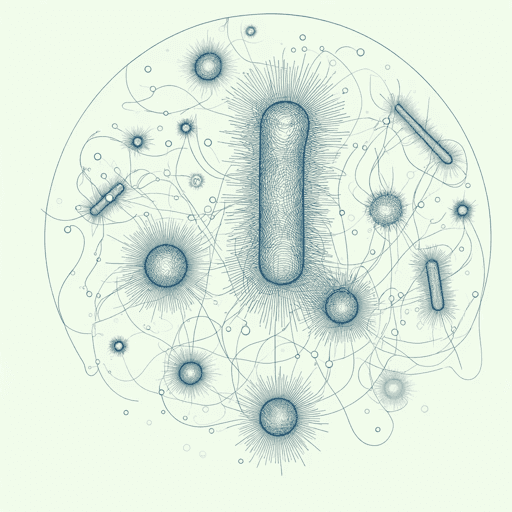
Jack returns home and nurses his sick children after he purposefully gives them the virus that will protect them from the particles. He realizes as he holds Amanda that her rash was from the molecule assemblers, which were transmitted from Julia’s clothes; she had been showering every night because she thought her clothes might be contaminated, a new behavior he had believed was evidence of an affair. The invisible particles were biting Amanda until she got into the MRI machine. When he remembers the white van and the men in the gas masks, he understands that the “vacuum men” Eric had seen were the cleanup crew. They had also left the sensor under Amanda’s crib. Now, instead of thinking that another man had been in the car with Julia, Jack thinks it was a swarm.
The desert lab was destroyed; there were no bodies or even bones. Jack’s ears ring constantly, and he wonders if he is paranoid. He realizes that the swarms always returned to the lab because they’d been programmed that way. He finds an email from Ricky to Julia that reveals they had been planning to release a swarm into the environment. It was intentional; they hoped that the swarm would evolve and solve the wind problem on its own. Jack is devastated by his losses, but he knows that Julia and Ricky were simply acting according to human nature. He worries that humanity will never learn from its mistakes.
Part 4, Chapter 28-31 Analysis
The final four chapters serve largely as a climactic action sequence in which Jack kills the swarms, escapes from the lab, learns what is affecting Julia, and helps inoculate his children. Jack’s approach to humanity results in a somber ending. He is too much of a committed scientist to speak in absolutes, but he has no reason to think that humanity can course-correct. Learning that Julia and Ricky intentionally released the swarm, and that Ricky hid the true code they used to program it, vindicates his beliefs about the most threatening aspects of humanity. Julia and Ricky were smart enough to understand the danger, but they did it anyway, accepting the risks: “It was one thing to release a population of virtual agents inside a computer’s memory to solve a problem. It was another thing to set real agents free in the real world” (362). They hoped their gamble would reward them. Jack mourns his wife as he imagines an appropriate epigraph on the world’s grave: “They didn’t understand what they were doing. I’m afraid that will be the tombstone of the human race” (363).
He knows that he has bought them all some time, but that may be all, given humanity’s propensity for reckless innovation. He is not able to act as bravely as he did in the lab: “I try to keep a brave face for the kids, but of course you can’t fool kids. They know I’m frightened” (361). Jack’s children represent the next generation, both its potential successes and failures. The children in his home are still more advanced than their corollaries from Jack’s generation. The technology that made the swarms possible now exists, and containing it to its most useful purposes will be impossible. Unless humans evolve to disdain greed and haste and instead prioritize scientific rigor over profits and fame, another system may evolve more quickly than people can adapt to it. The human race may find itself prey that is forced to evolve in order to fight its own creations.

Get in-depth, chapter-by-chapter summaries and analysis from our literary experts.
- Grasp challenging concepts with clear, comprehensive explanations
- Revisit key plot points and ideas without rereading the book
- Share impressive insights in classes and book clubs