Ramona and Her Father
Ramona and Her Father
A modern alternative to SparkNotes and CliffsNotes, SuperSummary offers high-quality Study Guides with detailed chapter summaries and analysis of major themes, characters, and more.
Summaries & Analyses
Quizzes
NEWReading Tools
Chapters 6-7Chapter Summaries & Analyses
Chapter 6 Summary: “The Sheep Suit”
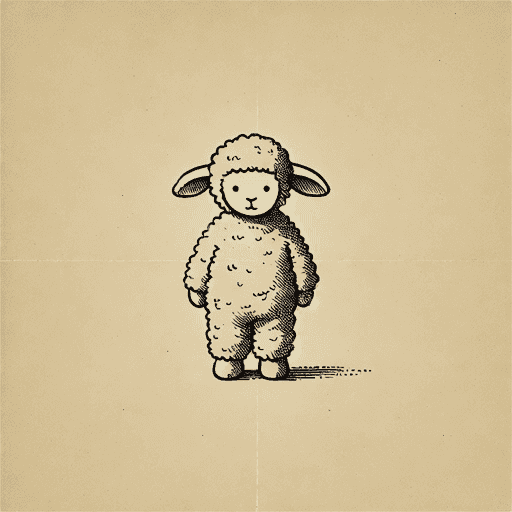
At Sunday school, the teacher announces that it’s time to start preparing for the Christmas concert and Nativity play. Ramona wants to be a part of the Nativity scene for the first time and volunteers to be a sheep. The teacher agrees, as long as Ramona can find someone to make her a costume, and Ramona thinks her mother can do it. Two of Ramona’s friends, Howie and Davy, get to be sheep along with her. Beezus is offered the role of Mary, which she happily accepts. That night, Ramona tells her mother about the play and needing a costume, and while her mother agrees to help, she isn’t sure where she will find the time.
Later on, Ramona overhears her parents talking and her father saying that Mrs. Quimby shouldn’t have agreed to make the suit. He calls Ramona a “spoiled brat” (131). Ramona is visibly upset for the next few days, and when Mr. Quimby finally asks about it, Ramona refuses to tell him. Beezus walks around with a “holier than thou” attitude, and Ramona gets jealous when Howie’s suit is nearly finished and hers is barely started. Later, Ramona finds a sign in her room from her father reading “A Messy Room Is Hazardous to Your Health” (135) and knows it is his way of poking at her for the no smoking signs.
A few days later, Ramona comes home to find the house smelling of cigarettes. She feels like a parent as she lectures her father. Mr. Quimby explains that he only had one and that quitting a habit is difficult. Ramona suddenly feels for her father and tells him she loves him. She then admits that she wishes the family could be happy, and Mr. Quimby replies that they are. He explains that no family is perfect. Ramona considers this and thinks about her family and the ways they help one another. She realizes her father is correct but believes she would be happier still with a sheep costume for the play.
Chapter 7 Summary: “Ramona and the Three Wise Persons”
Christmas approaches, and Mr. Quimby finally finds work at a supermarket. The mood in the household instantly lightens, and everyone seems happier except Ramona. The night of the Christmas play arrives, and Ramona’s mother has only had time to sew some ears and a tail for her costume. Ramona finds it all unfair and announces that she plans not to join the play after all. She pouts in the car on the way to the church, but when the family arrives there, Ramona is briefly taken aback by the light shining through the stained glass window.
In the church, all of the kids go downstairs to get ready for the play. Ramona sits in a corner behind the Christmas tree and continues to sulk, watching as all of the other children get ready and have fun. It occurs to Ramona that nobody seems to understand her, and she doesn’t know why she often misbehaves. After most of the children leave, Ramona notices three girls who come in to do their makeup at the last minute. The boys assigned to be the Three Wise Men decided to forego their duty, and the girls stepped in. Ramona watches as they put their makeup on and asks if she could have a black nose. One girl has mascara and paints a nose on Ramona and tells her she’s adorable. Ramona suddenly feels better and more like a sheep, and she goes out to join the others. On her way, she sees Davy and Howie and tells them where to go to get black noses of their own.
As the children set up for the play, Ramona can’t stop bleating because she’s too overjoyed. As the play unfolds, Ramona watches as her sister acts as gracefully as Mary, and she realizes that Beezus is not so bad after all. Ramona also sees her mother and father, and when her father winks at her, she knows he’s paying attention. Ramona is glad to see her parents proud of her and feels proud of herself, too. She thinks about how this Christmas didn’t turn out exactly as she hoped, but she is still grateful to have a family who loves her. She bleats loudly to express her love for them in return.
Chapters 6-7 Analysis
In the story’s rising action, Ramona volunteers to be a sheep in the church Nativity play for Christmas. It is a clear indication that Ramona is getting older and Discovering One’s Inner Strength. Over the past few months, Ramona has helped her father quit smoking, assisted her sister with a school assignment, and found her own source of inner joy and independence while playing out until dark with Howie. These events have helped Ramona find her confidence and develop a belief in herself. She thinks she is ready to be part of the yearly Nativity scene, which is something she was never old enough to do before. Ramona even comes up with her own idea for a role, although she does this under the assumption that her mother will make a costume for her. Ramona’s confidence is threatened once more when she overhears her father calling her spoiled, and she starts to wonder if she really is that child.
The Support of the Family Unit almost falls apart in the days leading up to Christmas but ultimately gets reinforced through honest communication. Ramona puts unnecessary pressure on her mother to create a sheep costume, and Mrs. Quimby silently accepts it, while Mr. Quimby reacts with irritation and anger. Inevitably, Mrs. Quimby doesn’t have time to finish the costume with her full-time job and taking care of the family, and Ramona is left feeling disappointed. Ramona also continues to deal with the issue of her father’s smoking but comes to an understanding with Mr. Quimby when he explains the difficulties in quitting a habit like smoking. Mr. Quimby’s tone is, for once, unpatronizing and on the level, and “hearing her father speak this way, as if she really was a grown-up” (137) is what helps Ramona feel respected and heard. Ramona doesn’t see herself as a small child anymore, and her father finally starts to pick up on this fact. With this change in the way Ramona and her father communicate, new bridges are built between them, and their relationship returns to its healthy normal. Mr. Quimby also helps Ramona realize an important fact about how support within a family is precisely what makes the happy family Ramona is always wishing for. Rather than thinking of happiness as being problem-free, Ramona starts to see happiness as having support even when there are problems. This new outlook also helps Ramona see her sister in a new way and feel more grateful for her mother’s efforts to make the costume, even if it wasn’t completed in time.
The story’s climax is also its conclusion, with the absence of a denouement or falling action portion of the plot. The night of the play arrives, and Ramona spends the first half of it sulking. In doing so, she starts to dislike the person she sees and looks for a way to change it. By adapting to her situation and finding her “inner sheep” instead of relying on the costume, Ramona finds her inner strength and demonstrates growth as a character. Though Ramona does go through a period of sulking and stubborn refusal to adjust, she eventually sees that it is up to her to make herself feel better. She sits behind the tree, wondering why no adult has come to force her into the play, and realizes that the push she needs must come from within. During the play, Ramona feels pride in herself and from her parents, and she also feels proud of her older sister, whom she previously saw as an adversary. Ramona’s story began with grand wishes of several new pets for Christmas and changed into one of wishing for a happy family. Ramona got her wish in the end, and the smile on her face in the final illustration clearly shows the joy she feels.
Cleary’s choice to use the third-person limited style creates a narrative voice that is both childlike and wise at the same time. She captures both Ramona’s naivety and simplistic ways of thinking while also including additional insight and a certain sageness that makes the chaos of the Quimby world more calm and endurable. Dialogue is also an important aspect of Ramona and Her Father because the story centers on the Quimby family and their complex relationships with one another. The way that Ramona lectures her father about his smoking, for instance, speaks to a certain understanding between them and Mr. Quimby’s long-time relinquishment of some of his power to his daughter.

Get in-depth, chapter-by-chapter summaries and analysis from our literary experts.
- Grasp challenging concepts with clear, comprehensive explanations
- Revisit key plot points and ideas without rereading the book
- Share impressive insights in classes and book clubs