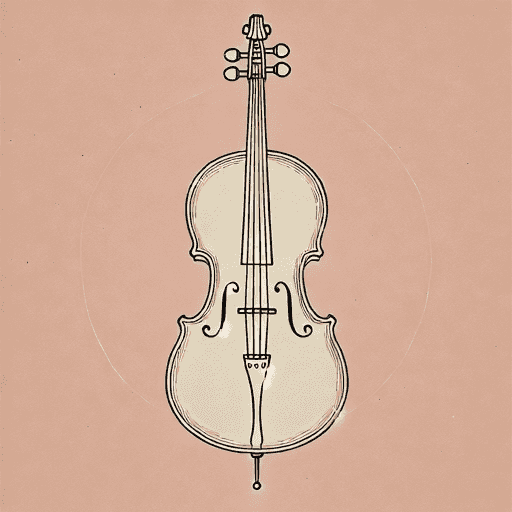
Rooftoppers
56 pages • 1-hour read
Katherine RundellRooftoppers
A modern alternative to SparkNotes and CliffsNotes, SuperSummary offers high-quality Study Guides with detailed chapter summaries and analysis of major themes, characters, and more.
Chapters 1-5Chapter Summaries & Analyses
Chapter 1 Summary
Content Warning: This section of the guide includes discussion of death and gender discrimination.
After the sinking of the Queen Mary in the English Channel, a survivor, Charles Maxim, finds a baby floating in a cello case, her shivering body wrapped for warmth in a Beethoven symphony. The baby has a shy smile and hair the “color of lightning” (2). Judging from a rosette pinned to her clothing bearing the number one, the baby is one year old. There is no trace of her parents or of any other survivors. Charles, who is 36 years old and single, decides to raise her as his own. Naming the child Sophie, he takes her home to his London manse, which is “beautiful” but, like himself, eccentric; it is full of “sharp corners,” spiderwebs, and books. Having always enjoyed books more than human beings, Charles vows to be more personable for Sophie’s sake. Meeting resistance from Miss Eliot, a gray-haired official from the National Childcare Agency, who questions a bachelor’s ability to raise a baby, Charles insists that saving the parentless Sophie from the sea has given him the sole responsibility of caring for her. He says that he loves her and that, judging from the poetry he’s read, that “should be enough” (7). The prim, skeptical Miss Eliot tells Charles that his guardianship of the baby is a “temporary arrangement.”
Chapter 2 Summary
Charles Maxim, as noted in the files of the National Childcare Agency, is tall, bookish, generous, and awkward. By Sophie’s seventh birthday, she has absorbed these traits from him. Since she tends to break dishes, Charles lets her eat off of books, which he has in abundance. Charles inherited most of his possessions from his father, including his house and his wardrobe. He is a solemn insomniac who seldom eats or smiles, but he has a “pitch-perfect” singing voice, especially when he sings to Sophie, who adores him. Miss Eliot, however, scowls at his unstructured parenting style, especially his lack of a sensible routine for feeding and schooling a child. She finds it unusual that Sophie wears boys’ trousers instead of dresses. Defending this habit, Sophie asserts that her mother, whom she lost at age one, wore trousers and played the cello, which Miss Eliot denies, claiming that “[w]omen do not play the cello” (14). Sophie clings to a vivid memory of seeing her mother’s “cloth-covered” legs kicking rapturously to music. Miss Eliot tells Sophie that no women survived the shipwreck. Sophie’s instincts tell her that the cello case she was found in was her mother’s and that her mother is still alive. Charles says, “Never ignore a possible” (16).
Chapter 3 Summary
Charles shows his obliviousness to women’s fashion by outfitting Sophie in men’s shirts. Miss Eliot notes that boys’ and men’s shirts all button on the right, not on the left like girls’ and women’s shirts. Charles counters that Sophie has read many books and has a world of knowledge far more relevant than “buttons.” Miss Eliot says that though Sophie is still a child, his negligent “training” of her can’t go on forever.
On Sophie’s ninth birthday, Charles surprises her with tickets to a concert hall to hear classical music. She hides her disappointment, preferring music that she can “dance” to, but once the string section (three violins, a cello, and a viola) start, her legs twitch with excitement, like her mother’s in her hazy memories. The cello, she gushes to Charles, “sings,” giving her tingles that feel eerily “familiar.” Delighted, Charles rushes out to buy her a cello. Since its size makes it awkward for playing in her bedroom, Sophie habitually climbs out on the roof to practice. A good practice session soothes her, and being up high is comforting. Ever since childhood, she has loved to climb. Charles has encouraged this hobby, saying, “Only weak thinkers do not love the sky” (26).
Chapter 4 Summary
Charles does not encourage one of Sophie’s fondest beliefs: that her mother was a cellist on the Queen Mary. Always a truthful person, he casts doubt, sadly telling her that he remembers the band on the Queen Mary and that they were all men with mustaches. Sophie insists on a memory of her mother playing a cello, perhaps just before the shipwreck. She has kept the cello case that was her lifeboat safe, partly so that her mother can identify her when she returns. Every night, she goes “mother-watching,” sitting at her window and watching the people pass in the street below. On the eve of her 11th birthday, she tries to draw a portrait of her mother in her sketchbook. The details are all guesswork: Her memories of her mother are little more than a “blur.” Pinching blood from her finger, she colors the picture to make it more lifelike. Mothers, she believes, “are a thing you need, like air” (32).
Chapter 5 Summary
On Sophie’s 12th birthday, Charles gives her a set of beautiful books, each one bound in leather of a different color. Afterward, they test Charles’s theory that the best place to eat ice cream is on the outside box of a horsedrawn coach in the rain. When they return, they find a letter waiting for them, and Sophie feels all her happiness drain. The letter is from the National Childcare Agency, which has doubts about Charles’s ability to raise a mature child. The agency is sending two inspectors to assess the household. Sophie and Charles rush to get their unkempt house into order, and Sophie tries to tame her hair. When the inspectors arrive, they ask why Sophie is not in school. One of them is Martin Eliot, Miss Eliot’s brother. The other, a woman, has the levity of a “damp sock.” Neither is appeased by Charles’s homeschooling, by the messages that he and Sophie have written on the walls to each other, or by Sophie’s drawers of rumpled clothes, which include mud-stained trousers. After they leave, Charles tells Sophie to prepare herself for the worst: If the agency rules against his guardianship, she’ll be put in an orphanage run by the state. Sophie, noting that “the state can’t love anyone” (46), asks if they can simply run away. Charles tells her that the Eliots of the world would come after them.
Several days later, an official letter ends their suspense. Citing the committee’s “unanimous” decision that Sophie’s upbringing has been “absolutely unsuitable,” it pronounces her transfer to the custody of the state, St. Catherine’s Orphanage, starting on June 5. Noncompliance by Charles will result in a prison sentence of a maximum of 15 years. In tears, Sophie runs to her bedroom and takes out her rage on the cello case she was found in, smashing it into pieces with a fire poker. Concealed under the baize lining of the case is a small, bronze plaque identifying the shop where the cello was made. Sophie and Charles are amazed to read the address: Rue Charlemagne, in Paris’s Le Marais neighborhood. This is their very first clue to her possible origins. Sophie begs Charles to take her to Paris to look for her mother, to which he heartily agrees. He says that they must leave the next day, before the London authorities decide to put them under surveillance.
Chapters 1-5 Analysis
The first lines of Rooftoppers, describing the rescue of a baby from a floating cello case a mile from a shipwreck, prepare the reader for a fantastical narrative. The whimsical details of this maritime disaster, such as a passenger shriek “duet[ing] with a high C,” are the stuff of fairy tales—not tragedy or strict realism—and the baby’s “lightning-colored hair” signals her uncanny past and destiny (2). This initial scene also foreshadows Sophie’s resourcefulness and ability to survive against impossible odds, qualities that will shape her journey throughout the novel. Another sign of the uncanny are her memories of her lost mother, improbably vivid for a one-year-old. These memories set Sophie apart from her peers: Her mother, she insists, wore men’s trousers and played the cello. This is impossible to Miss Eliot, a “childcare agent” and stand-in for the wicked stepmother of fairy tales.
Miss Eliot, whose voice is compared to “a window slamming shut” (14), emerges as the novel’s first obstacle to Sophie’s quest for her mother: Not only does she insist that Sophie’s mother is dead, but she also coldly dismisses Sophie’s memories of her as infantile fantasies. A joyless proxy for Victorian rectitude and narrowmindedness, Miss Eliot enforces her era’s gender norms and stereotypes, as when she lectures Sophie about blouses and shirts: “Blouses […] button right over left. I am shocked that you don’t know that” (19). Miss Eliot seeks to “button” Sophie into conformity while slamming shut every window into her mysterious past. This, she implies, is essential to Sophie’s future as a respectable Victorian lady. This dynamic reflects the theme of The Courage to Defy Norms, as Sophie instinctively resists Miss Eliot’s rigid expectations of gender roles and behavior. Sophie’s resistance is not merely rebellious but deeply tied to her sense of identity, inherited from her mother and nourished by Charles’s encouragement of curiosity and freedom. To Sophie, her past is her future, and she finds in her own eccentricities (pale skin, unmanageable hair, and a taste for trousers and cello music) a legacy and link to her mother, who was “beautiful” in the strange, rarified way of “cool air and soot” (13). Finding her mother, she believes, will open a portal into her own identity and future. Thus, she clings passionately to a dreamlike memory of her mother surviving the wreck of the Queen Mary, believing completely in the truth of it.
Luckily, Sophie was rescued from the sea by a kindred spirit, the scholar Charles Maxim, who saw in her a luminous spark of himself. He is also a survivor of the Queen Mary—a jerry-rigged vessel of dreamy impracticality that ran aground on the shoals of cold reality, doomed partly by the heavenly music of the ship’s band, which lulled its passengers and crew into languor. Charles’s love of music and literature positions him as a rare adult ally in children’s literature: a guardian who fosters imagination rather than stifling it. Charles has always felt oddly out of step with the practical, workaday world, the societal norms, fashions, and timetables of which hold much less savor for him than a book or a piano sonata. For Sophie, having such a kindred spirit is essential, offering her both the freedom to dream and the grounding presence of someone who truly believes in her potential.
Though Charles sometimes lightly pushes back at Sophie’s dreams of finding her cellist mother, his philosophy has always valued the improbable and “extraordinary” over the “boring or ugly”: “Never ignore a possible” (35). As such, he instinctively nurtures Sophie’s renegade spirit, encouraging her to defy Victorian norms and embrace her eccentricities. As a foundling (an infant lost or abandoned by their parents and raised by others), Sophie holds secrets and hidden talents that can emerge only in the fullness of time, and Charles is careful not to stifle her in any way. This guidance speaks directly to the theme of The Link Between Place and Self-Discovery, as Sophie must leave restrictive England to uncover her truest self.
Further, when Sophie hears ecstatic “singing” in the chords of a cello, Charles rushes out to buy her a cello of her own, though Victorian propriety insists that cellos are only for men. The Power of Music to Forge Human Connections also emerges in these early chapters, as Sophie associates the cello with the primal love of her long-lost mother. Music becomes a bridge between past and present, between loss and hope, and ultimately between Sophie and her future. Her rooftop cello playing visually reinforces this theme, as the rooftop is both a literal and symbolic threshold between earth and sky, childhood and adulthood, and isolation and connection.
Right on the heels of this clue to her past, Charles’s sudden loss of custodianship—the novel’s first crisis—upends both of their lives. As Sophie observes, “The state can’t love anyone” (46). Far from gaining a mother, she now stands to lose her father figure. However, Sophie’s angry reaction leads her, almost magically, to the first material clue to her origins: a brass plaque hidden in her cello case/lifeboat by its maker. Its Parisian address marks the first “X” on the treasure map of her self-discovery, and fittingly, it is violence (the smashing of her cello case) that reveals it. Over the course of Rooftoppers, bold, transgressive, “unladylike” actions—daredevilry, trespassing, lockpicking, and hand-to-hand violence—prove fundamental to Sophie’s quest for identity. Ironically, her violent flouting of the societal barriers that seek to contain her transpires in an upper realm, rooftopping, that is mostly unnoticed by the authorities—unfolding in darkness and above the watchdogs of society.
Ultimately, these early chapters establish Rooftoppers as a celebration of liminality—of characters who live between worlds, balancing fantasy and reality, childhood and adulthood, land and sea, and roof and street. Sophie’s journey will require her to claim agency in a world eager to silence her, but her imagination, courage, and defiance of convention will prove to be her greatest strengths. The cello case that first saved her life becomes a powerful symbol of this in-between space: part vessel, part coffin, and part cradle. Just as it once floated her to safety, it now guides her toward the truth about herself and her mother. The novel invites the reader to consider that the impossible often belongs to those brave enough to act on a dream.

Unlock all 56 pages of this Study Guide
Get in-depth, chapter-by-chapter summaries and analysis from our literary experts.
- Grasp challenging concepts with clear, comprehensive explanations
- Revisit key plot points and ideas without rereading the book
- Share impressive insights in classes and book clubs