Rooftoppers
56 pages • 1-hour read
Katherine RundellRooftoppers
A modern alternative to SparkNotes and CliffsNotes, SuperSummary offers high-quality Study Guides with detailed chapter summaries and analysis of major themes, characters, and more.
Important Quotes
Content Warning: This section of the guide includes discussion of gender discrimination.
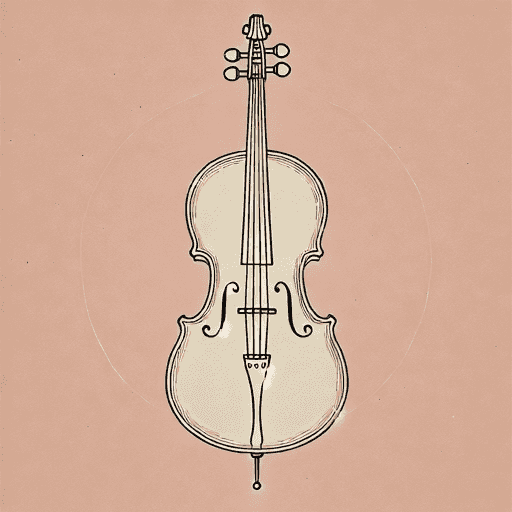
“On the morning of its first birthday, a baby was found floating in a cello case in the middle of the English Channel.”
(Chapter 1, Page 1)
The book’s first line, describing the protagonist’s rescue after a shipwreck, frames the novel as a foundling story: one that follows the life of a character who is found as a baby and whose origins are therefore a mystery. These stories are typically odysseys of self-discovery, where the protagonists search for clues to their parentage. In Rooftoppers, the first (and most important) of these clues is the cello case that serves as Sophie’s lifeboat. This quote highlights The Link Between Place and Self-Discovery by introducing Sophie’s journey of self-discovery, which will be shaped by her connection to music, memory, and place.
“Give those things a narrow aristocratic face with hooked eyebrows, and long arms and legs, and that is what the baby saw as she was lifted out of her cello case and up into safety.”
(Chapter 1, Page 2)
In his first appearance, Charles Maxim, Sophie’s rescuer and guardian, shows his innate eccentricity in his looks, e.g., his refined, underfed face with its ever-quizzical eyebrows. His lifting of Sophie out of danger forges a link in her mind between heights and safety, an unusual association that will prove important.
“Miss Eliot would look around the house, which was peeling at the corners, and at the spiderwebs in the empty larder, and she would shake her head.”
(Chapter 2, Page 11)
The dour, unimaginative Miss Eliot embodies a character type common to the Victorian age, one to whom organization, efficiency, and conformity are the soul of life. A believer in “a place for everything and everything in its place,” she has no patience for clutter or for coloring outside the lines. Her prim disapproval of Charles, her exact opposite, augurs trouble for the household. At the same time, this sentence gives Miss Eliot’s practicality its due: It’s not unreasonable for a childcare agent to expect a child’s guardian to have food in his larder. Hence, Miss Eliot is not altogether a loveless monster, just a bureaucrat lacking generosity of spirit and flexibility of mind.
“Sophie did remember her mother, in fact, clear and sharp. She did not remember a father, but she remembered a swirl of hair, and two thin cloth-covered legs kicking to the beat of wonderful music, and that wouldn’t have been possible if the legs had been covered in skirt.”
(Chapter 2, Page 15)
Though Sophie was separated from her mother at the age of one, she retains some vivid impressions of her, which have created ripples in her tastes and self-image. For instance, she takes pride in her pale skin and messy hair, which she thinks are like her mother’s, and she prefers boys’ trousers to dresses because of a faint memory of her mother’s trousered legs. As later events reveal, her mother did indeed wear men’s clothes to disguise herself as a male cellist. This moment connects to The Courage to Defy Norms, as Sophie’s memory of her mother inspires her to resist gender expectations in clothing and behavior.
“Boys’ shirts button left over right. Blouses—please note, the word is ‘blouses’—button right over left. I am shocked that you don’t know that.”
(Chapter 3, Page 19)
With her lecture on the difference between a blouse and a boy’s shirt, Miss Eliot shows her propensity to be “shocked” by trivial things. The importance that she assigns to this arbitrary sartorial difference—the side the buttons are on—satirizes Victorian rectitude and the bleak division it draws between male and female roles. Later in the book, Sophie, her mother, and the rooftoppers all show that gender roles (and fashions) can be much more fluid. Miss Eliot’s lecture also looks ahead to Sophie’s revelation about the Queen Mary’s cellist, whose shirt buttons are on the “wrong” side.
“Sophie’s legs wouldn’t stay still. She knelt up on her seat. After a moment, she risked a whisper. ‘Charles! Listen! The cello sings, Charles!’”
(Chapter 3, Page 25)
At a concert, Sophie’s restless legs reprise her lost mother’s “kicking to the beat” of music (15). The cello, the tones of which are often said to resemble a human voice, sounds “familiar” to her, sparking more memories—perhaps of her mother, who, in the book’s last scene, sings while playing the cello. This scene introduces the theme of The Power of Music to Forge Human Connections, as the cello awakens Sophie’s earliest memories of love and belonging.
“When they returned, streaming with water and stuffed with ice cream, there was a letter on the doormat. One look at the envelope made Sophie certain it was not a birthday card. All the happiness went out of her in a whoosh.”
(Chapter 5, Page 36)
Sophie and Charles receive the letter they have been dreading, a notice from the National Childcare Agency questioning Charles’s ability to raise Sophie as a “lady.” Sophie’s happiness with Charles is a matter of indifference to the Agency, which (in its next missive) does not even bother to get her name right. The Agency’s consequent decision to put Sophie in an orphanage is the crisis that impels Charles and Sophie to flee the country, setting the plot in motion.
“Under the green baize, there was a brass plaque nailed to the wood. […] On the plaque was an address. It was not in English.”
(Chapter 5, Page 54)
The cello case that kept the infant Sophie afloat also contains a clue to her origins, hidden under its baize lining. The Parisian address of the shop where the cello was made gives Sophie and Charles, who must flee England, a destination. The timing of this discovery is auspicious: If Sophie can find her mother, she may yet stay out of the orphanage, and Charles may stay out of jail. The discovery of the Paris address signals the link between place and self-discovery, as Sophie’s search for her origins becomes tied to a specific place.
“High up above the Seine, thirty feet up in the air, a pair of brown eyes was watching the street below. They watched a buggy pull up to the Hotel Bost, and a girl clamber out.”
(Chapter 7, Page 72)
As Sophie arrives in Paris, a mysterious figure catches sight of her from a rooftop or bridge. It is probably the rooftopper Matteo, who later tells her that he spied on her and Charles while they were talking in the street, which is how he knew their names. As he tells Sophie, he watches “everybody,” which makes him ideally placed to help Sophie in her search for her mother.
“Mr. Lille flushed. ‘I meant, she was peculiar in musical terms. She played funeral marches in double time. She played Fauré’s Requiem without the necessary dignity.’”
(Chapter 9, Pages 84-85)
At the Parisian music shop, the assistant Mr. Lille shows himself to be as narrowminded as Miss Eliot, but in a different way: Instead of disdaining “unladylike” behavior or modes of dress, Mr. Lille has straitlaced views about how certain musical pieces should be played. Victorian prudery exists on both sides of the English Channel, making eccentrics like Sophie and her mother, who march to the beat of a different drum, a distinct minority— not unlike the rooftoppers. This highlights the theme of the courage to defy norms, as Vivienne’s unconventional music mirrors her bold, rule-breaking life.
“‘There are thousands and thousands of things we have not believed that have turned out to be true,’ said Charles. ‘One should not ignore the smallest glimmer of possibility.’”
(Chapter 10, Page 94)
A refrain of Rooftoppers, Charles’s dictum that one should not dismiss the improbable evokes the heady ferment of new ideas and technological breakthroughs of the Victorian period, including the theory of evolution, medical advances, social reforms, and many other innovations. Though it was a notoriously pragmatic and conformist era, it was also a time of wide experimentation and bold daring. Sophie brings some of this mold-breaking audacity to her search for her mother, venturing far out of her (and her guardian’s) comfort zone to pursue the improbable. Charles’s belief in possibilities reflects the courage to defy norms, modeling an openness to wonder that Sophie will emulate.
“Top hats looked much less stupid, she thought, seen from a rooftop. And from up here, she thought, the streets looked like rivers. The river itself was quicksilver in the moonlight.”
(Chapter 11, Page 105)
Viewing the world from above gives Sophie an entirely different, and richer, perspective, literally giving her a new angle on everyday things and revealing hidden facets. Not only do some things appear to be more beautiful when seen from the rooftops, but a secret music and flow also reveal themselves, a sense of the city as an organic being. Sophie would probably never have found her mother if she had searched only at street level. this quote reflects the link between place and self-discovery, as Sophie’s rooftop experiences transform how she sees the world and herself.
“Mud and soot were scattered across the carpet. And there was a boy standing at the foot of her bed.”
(Chapter 12, Page 108)
In his first meeting with Sophie, Matteo slips into her room one night almost like a supernatural being, a flightless Peter Pan. Like Pan and the Lost Boys, Matteo and his “rooftopper” companions have forsaken the responsible, earthbound world for a freewheeling, fugitive existence in the air, where they partake of secret knowledge and the intensity of a life literally on the edge. Sophie, like Wendy, feels drawn to their exhilarating world, but not enough to live there full-time. The novel’s many mentions of “soot” also allude to another fantastical tale, that of Cinderella, a much-underestimated, ash-covered heroine who embarks on her own, daring quest of self-discovery.
“‘I can’t stay off the roofs,’ said Sophie. ‘I need them. […] I feel like I’ve been here before,’ she said. ‘I think they might be a clue.’”
(Chapter 12, Page 112)
Refusing Matteo’s order to stay off the rooftops—“his” domain—Sophie insists that they could lead her to her mother. Her faint sense memories from infanthood suggest that her mother may have taken her onto the roofs, which proves to be correct.
“‘I’m not saying that’s what happened. But it’s possible.’ […] ‘And never ignore a possible?’ […] ‘Precisely.’”
(Chapter 14, Page 124)
Charles deduces that if the sinking of the Queen Mary was part of an insurance scam, the passenger records may be hidden in the police archives. This chain of logic, however improbable, leads them to the address of Sophie’s mother. Charles’s dictum of never ignoring a “possible” yields paydirt once again. His use of the stylized noun “possible” (instead of “possibility”) evokes his eccentric perspective, which in Rooftoppers proves to be the more farseeing one.
“I never go on the ground. Not for years. You can’t get trapped on a rooftop.”
(Chapter 16, Page 139)
Matteo, an escapee from a prisonlike orphanage, knows the dangers of confined spaces, whether within walls or city streets. Life on the rooftops, though fraught with cold, rain, and hunger, represents freedom to him, just as it soon does to Sophie, who’s also threatened with captivity in an orphanage.
“The wind was high, and across the road, a shadow was swinging by its knees from the top of the lamppost.”
(Page 141)
Roof jumping with Matteo toward Paris’s edifices of officialdom, Sophie has her first glimpse of another “rooftopper”: a shadowlike, female figure who shares Matteo’s fearless athleticism. Matteo’s quick denial of her existence hints at a secret community of rooftoppers, one that he does not yet trust Sophie enough to share with her.
“By standing or squatting on different parts of the rooftop, she could hear snatches of conversation and snippets of music from half a mile away.”
(Chapter 18, Page 170)
Sophie learns how Paris reveals its secrets to the rooftoppers by sound as well as sight. This is a vital plot point since her mother’s cello music, traceable only at roof level, ultimately reunites mother and daughter. This moment ties to the power of music to forge human connections, as Sophie’s ability to hear music and voices from the rooftops guides her search for her mother.
“She tore to the far edge of the rooftop and stood on the tips of her toes, straining to hear. My mother, she thought. I am hearing my mother. The thought shook her to her bones.”
(Chapter 19, Page 192)
On the roof of Paris’s law court, Sophie picks up a gust of music from somewhere in the city: Fauré’s Requiem played in double time, just as her mother used to play it. Though she cannot yet trace it to its source, it tells her that her mother still lives in the city.
“The dark-haired girl had the face of someone who had seen a lot, and wouldn’t mind punching most of it. She wore a boy’s shirt and a man’s pair of trousers, held up at the waist with measuring tape tied in a knot.”
(Chapter 20, Page 199)
In a park after sunset, Sophie finally meets two of Matteo’s rooftopping companions: blonde Anastasia and dark-haired Safi. Toughened, like Matteo, by a turbulent childhood, Safi would never meet Miss Eliot’s definition of “ladylike.” Like Sophie (and, as it turns out, her mother), she wears trousers instead of a skirt. Safi’s appearance and toughness align with the theme of the courage to defy norms, challenging assumptions about gender and strength.
“Adults are taught not to believe anything unless it is boring or ugly. […] It is difficult to believe extraordinary things. It’s a talent you have, Sophie. Don’t lose it.”
(Chapter 25, Page 243)
Charles articulates one of the book’s themes: that adults have, through the process of growing up and conforming to societal pressures, lost much of their sense of wonder and faith—their openness to the world’s many possibilities and enchantments. Charles, still a child at heart, has raised Sophie to believe in the extraordinary, despite the disapproval of people like Miss Eliot. Sophie’s mother, it seems, has preserved within herself this childlike optimism as well. It is this, symbolized by the cello music, that allows mother and daughter to find each other after more than 11 years.
“‘It’s a man,’ she said again. […] ‘It’s odd, though. Because George Greene looks very much like you,’ said a voice.”
(Chapter 26, Page 253)
Sophie has found a photo of the Queen Mary’s band, whose sole cellist appears to be male. A mysterious voice, however, points out the cellist’s resemblance to Sophie; this turns out to be Safi, who has never spoken to her before. The bilingual Safi undoubtedly knows that vert (the last name of Sophie’s mother) is the French word for “green.” Safi’s revelation about the photo seems to have emboldened her power of speech, revealing her wisdom. As Anastasia tells the gariers a little later, children, girls, and women should not be “underestimated,” certainly not the silently wise Safi or the talented Vivienne.
“He saw the three girls standing, unblinking, in the night air. Two unconscious boys lay at their feet. Sophie whispered, ‘Do not mess with a mother-hunter. Do not mess with rooftoppers.’ She whispered, ‘Do not underestimate children. Do not underestimate girls.’”
(Chapter 28, Page 266)
Sophie, Anastasia, and Safi have come to the rescue of the rooftopper boys, fighting off the truculent gariers, who did not expect such resistance from girls. Triumphantly, Sophie paraphrases what Charles told the corrupt clerk at the police headquarters: “You underestimate children. You underestimate girls” (98). In Rooftoppers, the Victorian era’s sentimental condescension toward children and women serves as a double-edged sword, both obstacle and secret weapon. This line reflects the courage to defy norms, as Sophie and the girls overturn gender expectations by defeating the gariers.
“When her arm ached too much to keep bowing, she stopped. Matteo clapped. Charles whistled. Safi and Anastasia whooped. The stars stopped spinning. […] The music, though, kept going.”
(Chapter 29, Page 269)
When Sophie stops playing the Requiem, the music soars on, echolike, from a nearby roof. In a sense, Sophie is the echo—having finally returned, after more than 11 years, to her source (her mother). The music continuing after Sophie stops playing symbolizes the power of music to forge human connections, as it bridges the distance between her and her mother.
“The music must have stopped, Charles knew, because the cello was lying on the rooftop, forgotten, but there seemed to be music still playing, somewhere, faster and faster, double time.”
(Chapter 31, Page 277)
After mother and daughter embrace, “like one single laughing body” (277), Charles still seems to hear their music. This could be Sophie and Vivienne’s laughter, their voices, or their dancing footfalls as they whirl in each other’s arms—or possibly the music of Charles’s own happiness—in “double time” because the two have finally found each other after so much time apart.

Unlock every key quote and its meaning
Get 25 quotes with page numbers and clear analysis to help you reference, write, and discuss with confidence.
- Cite quotes accurately with exact page numbers
- Understand what each quote really means
- Strengthen your analysis in essays or discussions