Selecting a Reader
Selecting a Reader
A modern alternative to SparkNotes and CliffsNotes, SuperSummary offers high-quality Study Guides with detailed chapter summaries and analysis of major themes, characters, and more.
Summaries & Analyses
Quizzes
NEWReading Tools
Background
Literary Context
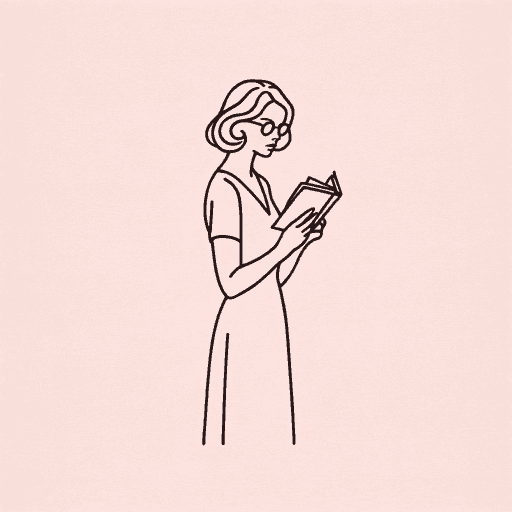
“Selecting a Reader” illustrates Ted Kooser’s participation in a movement that aims to demystify poetry. Along with other American poets like Billy Collins and Dana Gioia, Kooser writes poems for people who are not academics nor poets themselves. “Selecting a Reader” demonstrates Kooser’s awareness of how small space poetry actually occupies in American culture. He knocks poetry off its pedestal, as his speaker imagines the woman placing the book back on the shelf and choosing a clean raincoat over a book of poems.
In an interview with Reunion, Kooser notes that many poets “think more about expressing themselves than inviting readers into what one writes” ("Drawn to the Ordinary World: An Interview with Former U.S. Poet Laureate Ted Kooser." Reunion, 2006). As with Collins and Gioia, Kooser practices a poetics that prioritizes self-expression that recenters the reader. Whereas modernist poets like Wallace Stevens (1879-1955) and postmodern poets like John Ashbery (1927-2017) create dense, code-like poems, Kooser strives to produce simple work that does not require a guide or an advanced degree.
Kooser’s poem is a part of a larger canon of poems created from images of disparate women. In “Selecting a Reader,” Kooser presents a crisp and sharp picture of the woman character, describing her damp hair, her raincoat, and her financial strain. Many other canonized poets take inspiration from imperfect women. William Carlos Williams’s “To a Poor Old Woman” (c. 1935) describes an elderly lady eating a delicious plum out of a paper bag on the street. In Allen Ginsberg’s long poem Kaddish (1957-1959), the poet presents a disquieting image of his mother on her bed by calling attention to her physical scars.
Historical Context
In the 1980s in America, many factories and industries that employed people in Midwestern states downsized, shut down, and went overseas where labor and production costs were less expensive. As a poet firmly rooted in Midwest life and culture, Kooser’s selected reader of this poem represents this historical moment. Her disheveled appearance and her financial struggles speak to the upheaval in the Midwest during the time at which Kooser wrote this poem, in 1980. The reader is a representative of a region that is less vibrant and prosperous than it was at the start of the 1900s. Near the end of the 20th-century, the entire region of the American Midwest, like the speaker’s reader, is struggling to make ends meet.
“Selecting a Reader” also ties into Kooser’s personal history and his openness in his interest in women. In a 2018 interview with The Ames Tribune, “Spinning tires and revving engines,” Kooser admits that one of the reasons why he joined the Nightcrawlers was “to meet girls.” As an adult, Kooser remains preoccupied with women. With his wife’s permission, he wrote poems as valentines to over 2,500 women and published some of the poems in a book called Valentines. Reviewing the collection in The New York Times, “Be Mine, Mine, Mine” (2008), Emily Nussbaum calls the collection “more than a little problematic” for its emphasis on gender norms and Kooser’s male gaze.

Get in-depth, chapter-by-chapter summaries and analysis from our literary experts.
- Grasp challenging concepts with clear, comprehensive explanations
- Revisit key plot points and ideas without rereading the book
- Share impressive insights in classes and book clubs