Sinners Anonymous
58 pages • 1-hour read
Somme SketcherSinners Anonymous
A modern alternative to SparkNotes and CliffsNotes, SuperSummary offers high-quality Study Guides with detailed chapter summaries and analysis of major themes, characters, and more.
Important Quotes
Content Warning: This section of the guide contains discussion of graphic violence, emotional abuse, death, and sexual content.
“My father always said my temper was different from my brothers. Their anger burns slow like a candle and is easy to extinguish, whereas mine is like a firework. Light my fuse and I explode mere seconds later, with no thought to the irreparable damage I will cause.”
(Prologue, Page xi)
In this internal monologue, Angelo’s character is defined through a simile comparing his anger to a firework. This establishes his capacity for sudden, destructive violence, which often drives the narrative forward. The quote provides the origin of his nickname, “Vicious,” framing this trait as an inherited part of his identity. It also foreshadows the lengths he will go to later to defend Rory, creating an underlying tension throughout the narrative.
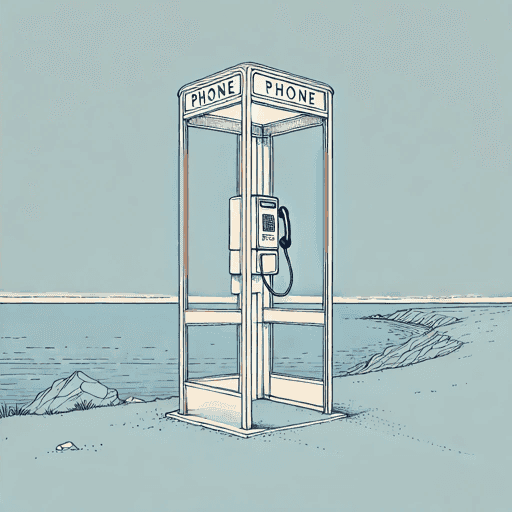
“‘My name is Rory Carter and I do bad things.’ The wind snatches the words from my lips, carrying them away from the cliff edge and over the choppy sea. I like to do that sometimes. Say it aloud when I’m alone just to see how the truth tastes.”
(Chapter 1, Page 1)
Rory’s introduction establishes her central internal conflict and self-perception as a sinner, linking her to the theme of The Corrupting Nature of Power and Relativity of Morality. Her private confession into the wind is a ritual that underscores her guilt and her need for release. This act portrays confession as a personal and psychological necessity that offers her a sense of control and agency amid her tumultuous circumstances. However, the scene creates irony in that she perceives herself as a sinner despite often being surrounded by violent criminals.
“‘The head of the table is for the underboss and the consigliere,’ he growls quietly […] ‘Not my father’s plaything.’”
(Chapter 2, Page 7)
Spoken by Dante at a family dinner, this quote encapsulates how Rory is perceived within the Visconti’s patriarchal structure. The term “plaything” objectifies Rory, reducing her identity to a temporary amusement for the capo and denying her legitimacy or agency. This line directly confronts the theme of The Negotiation of Agency in a Patriarchal World, highlighting the dismissive hostility Rory must navigate.
“Pearl by pearl, Vittoria’s necklace unfurls from my bra and into his hand. Despite the panic starting to seep through my veins, I can’t ignore how each cold bead grazes past my nipple as he slowly pulls.”
(Chapter 5, Page 38)
This moment reveals multiple layers of the developing dynamic between Rory and Angelo. It exposes Rory’s secret rebellion through theft, showcases Angelo’s unnerving perceptiveness, and introduces an unwanted erotic tension into their conflict. The sensory detail of the cold pearls against her skin illustrates the dangerous and confusing attraction that complicates their power struggle.
“There’s a glint in his right hand. Then the bang is too loud. The smell of gunpowder too strong, and the taste of blood splatter on my lips too tangy.”
(Chapter 7, Page 64)
Describing Angelo’s murder of Max, this passage employs stark sensory details—sight, sound, smell, and taste—to convey the shocking reality of sudden violence. The visceral description, focusing on Rory’s physical experience of the event, emphasizes the brutal finality of mafia justice. While these experiences may be more common among the Viscontis, Rory is completely new to them, and this puts her in a state of shock. This act solidifies Angelo’s “Vicious” reputation and shatters any illusions about the world Rory has entered.
“‘Yeah, you’ve probably seen the cards around.’ Please god, no. ‘It’s called Sinners Anonymous.’”
(Chapter 7, Page 66)
This exchange marks a major turning point, confirming that the hotline Rory uses for anonymous confession is run by the Visconti brothers. The revelation fully realizes the theme of Confession as a Mechanism for Power and Control, transforming Rory’s perceived safe space into an instrument of surveillance. Her vulnerability is now completely exposed to the men who hold power over her life.
“Among all the candles, robes, and dusty stacks of Bibles, our father told us that from then on, on the last Sunday of every month, we’d have to decide which was the worst confession we’d heard. And then we had to do something about it.”
(Chapter 8, Page 68)
This flashback explains the origin of the Sinners Anonymous “game,” grounding the brothers’ twisted vigilantism in their childhood experiences. By subverting the sacrament of confession into a tool for judgment and punishment, their father established a corrupt moral framework for his sons. This passage is crucial to understanding how their concept of justice was formed, directly supporting the theme of The Corrupting Nature of Power and Relativity of Morality.
“‘Tell me a sin, Aurora,’ he drawls. His tone drips in syrup, thick enough to drown in.”
(Chapter 10, Page 90)
In this exchange, Angelo reframes confession from a spiritual release to a transaction for his silence, establishing their new power dynamic. The metaphor comparing his tone to syrup “thick enough to drown in” characterizes their interaction as simultaneously seductive and dangerous. This moment directly plays on the submissive nature of confession, wherein one conveys their sin to a higher power for absolution.
“I am not Vicious anymore.”
(Chapter 11, Page 93)
This short, declarative sentence from Angelo’s internal monologue serves as an instance of dramatic irony. He asserts his reformed character immediately after indulging in violent, possessive thoughts about Rory. The statement functions as a denial, highlighting the conflict between the man he wants to be and the violent nature he struggles to suppress.
“‘Remember when she let Spencer and his crew run a train on her?’[…] Their whispers continue but I can’t hear them any longer over the blood thumping in my temples. […] So much so, that I slip my hand in the pocket of my slacks and curl it into a fist.”
(Chapter 12, Pages 108-109)
This passage reveals the brutal misogyny of the novel’s world, where a woman’s worth is tied to her sexual reputation. The Viscontis believe a rumor that actually hides the truth—that a group of men tried to sexually assault Rory—and assert that, had she had sex with many men, this would devalue her as a person. The overheard rumor triggers a visceral, physical reaction in Angelo, described by the internal sensation of “blood thumping in my temples” and the external action of clenching his fist. This response demonstrates a violent possessiveness rooted not in respect for Rory, but in a sense of territorial pride, foreshadowing his later violent acts.
“‘You want to burn this fucking coast down, I’ll lend you my lighter. But please, for the love of God, don’t make me go to war with our cousins over a piece of pussy.’”
(Chapter 14, Page 125)
Delivered by his brother Rafe, this line succinctly defines the stakes of Angelo’s developing feelings for Rory. The first sentence establishes Rafe’s absolute loyalty, while the second bluntly frames Rory as a sexual commodity whose value is measured by her potential to incite a war between families. This juxtaposition underscores the importance of family loyalty in this environment and the precariousness of female agency in a world where women are seen as property.
“Christ himself doesn’t have as much restraint as me.”
(Chapter 19, Page 169)
This line from Angelo’s internal monologue reveals the immense strain Rory has placed on his self-control. The use of religious hyperbole, comparing his struggle to a divine trial, elevates the temptation she represents to a mythic, almost spiritual level of conflict. It effectively illustrates the internal battle between his carefully constructed, “reformed” identity and the “Vicious” nature she provokes.
“The waves roll back in, lazily lapping over the line and melting it away.”
(Chapter 21, Page 188)
This image serves as a visual metaphor for the inevitable failure of the boundaries Angelo and Rory attempt to set. The natural, unstoppable force of the tide symbolizes the overwhelming nature of their attraction, suggesting that any self-imposed “line” is temporary and destined to be erased. This imagery foreshadows that their rules cannot hold against the force of their connection.
“‘Because you should know what type of family you’re marrying into. Viscontis don’t keep their promises, and the Cove Clan in particular? […] They are made men, Aurora. Cheats and liars.’”
(Chapter 22, Page 196)
Here, Angelo uses confession not for intimacy but as a tool of deterrence. By deliberately including himself in the family’s corruption, he demonstrates how revealing secrets can be weaponized for control and emotional manipulation. This moment explores the theme of The Corrupting Nature of Power and Relativity of Morality by showing him tainting his own image to achieve a specific, self-protective goal.
“You’re a silly little girl, Aurora. And now, you’ll learn that you’re not ready to play with a real man.”
(Chapter 23, Page 204)
Angelo’s words, delivered as he prepares to punish Rory in public, encapsulate their power dynamic, blending condescension with intense desire. His use of “silly little girl” is an attempt to diminish her, yet the act itself is a direct response to her provocative assertion of agency. This dialogue highlights the performative nature of their dominance and submission, where punishment becomes a mutually, if tacitly, desired form of intimacy.
“‘You really think that contract meant jack shit, anyway? The Devil’s Preserve isn’t even my land, you stupid bitch.’[…] ‘It’s Devil’s Dip. Angelo’s territory.’”
(Chapter 26, Page 221)
This dialogue marks a pivotal plot twist, revealing the futility of Rory’s sacrifice and the depth of Alberto’s sadistic deception. The revelation dismantles the foundation of Rory’s narrative, exposing her deal as an illusion designed for Alberto’s gratification. This moment critically shifts the power dynamics of the novel, re-centering the core conflict around Angelo’s ownership and, by extension, his responsibility to defend Rory.
“He doesn’t recognize me outside of the forest, Angelo. That’s why it can’t be knocked down, and that’s why we can’t leave. What my father and I have, it doesn’t exist outside of it.”
(Chapter 28, Page 247)
Rory’s confession provides the crucial emotional context for her motivation, transforming her fight for the Preserve from an abstract cause into a desperate act to save her relationship with her father. The concept of “environmental dementia” functions as a unique literary device that literally ties a character’s memory and identity to a physical place. This reveal deepens Rory’s character, justifying her extreme choices and raising the personal stakes of the narrative.
“‘Out of all my sins, you’re my favorite.’”
(Chapter 29, Page 252)
Angelo’s statement reframes their relationship through the novel’s central theme of The Corrupting Nature of Power and Relativity of Morality. Instead of viewing Rory as a temptation to be resisted, he recharacterizes her as his most cherished transgression, a sin he willingly embraces. This line marks a significant turning point in his character arc, signaling his acceptance of their corrupt, intertwined fate.
“Our hotline is for sins committed, not sins you’re thinking about committing.”
(Chapter 30, Page 262)
Confronted by Gabe, who knows her plan to murder Alberto, Rory learns the extent of the hotline’s surveillance. This line epitomizes the theme of Confession as a Mechanism for Power and Control, showing how it can bring consequence both before and after her sins have been committed. The dry delivery underscores how confession in this world is not about redemption but about exposing vulnerabilities that can be exploited, demonstrating that Rory’s last bastion of privacy has been breached.
“Sorry, Magpie. I’m a thug through and through.”
(Chapter 32, Page 272)
At the cliff, Angelo rejects Rory’s plea for him to act like a businessman by throwing her engagement ring from Alberto into the sea. This statement signals his full embrace of his violent identity, suggesting that within their corrupt world, true power cannot be achieved through legitimate means. The line marks a pivotal moment in his character arc, linking his capacity for brutality with his claim over Rory and tying into the theme of The Corrupting Nature of Power and Relativity of Morality.
“I suppose it’s the perfect time to change that, then. I whip out my gun and fire one shot. […] I guess you never expect a bullet in your head from a family member.”
(Chapter 33, Page 279)
In this passage, Angelo narrates the murder of his uncle with stark, procedural indifference. The understated narration amplifies the shock of the event, exemplifying the recurring presence of a sudden, extreme violence in the story. Angelo’s internal monologue reflects a cold pragmatism and a deep-seated cynicism about family loyalty, framing the murder not as a passionate crime but as a calculated business decision to secure power.
“Everybody has five seconds to get the fuck out of my house.”
(Chapter 33, Page 281)
Immediately after killing Alberto, Angelo issues this command to Gabe’s men before turning his attention to Rory. The line serves as a raw display of his newly reclaimed authority, establishing his absolute control over his environment. By clearing the room, Angelo creates a space where his public power as capo and his private possession of Rory merge, signaling that their impending intimacy is an extension of his dominance.
“‘Cause the night you killed him, you called Sinners Anonymous.”
(Chapter 35, Page 298)
Rafe reveals to Angelo that he has long known Angelo murdered their father. This revelation retroactively reframes Angelo’s drunken confession not as a simple cry of guilt but as a subconscious communication within their unique familial code. The line demonstrates how the Sinners Anonymous hotline functions as more than a tool for punishing outsiders; it is a repository for the family’s darkest truths, creating a twisted form of intimacy and absolution among the brothers.
“‘What do you reckon, Magpie?’ […] ‘Will he fall, or fly?’”
(Chapter 38, Page 319)
Before executing his mother’s killer, Angelo asks Rory for her judgment on the man’s fate. This question marks the culmination of Rory’s journey from victim to accomplice, as Angelo explicitly includes her in his act of retributive violence. The choice of words, “fall, or fly,” invokes a sense of poetic justice, positioning them as arbiters of morality and solidifying their bond through shared darkness.
“‘You ready to go to war, baby?’ […] ‘Ready as I’ll ever be.’”
(Epilogue, Page 330)
In the book’s final lines, Angelo and Rory watch their port burn after a retaliatory attack. Angelo’s question is not one of concern but a challenge, and Rory’s response confirms her complete acceptance of their violent world. This exchange frames the impending war as the next chapter in their relationship, cementing her full transformation and embrace of a life defined by power and danger.

Unlock every key quote and its meaning
Get 25 quotes with page numbers and clear analysis to help you reference, write, and discuss with confidence.
- Cite quotes accurately with exact page numbers
- Understand what each quote really means
- Strengthen your analysis in essays or discussions