Solibo Magnificent
Solibo Magnificent
A modern alternative to SparkNotes and CliffsNotes, SuperSummary offers high-quality Study Guides with detailed chapter summaries and analysis of major themes, characters, and more.
Summaries & Analyses
Quizzes
NEWReading Tools
Games
Part 2Chapter Summaries & Analyses
Content Warning: This section of the guide contains discussion of racism.
Part 2: “After the Word (Document of the Memory)”
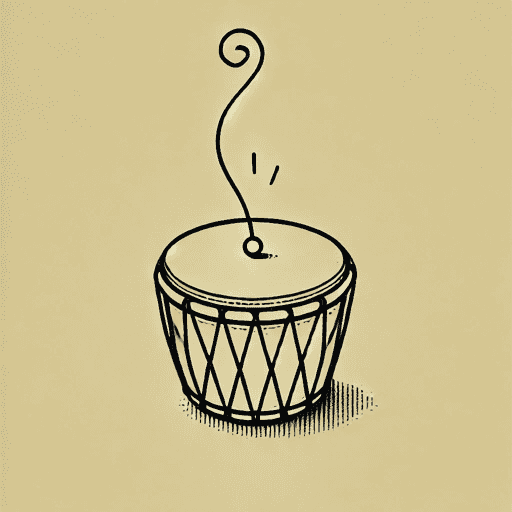
Part 2, Chapter 5 Summary: “Sequence of Sucette’s Solo”
The one-page chapter is a series of onomatopoeic phrases representing the sound of Sucette’s drumbeat, as in “Tak Patak!”
Part 2, Chapter 6 Summary: “When Solibo Spoke”
This chapter is a representation of Solibo’s final story in the moments before he died. The passage is written in a lyrical, poetic, free verse style with few punctuation marks. There are moments of call-and-response where the audience’s replies are italicized.
Solibo tells the story of Martinique. He begins by describing a time when the béké (white man) made the “congo” (Black men) work their fields “even though he knows no fwrench” (164). The Black field workers were illiterate, but they knew the Vauclin Mountain like the back of their hand. Solibo points out that Black people are now literate, but they can no longer navigate Vauclin Mountain as well. He mocks how the people of Martinique now use their voices to “yell Vive de Gaulle” (165).
Solibo tells them that he was given the name “Magnificent.” He says that no one gave him the words, but he is “Magnificent” because he speaks. Solibo recalls the lineage of Black folklore, referencing figures like Br’er Rabbit, but he says that he does not tell stories like those that are designed to teach lessons.
Solibo says he wants to “hoe up the truth” (167). He asks the audience if they know who was killed in Fond-Massacre (Massacre Valley). The audience replies that they do not know whether Black people, toads, snakes, or rats were killed in Fond-Massacre.
Solibo says he is going to present “the fundamental Solibo” (168). He describes his life of “rummag[ing] through the land” (168) with two languages. He describes major geographic sites around Martinique and has the audience guess their names. He ends with Pointe-des-Nègres.
Then, he calls for Doudou-Ménar to bring him a piece of candied grapefruit and some rum. He praises the sweetness of Antoinise’s syrup. He tells the audience that when he dies, he will have a party in the next life in a land without French colonialism.
Finally, he calls out “Patat’ sa.” The audience replies “Patat’ si!” Then, Solibo falls down, dead.
Part 2 Analysis
Part 2 of Solibo Magnificent is a radical departure from the rest of the text. In Part 1, the text is written in prose punctuated with lyrical passages. However, Chapter 6 is written more like a prose poem or a freestyle rap set to Sucette’s drum beat, rendered in onomatopoeia in Chapter 5. Within the logic of the book, Part 2 becomes a representation of the narrator Patrick’s account of Solibo’s words on the night he died.
Solibo’s final story also illustrates the finer nuances of Oral Tradition as a Marker of Creole Identity. For example, Solibo notes that agricultural workers who were illiterate knew Martinique better than those who have had a colonial education and learned their “A.B.C.D.”—that is, those who have learned to read. While they know the names of geographic locations on the island of Martinique better than the “congo,” or enslaved worker, they no longer have a visceral, firsthand knowledge of the land. Solibo emphasizes that the loss of this oral tradition has also caused the people to lose aspects of their own unique culture. As he says, “We sing Vauclin Mountain, don’t know Voklin Montin” (165). The two renderings of the name “Vauclin Mountain” denote the connection between oral tradition and the Creole language. “Vauclin Mountain” is the formal French name of the place, and Voklin Montin is a Creolized rendering of the same name. Solibo further mocks the people of Martinique, including himself, for replacing their Creole and local knowledge with formal French and with a desire to align themselves with the French republic. As he ironically states, “I myself Solibo who can talk in the mouth I yell Vive de Gaulle on July 14” (165). With this admission, Solibo makes it clear that even he, who speaks Creole and represents Creole culture, lauds the president of France (Charles de Gaulle) on the French national holiday, July 14.
Solibo is careful to emphasize that his form of storytelling is different from traditional Black folklore such as “the tales about Br’er Tiger, Br’er Rabbit” (166). These are morality tales that blend Aesop’s Fables with African and Caribbean folklore, passing on lessons in survival under enslavement. Instead, Solibo says that he isn’t there “to give lessons or to make you roll on the ground laughing” (166). His stories are a reflection of a deep cultural memory and of life itself, and they are not overly virtuous. As he told Patrick at the beginning of the novel, “Too much virtue is boring, son, and it does you no good” (4). Solibo’s lack of seriousness about himself is underlined in his final words, Patat’ sa, which mean, “that potato over there.” Thus, his last words are a nonsense phrase that contains a resonance like the beat of Sucette’s drum, connecting his oral language with the music that undergirds it.
Solibo completes his story in the moments before his death with a description of an anticolonial utopia. It is a world without white overseers (békés) or plantations. Solibo emphasizes that in this utopia, “Air-France got no terminal” (172), indicating that the land is no longer tied to the metropole; it has been returned to its people. Solibo then describes an idyll “where the blackman is all joy all music all dance” (172). After painting a picture of an ideal future, Solibo dies, and this pattern is evocative of the religious symbolism highlighted in Chapter 1. Like Moses, Solibo has described an ideal place, one that is symbolically flowing with milk and honey (or as the text renders it, “all syrup”), and he has tried to lead the people there. However, also like Moses, he dies after glimpsing this promised land but before he can enter it himself, and it will be up to others to carry that torch and realize his vision.

Get in-depth, chapter-by-chapter summaries and analysis from our literary experts.
- Grasp challenging concepts with clear, comprehensive explanations
- Revisit key plot points and ideas without rereading the book
- Share impressive insights in classes and book clubs