Song of Myself
Song of Myself
A modern alternative to SparkNotes and CliffsNotes, SuperSummary offers high-quality Study Guides with detailed chapter summaries and analysis of major themes, characters, and more.
Character List
Meet the key characters, with insights into their roles, motivations, and relationships—spoiler-free.
Major Characters
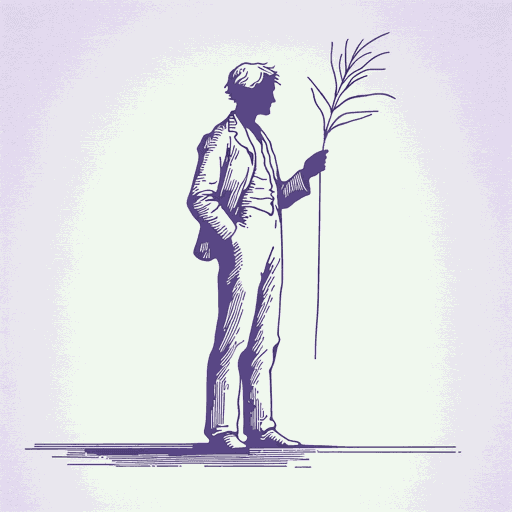
Walt Whitman is a 37-year-old poet who introduces himself as a cosmos and a son of Manhattan. He possesses a strong curiosity and an empathetic drive to connect with all elements of American life and the natural world. Instead of judging others, he mentally inhabits their experiences, absorbing their joys and sorrows as his own.
Companion of The Reader
Inquired by The Child
Observer of The Wealthy Woman
Admirer of The Black Dray Driver
Descendant of The Great-Grandfather
Spiritual Companion of God
The Reader is an interactive figure addressed directly by the poet throughout the text. This presence acts as a student to the poet's teachings about physical reality and spiritual connection. The poet urges this person to discard secondhand opinions and experience the world directly.
Student of Walt Whitman
Supporting Characters
The Child is a young boy who approaches the poet with a handful of grass. His simple question about the nature of the plant sets off a chain of observations about biology, the cycle of life, and human connection.
Inquirer to Walt Whitman
The Wealthy Woman is a 28-year-old who lives a lonely, isolated existence indoors. She voyeuristically watches a group of young men bathing in the river outside her home. In her active imagination, she joins them in the water.
Observed by Walt Whitman
Secret Admirer of The 28 Young Men
The 28 Young Men are a group of physically robust bathers playing in the river. They are entirely unaware that they are being watched from a nearby house. They represent natural vitality and unashamed physical freedom.
Secretly Observed by The Wealthy Woman
The Butcher-Boy is a physical laborer who engages in light debate and repartee with the poet. He performs a shuffle and break-down dance originating from African American folk traditions.
Friendly Acquaintance of Walt Whitman
The Black Dray Driver is a tall and commanding worker managing a large transport cart. He carries himself with a casual confidence that immediately catches the poet's attention and respect.
Admired by Walt Whitman
The Runaway Slave is a fugitive seeking safety who arrives at a house in need of help. He is taken in, fed, and allowed to rest in an environment colored by both care and the threat of violence from slave-catchers.
Sheltered by Walt Whitman
The Trapper is a rugged outdoorsman participating in an open-air wedding ceremony. He celebrates his union surrounded by friends in the wilderness. His marriage represents the blending of different cultures on the edge of civilization.
Husband of The Native American Woman
The Native American Woman is a bride marrying a trapper in a frontier setting. She sits beside her new husband as her family members socialize nearby.
Wife of The Trapper
The Great-Grandfather is the poet's ancestor and the source of a historical story. He serves in the Revolutionary War and passes down a vivid account of fighting aboard a sinking ship named the BonHomme Richard.
Ancestor of Walt Whitman
Subordinate to The Great-Grandfather's Captain
The Great-Grandfather's Captain is a courageous naval commander who boldly laughs and refuses to surrender during a fierce battle. He maintains a pale but steady resolve even as his ship takes on fire and water.
Commander of The Great-Grandfather
Opponent of The English Captain
The English Captain is an opposing naval commander described as tough and true. He leads the enemy vessel, the Serapis, and demands the surrender of the American forces during a nighttime battle.
Opponent of The Great-Grandfather's Captain
God is characterized by the poet as a great companion. This spiritual figure is viewed as an intimate peer rather than a distant deity and is seen in the faces of everyday people and natural objects.
Spiritual Companion of Walt Whitman