Stig of the Dump
Stig of the Dump
A modern alternative to SparkNotes and CliffsNotes, SuperSummary offers high-quality Study Guides with detailed chapter summaries and analysis of major themes, characters, and more.
Summaries & Analyses
Quizzes
NEWReading Tools
Background
Geographical Context: The Prehistoric Landscape of the North Downs
Stig of the Dump draws directly on the author’s childhood experiences in a region rich in prehistoric history. Clive King grew up on a farm in Ash, Kent, located in the North Downs region of southern England. These downlands are dense with archaeological evidence from the Neolithic (c. 4000-2500 BCE) and Bronze Ages (c. 2500-800 BCE). This history lends a layer of authenticity to the novel’s seemingly fantastical elements.
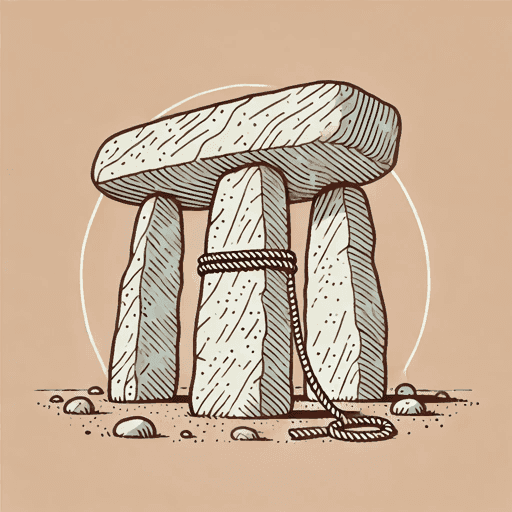
Kent is home to a high density of some of the earliest Neolithic monumental stone structures, known as the Medway Megaliths. These ancient standing stones are remnants of a distant past when early agricultural communities reshaped the landscape. The standing stone structure Barney and Stig help to complete in the novel bears a close resemblance to Kit’s Coty House in southeastern Kent, a burial chamber dating from approximately 4,000 BC, consisting of three standing stones covered by a capstone. The scene in which the characters use a system of rope pulleys and the “heave-ho” method to move the final, heavy capstone reflects archaeological theories about how prehistoric communities worked collectively to build ceremonial structures such as Stonehenge and the Kentish dolmens. The incident also conveys the ingenuity and resourcefulness of the early Neolithic people. The enduring presence of the standing stones in the present day contributes to the idea that the North Downs is a landscape shaped by the lives of ancient human communities.
The North Downs are characterized by rolling chalk hills, comprising soft white limestone formed from ancient marine deposits. Neolithic miners dug deep shafts into chalk, resembling natural hollows or quarries, to extract high-quality flint nodules. King’s childhood home was situated next to an abandoned chalk pit, and the author portrays this real-world setting in his story. The chalk pit where Barney meets Stig resembles these prehistoric excavation sites. The narrative opens with Barney at the edge of a “chalk pit” (3), its sides described as “white chalk, with lines of flints poking out like bones” (4). This description links the novel’s contemporary setting with authentic prehistoric activity.
Prehistoric people made tools and weapons from the flint they excavated from the North Downs chalk hills. Archaeologists have discovered thousands of flint artefacts across the Downs, including hand axes from the Paleolithic period, scrapers and knives used for preparing animal skins, and arrowheads and spear points from Mesolithic and Neolithic hunters. Stig frequently uses flint tools and demonstrates the prehistoric skill of flintknapping when he expertly chips a piece of flint into a sharp blade to free Barney. The arrowhead he gives to Barney serves as a lasting reminder of Stig’s existence and is a testament to the skill and ingenuity of prehistoric tribes.
The geography of the North Downs is both a realistic landscape feature of the novel and a metaphor for archaeological discovery. Stig’s character embodies the living presence of Neolithic Britain in present-day England, making the boundary between them seem permeable. Barney’s experience of discovering Stig and the insights he gains into his prehistoric way of life convey the deep, enduring connection between the present-day landscape and its ancient human origins. The setting suggests that the modern countryside is layered with hidden histories just waiting to be discovered.

Get in-depth, chapter-by-chapter summaries and analysis from our literary experts.
- Grasp challenging concepts with clear, comprehensive explanations
- Revisit key plot points and ideas without rereading the book
- Share impressive insights in classes and book clubs