Stig of the Dump
44 pages • 1-hour read
Clive KingStig of the Dump
A modern alternative to SparkNotes and CliffsNotes, SuperSummary offers high-quality Study Guides with detailed chapter summaries and analysis of major themes, characters, and more.
Character Analysis
Content Warning: This section of the guide includes discussion of bullying.
Barney
Barney is the novel’s protagonist, an imaginative eight-year-old boy through whose perspective the story unfolds. As a round and dynamic character, his journey is one of discovery, friendship, and the validation of a worldview that operates beyond the confines of adult logic. His defining trait is an open-minded curiosity that leads him away from the prescribed safety of his grandmother’s house and toward the forbidden chalk pit, a place adults see as a dump but which he perceives as a realm of possibility. His fall into the pit is the inciting incident that introduces him to Stig and sets the narrative in motion. Barney’s immediate and unconditional acceptance of Stig, a prehistoric boy living in a den made of refuse, establishes his capacity for empathy and his disregard for conventional social norms. When his family dismisses his new friend, Barney calmly insists on Stig’s reality, stating, “He just wears rabbit-skins and lives in a cave. He gets his water through a vacuum cleaner and puts chalk in his bath. He’s my friend” (12). This declaration encapsulates his straightforward, non-judgmental nature.
Barney’s relationship with Stig forms the heart of the novel and establishes the theme of Forming Unexpected Relationships Through Empathy. Lacking a common spoken language, the two boys build their bond through shared activities, mutual respect, and collaborative creation. Barney is not merely a passive observer of Stig’s world; he is an active participant and innovator in his own right. While Stig possesses ancient, practical skills, Barney contributes modern concepts like fireplaces and windows to Stig’s life. This collaboration elevates their friendship from simple companionship to a dynamic partnership in which both boys learn from and contribute to each other’s lives.
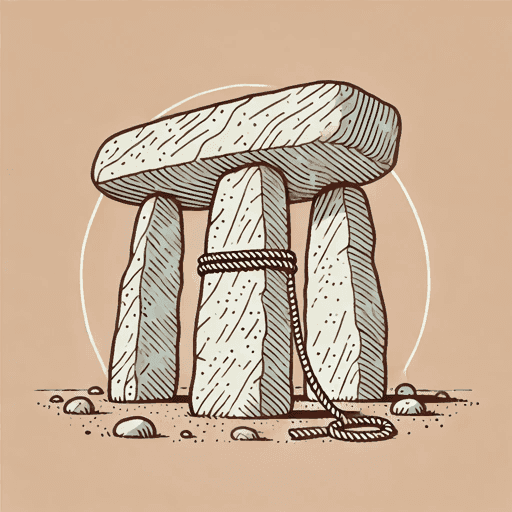
Through his unwavering belief in Stig, Barney embodies the innocence and perceptiveness of childhood. He is the central figure in the theme of The Divide Between Childhood Perception and Adult Skepticism, as his experiences are consistently met with affectionate disbelief by his grandmother and sister. However, his friendship with Stig fosters significant personal growth. He develops from a somewhat lonely boy seeking adventure into a confident and capable individual. He bravely faces the Snargets, masterminds the foiling of the burglars, and even leads his sister Lou into the magical experience of erecting the standing stones on Midsummer Night. This final adventure, where time seems to collapse, and Stig’s ancient tribe appears, serves as the ultimate confirmation of Barney’s perceptions. It solidifies his understanding that the world contains wonders that are invisible to those who have lost the capacity to see them. His journey is a testament to the power of an open heart and the profound, transformative nature of an unlikely friendship.
Stig
Stig is the title character and deuteragonist, a prehistoric cave boy who lives in a den at the bottom of a modern chalk pit. He is a round but static character; while his personality and skills are multifaceted, his fundamental nature as a self-sufficient, ancient being remains constant. Because he does not speak a modern language, his character is revealed entirely through his actions, creations, and nonverbal interactions with Barney. Barney’s first impression of him as “not […] much bigger than himself, but he looked very strong, and his hands looked cleverer than his face” (11) highlights Stig’s embodiment of timeless human ingenuity and the ability to adapt. His existence in the present day is never explained in rational terms, positioning him as a figure of mystery and magic who challenges the boundaries between past and present. He is a powerful, almost elemental presence, whose skills and worldview offer a commentary on modern society’s relationship with waste and nature.
The most prominent of Stig’s traits is his extraordinary resourcefulness, which is central to the theme of The Transformative Power of Imagination and Resourcefulness. His den is a marvel of engineering, constructed entirely from the refuse of contemporary civilization. This ability to see potential in what others have thrown away is a form of practical magic. When Barney offers him a broken pocketknife, Stig’s instinct is to use the blunt steel blade to chip a piece of flint into a far superior cutting tool. This act symbolizes his connection to an ancient knowledge that transcends and repurposes the failures of modern technology. Stig’s world is one where an object’s value is created through skill and imagination, turning the dump from a symbol of waste into a treasure trove of possibilities.
Stig’s relationship with Barney is one of profound loyalty and unspoken understanding. He quickly recognizes Barney as a friend, and their bond deepens through their collaborative projects. Stig is fiercely protective, as demonstrated when he single-handedly terrifies the bullying Snargets and later chases off the thieves who burgle Barney’s grandmother’s house. While often depicted as a pragmatic survivor, Stig also possesses a rich inner life and an artistic capacity. He creates detailed and dynamic cave paintings of a hunt, losing himself in the memory and emotion of the scene. He also invents a primitive stringed instrument, suggesting an innate desire for music and expression. The novel’s climax during Midsummer Night reveals Stig’s origins, placing him within a tribe and a community engaged in a monumental ritual. This vision connects him to a larger prehistoric human history, showing that his skills and instincts are part of a deep cultural heritage.
Lou
Lou, Barney’s older sister, serves as a crucial foil to the protagonist and represents the encroaching rationality that separates the world of adults from that of children. As a dynamic character, her primary function in the narrative is to embody skepticism, initially dismissing Barney’s incredible stories with the logical, slightly condescending air of an older sibling. When Barney first describes his new friend, Lou’s immediate reaction is to re-categorize the experience into a familiar childhood game, concluding, “Stig’s just a pretend-friend, isn’t he, Barney?” (13). This response firmly establishes her position on the adult side of the theme The Divide Between Childhood Perception and Adult Skepticism. She is not unkind, but her worldview is governed by what is probable and known, making her unable to accept the existence of a cave boy in a dump.
Lou’s character arc is defined by her gradual and reluctant journey from disbelief to acceptance. While she initially resists Barney’s world, a series of extraordinary events forces her to confront the limits of her own understanding. The first significant challenge to her skepticism occurs during the hunt for the escaped circus leopard, where she, dressed in a leopard skin from Stig’s den, comes face-to-face with the real animal and witnesses Stig’s calm, capable presence. The pivotal moment of her transformation, however, is the shared adventure on Midsummer Night. Pulled into a time slip with Barney, she witnesses Stig’s tribe and their monumental task of erecting the standing stones. This direct, inexplicable experience shatters her rational framework and aligns her perception with her brother’s. By the end of the night, she is a co-conspirator, sharing a secret that she knows cannot be explained to adults. Her development from a skeptic to a trusted confidante completes her journey, suggesting that the capacity to believe in the extraordinary is not entirely lost with age, but requires an openness to experience.
Grandmother
Barney’s grandmother functions as the primary representative of the adult world in the novel. She is a flat, static character whose loving, gentle nature provides a safe, stable backdrop for Barney’s adventures. Her role is essential in illustrating the theme of The Divide Between Childhood Perception and Adult Skepticism. While she cares deeply for Barney, she cannot comprehend the reality of his friendship with Stig. She consistently interprets his accounts of Stig’s life and their shared projects as products of a vivid imagination. Her reaction to Barney’s first mention of Stig is one of amused affection, remarking, “What funny friends you have, dear!” (13). This response, while well-intentioned, places a firm boundary between Barney’s perceived fantasy and her adult reality. She humors him without ever truly listening, a common experience for children whose worlds are not yet governed by adult logic. Her consistent, benevolent disbelief highlights the solitude of Barney’s experience and makes his secret world with Stig all the more special and private.
The Snargets
The Snargets are a group of three local boys who are collectively characterized as “rough,” territorial, and initially antagonistic. They serve as a brief source of conflict, challenging Barney’s presence in the dump, which they consider their territory. Their attempt to bully Barney prompts him to seek Stig’s help, leading to a direct confrontation between the modern world’s rough-and-tumble children and the prehistoric boy. Their reaction to Stig is one of pure terror, which quickly dissolves into awe and respect. The Snargets’ transformation from bullies to allies is swift and humorous, marked by their peace offering of jelly babies. This encounter demonstrates Stig’s formidable presence and his ability to command respect without words. Ultimately, the Snargets and Barney form a new gang with Stig, expanding Barney’s social world and showing that even the toughest of children can be won over by the extraordinary.

Unlock analysis of every major character
Get a detailed breakdown of each character’s role, motivations, and development.
- Explore in-depth profiles for every important character
- Trace character arcs, turning points, and relationships
- Connect characters to key themes and plot points