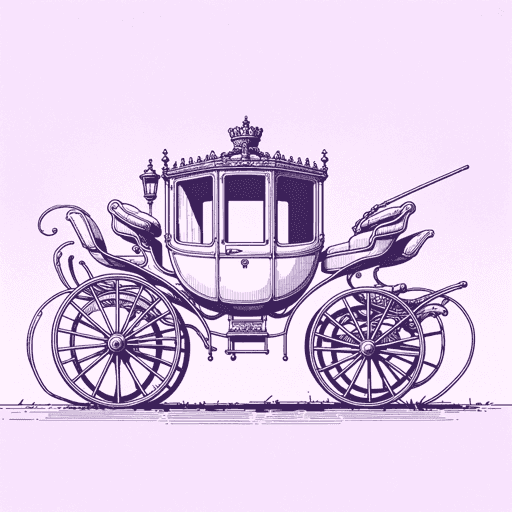
The Carriage
A modern alternative to SparkNotes and CliffsNotes, SuperSummary offers high-quality Study Guides with detailed chapter summaries and analysis of major themes, characters, and more.
Background
Authorial Context: Nikolai Gogol
Gogol was born in 1809 in what is now central Ukraine. His parents, minor landowners and members of the local gentry, were both descendants of Ukrainian Cossacks. His father was an amateur poet and playwright, and as a child, Gogol briefly considered becoming an actor. After moving to St. Petersburg in 1828, he attained a job in the civil service and began writing fiction. His first major work, a collection of short stories called Evenings on a Farm Near Dikanka (1831), was an instant success, and Gogol soon became known as a regional Ukrainian writer whose work depicted specifically Ukrainian characters and themes (he would soon become “reclassified” as a Russian writer). He lived abroad between 1836 and 1848, spending much of that time in Italy and Germany, and in 1842 he published Dead Souls, a picaresque novel satirizing the aristocratic pretensions of the middle class in Imperial Russia (a similar critique of The Performance of Class animates “The Carriage”). After a pilgrimage to Jerusalem, he settled near Moscow, dying in 1852.
Although critics often focus on Gogol’s critiques of Russian politics and society, Gogol was a prominent member of what is now known as the Slavophile movement. Slavophilia, which originated in the 1830s and flourished among the intellectual elite, maintained that the Russian Empire should be rooted in early Russian values and institutions. Most of its advocates opposed the modernization efforts of leaders like Peter the Great and Catherine the Great and were vocally opposed to industrialization, collective action by the peasants, and “Western” philosophies that promoted rationalism or individualism. They also believed that the Russian Orthodox Church was (and should be) a more significant influence than the state and were often influenced by Russian mysticism. Ultimately, despite some variations in their beliefs and approaches, Slavophiles sought to define what was unique about Russian identity and to protect it from the rapidly changing outside world. Gogol himself expressed anxiety about whether he was accurately capturing what it meant to be Russian. In a foreword to the second edition of Dead Souls, published in 1846, he wrote:
In this book many things are described incorrectly, not the way they really are and as they occur in the land of Russia, inasmuch as I could not learn everything: a man’s life would not suffice to learn by himself even a hundredth part of what goes on in our land.
Although Gogol wrote these words 10 years after publishing “The Carriage,” this moment of uncertainty about his ability to effectively describe Russian life offers a lens for understanding the complications of national identity and patriotic sentiment across Gogol’s entire body of work. “The Carriage,” for example, pokes fun at the provincialism that leads the mayor of B— to refer to pigs as “Frenchman,” but it also lampoons Chertokutsky for boasting about his “Viennese” carriage.

Get in-depth, chapter-by-chapter summaries and analysis from our literary experts.
- Grasp challenging concepts with clear, comprehensive explanations
- Revisit key plot points and ideas without rereading the book
- Share impressive insights in classes and book clubs
Related Titles
By Nikolai Gogol