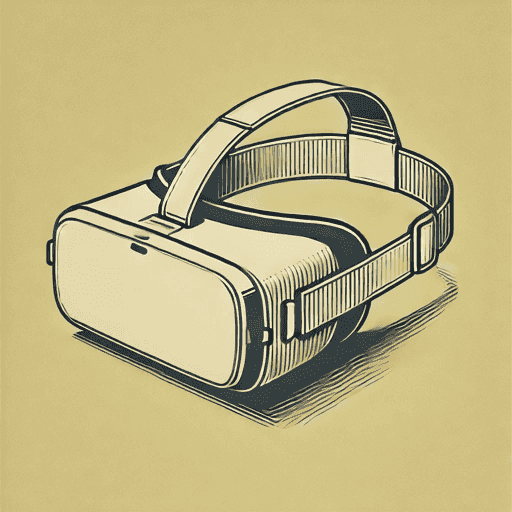
The Eye of Minds
51 pages • 1-hour read
James DashnerThe Eye of Minds
A modern alternative to SparkNotes and CliffsNotes, SuperSummary offers high-quality Study Guides with detailed chapter summaries and analysis of major themes, characters, and more.
Chapters 6-10Chapter Summaries & Analyses
Content Warning: This section includes discussion of graphic violence and death.
Chapter 6 Summary: “Through the Floor”
Michael is agog at the sight of the Black and Blue, a famed club for the VirtNet rich and famous. Michael, Sarah, and Bryson ponder how to access Ronika, as they are too young to enter the club and search for her. They plan to hack their way into the club until Sarah comes up with the idea to hack into the bouncers’ digital memory, then blackmail their way past the bouncers by threatening to send details to their family and friends.
Inside the club, everyone has coded themselves to look “perfect,” which Michael finds uninteresting compared to Sarah’s “dorky” charm. The three friends split up to search for Ronika, but Michael grows uneasy when he can no longer locate his friends.
Suddenly, he drops through the floor and finds himself with his friends in a formal room. Ronika enters and demands to know why they broke into her club. When they admit that they were sent by Cutter and are seeking information about Kaine, Bryson is struck by a sudden, intense headache, signifying that Kaine is close. Ronika is unsurprised by the news.
Chapter 7 Summary: “Black and Blue”
Ronika explains that Kaine has come to the club before but that he “wouldn’t dare cross [her]” (84), as she saved one of his Tangents, a digital representation of a life form, from Decay, a process wherein the digital representation begins to decline as would an organic body. Recoding a Tangent is illegal, Ronika easily admits. Michael doubts that Kaine feels bound by loyalty. Ronika contends that this isn’t loyalty but opportunism: Her skills are rare, and Kaine wouldn’t risk alienating her, in case he needs her help again.
Ronika agrees to answer the teens’ questions in return for an open-ended favor. She confirms that Kaine is up to “something secret, hidden deep inside the VirtNet” (87), but knows few details. The Path, she explains, is the sole avenue to the Hidden Ravine, where Kaine is purportedly conducting his experiments. She advises them to try playing Devils of Destruction, a battle-simulator game played by older gamers than Michael and his friends. There is a “weak spot” in the game’s coding: If the teens can find it, they can hack their way onto the Path.
A horrible scream starts ringing out. Ronika and the teens flee from an enormous shadow creature, which was sent by Kaine. Ronika identifies these as KillSims, a term Michael recognizes from Tanya. Ronika explains that they are a type of “antiprogramming” creatures whose bites destroy their victims’ digital lives. Gamers would either have to begin their life in the VirtNet anew or abandon their games; some victims suffer brain damage in their real bodies, as well. The KillSims trap but don’t attack Ronika and the teens. The four sneak their way out toward the main club, running as quickly as possible when the KillSims see them.
The humans are losing until Bryson discovers that squeezing the KillSims’ eyes until they burst kills the creatures. The three teens are safe, but Ronika’s digital life has been consumed. When they return to the Wake, Michael feels as battered as if the battle had been real.
Chapter 8 Summary: “A Very Short Man”
Michael’s vicious headache endures, and he feels persistently nauseated. He frets over how close he came to being one of Kaine’s victims. He’s surprised to learn that the pain increases his determination to win against Kaine. It takes him days to feel better. He connects with his friends, relieved they still want to search for the Path. They begin researching Devils of Destruction, which is based on history. Michael finds himself surprisingly engaged by the details of wartime tactics.
Michael finds a note taped to his door demanding that he return to the alley where the VNS originally abducted him. He finds a short, bald man who demands a report on their progress. He introduces himself as Agent Scott, but seems to know suspiciously little about Michael’s task. He urges Michael to “assume everyone [he meets] is [his] enemy” (111). Scott says the VNS cannot help the teens if they get into trouble, but warns that Kaine is “fishy.”
On his way home, Michael experiences a brutal headache worse than what he experienced with the KillSims. He experiences strange visual hallucinations that leave his surroundings unrecognizable. The episode passes, but he fears that “something terrible” has happened to his brain following the KillSims’ attack.
Michael searches for Ronika’s real-world analogue and finds Wilhelmina Harris, who has been in a coma since the attack. Her prognosis is not good. As he falls asleep, Michael realizes that Helga, his nanny, did not return home for the evening.
Chapter 9 Summary: “None Shall Pass”
Michael wakes the next morning feeling afraid of, but also excited by, his mission. He enters the Sleep and meets his friends at the Gaming Depot, a hub where gamers swap tips on hacking the game. Bryson and Sarah are annoyed that Michael didn’t tell them about his debilitating headaches sooner. They fret about Wilhelmina Harris’s fate and the possibility that the “KillSims are just the start” (119) of what they will face.
The three strategize how to get through Devils of Destruction; if one of them dies in the game and must return to the beginning, the others will wait. A ticket-seller denies them entry, as Devils of Destruction is only open to those aged 25 and up. The teens are confused by this, as the game would be more popular with teenagers wanting to break in if it was for adults only. They try to hack into the game, to no avail.
Michael tries to storm his way through the ticket-seller, but a girl named Ryker points guns at him. He rushes her, knocking the guns aside, then wrestles them away. The ticket-seller triggers a safety mechanism that has ropes slither from the walls and toss Michael in the air. Michael shoots the ropes with the gun he stole from Ryker. Michael plans to shoot the ticket-seller, but Bryson hacks her first—she is a Tangent, not a real person.
Chapter 10 Summary: “Three Devils”
Ryker warns the trio that they are “as clueless as can be” (136) as they enter the game. The three teens walk down a long, frigid hallway before entering the game. Their digital forms wear snowsuits heavy with gear. Sarah worries that VNS will deny knowing them if they are caught doing any of the many illegal things they’ve done on their quest. The friends stock up on weapons from a cache and worry what might be so alarming in the game as to merit the adults-only rating.
The three begin charging through the frigid landscape, an experience Michael finds miserable. They climb a hill and see a vicious, trench-lined battlefield below them. Michael and Bryson are confused by the illogical nature of the carnage, but Sarah contends that the point of the game might not be historical accuracy but just senseless violence—hence the adult rating. They realize that the guns they got from the stockpile don’t work; the game privileges hand-to-hand combat.
The friends begin searching for the Path Portal. Sarah tries to calmly remind them that if they die, they will just be returned to the entrance of the game. Michael fights a woman who is consumed with rage, wrestling a long pole away from her and then beating her brutally with it. He is quickly attacked by a larger man, who cuts Michael’s throat, killing him.
Chapters 6-10 Analysis
This portion of the novel explores some of the conventions of YA literature while continuing to develop the novel’s discussion of how teens interact with virtual reality. When Michael, Bryson, and Sarah discuss why the VNS might have recruited them in the quest against Kaine, they weigh the limitations that teenagers face in the digital world against the specific benefits of being a younger player. They reflect on their status as digital natives—though they do not name it as such—as offering them greater fluency with digital worlds than that experienced by older players. Though this turns out not to be VNS’ true motivation, the novel nevertheless does not suggest that Michael and his friends are wrong: They experience the digital world differently than adults do.
The teenagers’ sense of what danger is or is not worth the risk continues to morph in this section, though they still largely treat their experiences as games, reflecting The Tensions Between Appearance and Reality. They see losing their digital selves as a real stake when Ronika explains the KillSims, not because of the potential threat to their real bodies, but because of the amount of time they have spent putting into developing those digital identities. The teenagers’ psychological investment in their digital selves lends a sense of reality to those identities.
Michael still primarily thinks of the things that he faces in the VirtNet as a game, even as they grow more dangerous and as their implications extend into the real world. After he learns that Ronika has died in the Wake after being attacked by KillSims in the Sleep, he reflects, “Like many games Michael had played before, it was kill or be killed. Except this time it was for real” (105). Michael sees reality and unreality as operating on a different continuum, but once the real-world effects become more apparent, it becomes clearer that Michael may be mistaken about the boundaries between what is real or virtual. As the stakes rise, Michael finds that his sense of reality continues to waver and that it is the digital world that feels increasingly real to him.
This growing sense of reality coincides with the continued world-building in this portion of the text, addressing The Mental Repercussions of Virtual Reality. Michael and his friends explore the “world within a world” structure of the VirtNet when they explore the boardwalk that leads to the various games that gamers can play in the virtual world. These different games provide a divide—both narratively and in the characters’ experience of the Sleep—between the Lifeblood side of the VirtNet that imitates real life, and the game side that explores the possibilities of virtual reality.
The characters’ movement into Devils of Destruction, where they are repeatedly killed and resurrected, highlights the possibilities of digital exploration but also draws attention to the mental and emotional effects even virtual reality can have. The teenagers note that they have already experienced a great deal of violence in virtual reality. Bryson, despite being somewhat desensitized to video game violence, notes that he does not feel equal to knife fighting, something he recognizes as being more intimately violent than gun violence. His inability to stomach this type of hand-to-hand violence indicates that he knows the psychological costs of violence, even if the physicals costs are only fleeting. The disturbing nature of the game’s senseless violence also suggests that the game is designed to appeal to gamers’ worst instincts.
Dashner thus presents a digital world in which the possibilities of digital worlds are balanced out by their potential downsides. Having a digital body allows for the possibilities of resurrection and bodily modification, but, as Michael notes, your digital memories become susceptible to hacking. The price of hyperreal digital consciousness, like that experienced by the Tangents, is that they, like humans, begin to eventually experience decline as do organic forms of consciousness. This final trade becomes increasingly relevant in the text as Michael will eventually learn that he is a Tangent himself.

Unlock all 51 pages of this Study Guide
Get in-depth, chapter-by-chapter summaries and analysis from our literary experts.
- Grasp challenging concepts with clear, comprehensive explanations
- Revisit key plot points and ideas without rereading the book
- Share impressive insights in classes and book clubs