
The Fifth Child
A modern alternative to SparkNotes and CliffsNotes, SuperSummary offers high-quality Study Guides with detailed chapter summaries and analysis of major themes, characters, and more.
Summaries & Analyses
Quizzes
NEWReading Tools
Games
Symbols & Motifs
Content Warning: This section of the guide includes discussion of child abuse and ableism.
The Gaze
The motif of the gaze emphasizes the agency associated with looking and the denial of looking away. The interactions between Ben and Harriet often focus on looking, observing, staring, and its opposite—avoidance, “cold eyes,” and complacency. Lessing argues that society refuses to look at things that disturb or do not conform to the norm. They ignore it, refuse to look at it, or deny it recognition; in this case, this impulse translates into shutting Ben away in his room, keeping him out of the house with John, and, more extremely, sending him away to die in an institution.
Often objectified by the gaze, Ben also challenges others by returning the gaze and confronting their stares: “[W]homever he was looking at became conscious of that insistent gaze and stopped talking; or turned a back, or a shoulder, so as not to have to see him” (61). Ben’s gaze, his perspective and autonomy, remain a mystery. The narrative is told through Harriet’s eyes, a biased yet conflicting and contradictory voice of shame, frustration, and sympathy. Yet Ben does a lot of looking as an outsider in his own home. He observes his surroundings, at first to learn how to fit in, however counter it seems to his nature. At the end, he is watching for others like him with whom he can belong.
The Marriage Bed
The Lovatts’ bed symbolizes the conflation of sexuality with reproduction. Harriet and David inherit a large, custom-made bed from the previous owners who “had seen a home as they d[o]” (9), i.e., as the site of possible domestic perfection. At first, the bed is a symbol of the Lovatts’ domestic bliss, and the children play games and cuddle together in the “family bed.” David happily remarks on how “progenitive” their bedroom is in fulfilling their wishes for a large family. However, when Harriet becomes pregnant despite their efforts to wait on having a fifth child, David uneasily jokes that the bedroom is a “baby-maker,” deflecting his own responsibility for the unexpected pregnancy.
As the novella continues, the bed’s mysterious origins render it a cursed object, contributing to the tone of horror evoked by Harriet’s numerous pregnancies and the burden of motherhood. The bed has an imposing, sinister presence in the couple’s bedroom; because of its enormous size, “[t]o take it away, so sa[ys] the agent, would […] mean[] dismantling it” (9). Its physical permanence echoes the restrictive institutional and social pressures of reproduction and fertility that are so heavily ingrained as expectations for women that only radical “dismantling” could bring about reproductive freedom. Despite Harriet’s private hesitations, she repeatedly conceives and delivers all her children in the bed—all except for Ben, the child who embodies her repressed doubts about motherhood and domesticity.
At the end of the novella, the bed no longer symbolizes intimacy and ease but instead struggle and estrangement, where Ben rejects Harriet’s nurturing and David no longer sleeps in the same room with her. The bed, like the constraints of motherhood, is a cumbersome, heavy piece of furniture that weighs Harriet down.
The Victorian House
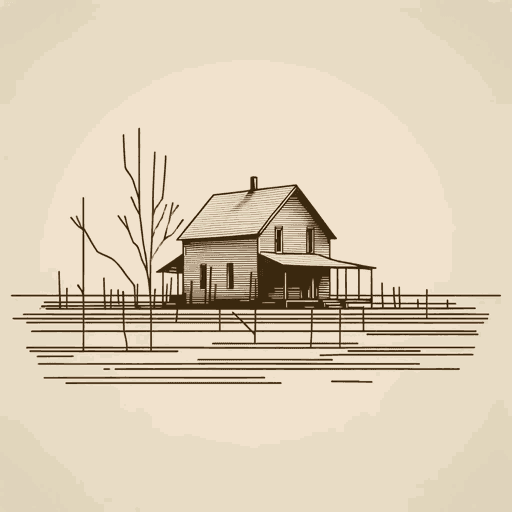
Like the bed, the Lovatts’ Victorian home is a symbol of old-fashioned values and the dream of domestic bliss. The house dates from an era when the ideology of the “cult of true womanhood” defined women’s roles exclusively as mother and wife. Harriet decorates the house with props that represent her middle-class tastes and vision of a “happily ever after” life in the suburbs, inspired by the British countryside: settees, rugs, books, a dresser with cups on hooks, flowers in a jug, an Aga stove, and a massive table where her family eats “traditional English pudding” (15). The impractical house, oversized and often referred to as a “hotel,” mirrors the impracticality of the Lovatts’ goal to have numerous children. Its structure is often depicted as having a haunted quality, with dead branches scratching at its windows and its many empty rooms.
Located in the suburbs and away from noisy London, the house blocks out anything different from the Lovatts’ value system and symbolizes their insularity, defensiveness, and lack of social engagement. Ironically, what they think will bring them joy (more children) becomes the breaking point of their domestic idealism. The house and the Lovatts’ growing family recall the nursery rhyme of the old woman who lived in a shoe who “had so many children, she didn’t know what to do. / She gave them some broth without any bread; / And whipped them all soundly and put them to bed” (Mother Goose. “There Was an Old Woman Who Lived in a Shoe.” Poetry Foundation). The Fifth Child can be interpreted as a gothic horror retelling of the rhyme, with Harriet representing the exasperation, exhaustion, and violence of an overextended motherhood.

Unlock the meaning behind every key symbol & motif
See how recurring imagery, objects, and ideas shape the narrative.
- Explore how the author builds meaning through symbolism
- Understand what symbols & motifs represent in the text
- Connect recurring ideas to themes, characters, and events
Related Titles
By Doris Lessing








Featured Collections
Appearance Versus Reality
View Collection
Beauty
View Collection
Birth & Rebirth
View Collection
Books that Feature the Theme of...
View Collection
Books that Feature the Theme of...
View Collection
Brothers & Sisters
View Collection
Childhood & Youth
View Collection
Class
View Collection
Class
View Collection
Daughters & Sons
View Collection
Family
View Collection
Fear
View Collection
Hate & Anger
View Collection
Marriage
View Collection
Mothers
View Collection
Nature Versus Nurture
View Collection
Pride & Shame
View Collection