The Garies and Their Friends
The Garies and Their Friends
A modern alternative to SparkNotes and CliffsNotes, SuperSummary offers high-quality Study Guides with detailed chapter summaries and analysis of major themes, characters, and more.
Summaries & Analyses
Quizzes
NEWReading Tools
Symbols & Motifs
Marbles
Content Warning: This section refers to racism and discrimination.
Throughout The Garies and Their Friends, Charlie Ellis is dedicated to the game of marbles, a motif that relates to the theme of Solidarity and Resistance Within Black Communities. Marbles is a children’s game where players attempt to knock the opponent’s marbles out of a circle. When Charlie is first introduced, he is described as being so passionate about the game that he does not try to keep his clothes clean. When he is put into service at the Thomas residence, he dirties his uniform when playing marbles. Later, he is pulled away from his duty to bring his sister dinner when he “several times stop[s] to act as umpire in disputed games of marbles” (86). Charlie’s passion for play, and play at marbles specifically, represents his resistance against racist attitudes about and expectations of Black children, namely that they should be obedient and serve white people.
The game of marbles is also a way that Black children build solidarity and community. Charlie is acknowledged as a leader in this youth community because of his knowledge of marbles. When he leaves for the countryside to recover from his broken arm and subsequent illness, he symbolically gives his best friend, Kinch, “a number of marbles” as a parting token (109). Considering the importance of the marbles to Charlie, giving them to Kinch is a signal of how important this friendship is to Charlie.
Food
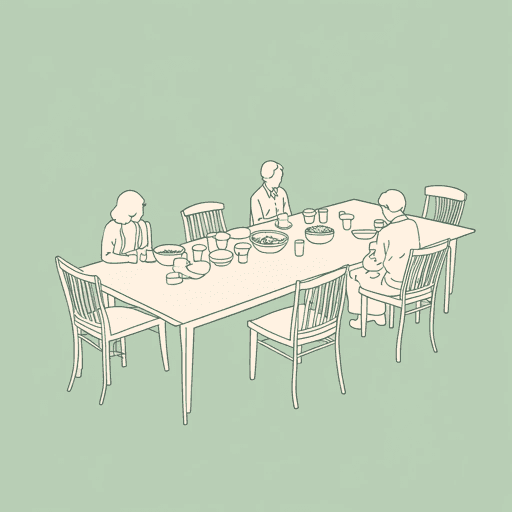
Food serves multiple symbolic functions within The Garies and Their Friends. The importance of food is signaled by the way it is extensively detailed at various points. Food is a symbol of community and class. The narrative opens with a long description of the Garies’ meal and, near the end, includes a long description of the feast at Charlie Ellis and Emily Garie’s wedding. These two meals bracket the arc of the novel’s plot.
In the opening pages of the text, Webb describes “a table covered with all those delicacies that, in the household of a rich Southern planter, are regarded as almost necessaries of life” (1). This meal is a sign of the close domesticity and contentedness of the Garie family as well as their wealth. This luxurious meal contrasts with the meal with which the Ellis family is introduced. Like the Garie family, their dinner table is a sign of their close contentedness as a family. However, their simple meal of cornbread and tea is emblematic of their relative poverty.
By the end of the novel, when the two families are united by marriage, a wedding feast is arranged. The description of the meal rivals that of the Garie family in the opening pages: There is turkey, oysters, ice cream, champagne, and much more. This meal shows the joy in solidarity and resistance in the coming together of the two families. Webb notes explicitly, “What a happy time they had!” (377).
Literacy
For many Black people in the antebellum United States, learning to read and write was of the utmost importance. Literacy provides a better understanding of the world and the opportunity to be taken seriously as advocates, and it opens doors to better forms of employment. Author Frank J. Webb was a life-long advocate for Black literacy programs, and his dedication to the importance of this skill appears in The Garies and Their Friends. This belief is voiced by Mr. Walters in the novel when he learns that Charlie has been sent to work for the Thomas household: “The boy should be at school. […] The worst thing you can do with a boy of his age is to put him at service” (62). However, such a stance was not uncontroversial at this time. In the antebellum South, it was illegal to teach Black people to read or write. In the North, it was legal, but Black students attended segregated schools or were otherwise forced to sit separate from white students in class. This motif highlights the Racism and Discrimination in the Antebellum North.
The Garies attempt to exercise their legal right to send their children to school. However, when it is discovered that the children are biracial, they are expelled. It is decided that if Clarence is to continue his schooling, he will be sent to a boarding school where he will have to keep his Black heritage a secret, an example of the many forms of discrimination that Black children faced. Even Charlie, who attends a school for Black children and is very bright, faces racism when the well-intentioned but condescending white schoolteacher at the Sunday school in the countryside assumes that he is illiterate.

Unlock the meaning behind every key symbol & motif
See how recurring imagery, objects, and ideas shape the narrative.
- Explore how the author builds meaning through symbolism
- Understand what symbols & motifs represent in the text
- Connect recurring ideas to themes, characters, and events