59 pages • 1-hour read
The History of Sound: Stories
A modern alternative to SparkNotes and CliffsNotes, SuperSummary offers high-quality Study Guides with detailed chapter summaries and analysis of major themes, characters, and more.
Themes
Content Warning: This section of the guide discusses death.
Art as a Form of Expression and Communication
Throughout the collection, Shattuck explores the meaning and purpose of art across time. Whether his characters are musicians, painters, or writers, they all attempt to use art as a tool. In “The History of Sound,” making, studying, and recording music is a way for Lionel Worthing and David to capture the beauty of their relationship and communicate their feelings to each other. In “Edwin Chase of Nantucket,” Will conveys his deep love for Laurel via his songbird painting. In “The Silver Clip,” painting connects the narrator to other artists before him. In “August in the Forest,” writing is August’s means of expressing his confused and intense longing for Elizabeth, while also establishing his identity. In “The Journal of Thomas Thurber,” Thomas Thurber uses writing to feel connected to his wife while he’s away from home, while in “Introduction to The Dietzens,” Cal Owens uses writing to memorialize his childhood connection with his sister, and in “Origin Stories,” Annie finds a way out of her isolating marriage by connecting with David and Lionel’s lost musical recordings. In this network of ways, art offers Shattuck’s characters the means to navigate their emotional spheres and to connect with others. The act of creation, The History of Sound suggests, is both a sense-making mechanism and a way to pass down stories from one generation to the next.
The way that Lionel regards his musical practice in “The History of Sound,” provides insight into all the subsequent short stories’ explorations of art. While he’s singing with David at the bar, Lionel has an internal monologue that captures art’s significance in his life:
I’ve always felt as if what came from my throat and lips was not mine, like I was stealing rather than producing something. This body was mine—the constriction of my diaphragm, the pressure in my throat, the lips and the softening of my tongue that shaped the sound—but what left me, ringing through the crown of my head so my skull felt more bell than corporeal, flooding my ears’ timpani, vibrating through my nose, wasn’t my own. More like […] an echo of my own voice, coming from my mouth. A repetition (4).
While singing, Lionel feels the resonance of artistic history in his body. He is making sounds with his “throat,” “lips,” and “tongue,” but this sound passes through and out of him, echoing from the top of his head and beyond his corporeal parameters. He is a part of musical history and is participating in a lineage of creation and expression through song. The same is true of how the other characters experience art—they’re all a part of a larger artistic story.
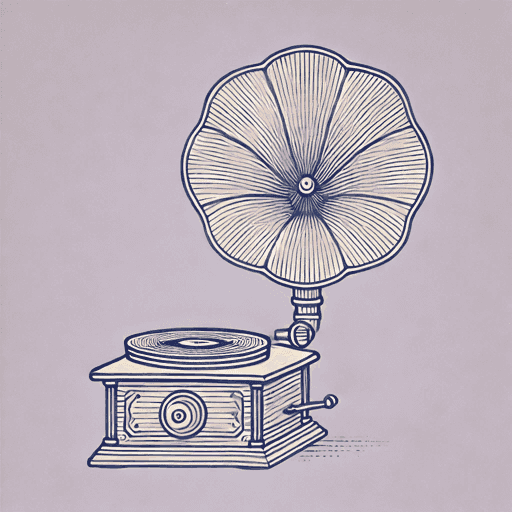
The recurrences of the phonograph cylinders and the songbird painting are two imagistic examples of how art communicates from one age to the next. Annie learns something about the past, but also about herself when she encounters David’s cylinders, just as the narrator of “The Silver Clip” discovers his own pathway to creation via his relationship with Will’s songbird painting. Shattuck establishes art’s fundamental place in these characters’ lives, illustrating how through art, they not only express themselves—they also connect with others, both in their own time and along the continuum of history.
The Ethics of Storytelling
The short stories in The History of Sound capture the possible ethical implications involved in telling stories. Although Shattuck’s characters face unique challenges and have distinct longings, they all share the desire to express themselves and connect with others. Reading, writing, or sharing stories is one way that they attempt to do so, and through their artistic efforts, Shattuck examines the ethics of storytelling.
Because Shattuck depicts storytelling in a myriad of ways, The History of Sound presents both the positive and negative aspects of the tradition. At times, Shattuck’s characters are compelled to co-opt others’ stories for their own gain, while at other times, they use stories to manipulate or connect with others, to make sense of their emotions, to gain power, or to protect themselves. In “Edwin Chase of Nantucket,” Edwin gains access to Laurel’s past when he reads Will’s journal and Laurel’s letters; without permission, he inserts himself into Laurel and Will’s story, hoping to understand his mother and himself better. In “Graft,” Hope is terrified of telling her own story to her husband Harold, convinced that the true account of her life will push him away, while in “August in the Forest,” August inadvertently betrays his wife and best friend Elizabeth when he bases a character off of her to secure his first fiction publication. In “The Journal of Thomas Thurber,” Thomas records Winslow’s story in his journal, an action that ultimately robs Winslow of his agency to tell his side of the story and threatens his freedom, and in “The Children of Eden,” Karl Dietzen uses his story of eternity to scam his followers, ultimately leading them into death. In “Introduction to The Dietzens,” storytelling is Cal’s way of navigating his past, and in “Origin Stories,” Annie discovers that reframing her own story can help her regain control of her life. Each of these characters resorts to storytelling to fulfill their needs, and Shattuck explores the complicated tensions that result from their efforts.
The way that August regards storytelling in “August in the Forest” offers a prime example of the possible complications of using someone else’s story without their permission. When the magazine prints his short story, August wonders, “What would Elizabeth first say when he finished reading her the story? She wouldn’t be wrong to be angry. To be […] drawn into a story that he only wanted to publish for the sake of—what? Some small bit of entertainment for a few dozen readers” (154). August acknowledges the possibly fraught repercussions of writing about Elizabeth, but soon after, he muses that arguing with her about the story could make a perfect scene of dialogue for his next story. August regards his life as material for his work; to him, storytelling is a fact of life, and embedding others’ stories into his writing is a part of his process. The overarching structure of the collection authenticates this notion—one character’s story resurfacing within the surrounding narratives, illustrating the way these stories resonate across time. What might be exploitation in one context or era becomes a lesson in the next. For example, while Karl used story to manipulate his followers, centuries later, the story of the Dietzens helps a character like Cal make sense of his life. Shattuck thus implies that the ethics of storytelling are ambiguous. The practice itself will always involve some fictionalization or narrative manipulation, and the effects are so far-reaching that they cannot be anticipated.
The Universality of Love, Loss, and Longing
The short stories collected in The History of Sound span American state lines and temporal eras, depicting the lives of a collective cast of characters who all experience love, loss, and longing. While Shattuck’s characters have distinct personalities and circumstances, they all experience innate human emotions: They fall in love, experience loss, encounter disappointment, are weighed by sorrow, or discover the beauty of life. Shattuck uses their stories to highlight the commonalities of their emotional experiences and argue for the universality of the human experience.
Shattuck creates connective threads between the collected short stories by allowing his characters to experience familiar emotions no matter the era they’re living in. Overlaps in the language he uses to render these internal expires underscore the thematic and emotional resonances between the stories. For example, the way that Edwin regards his life in “Edwin Chase of Nantucket” echoes the way that Will thinks about his life in “The Auk.” Edwin spends every night thinking “of how [his] life might change” (33); every facet of his life is mapped out and predictable, and he feels caught in his longing for something new to jog his otherwise isolating and banal circumstances. Not dissimilarly, Will spends his “daily afternoon walks” wondering if his “life [will] always be this narrow and difficult” (212). Edwin is 20 years old and living in the late 18th century on a farm in New England, while Will is in late middle age and living in the late 20th century in a coastal town in Newfoundland. However, Edwin’s and Will’s internal experiences resonate with each other. Their age, era, and environment are starkly different, but their humanity is the same.
The parallels between Hope’s internal experience in “Graft” and Annie’s internal experience in “Origin Stories” are another example of the universality of human emotion. When Hope returns to Davis and Annabelle’s house, she often feels “displaced” and doesn’t “quite know what to do with herself” (88). She longs to feel grounded in a life that’s her own but doesn’t know how to realize this desire. The same is true for Annie, who feels despondent because of how much she’s given up to be with Henry. She finally tells him that she hates that she isn’t “doing anything with [her] life” (293). Like Hope, Annie wants to feel love and acceptance, but she also longs for purpose and fulfillment.
Each of the stories in the collection features episodes of loss, grief, love, desire, and loneliness. By emphasizing the commonalities in their experiences, Shattuck asserts that although the individuality of humans is infinite, many human experiences and emotions are universal.
The Clarifying Power of History
All the short stories in The History of Sound feature instances of historical discovery, whether in the context of a place, an object, a relationship, or a story. Shattuck’s characters are all haunted by the past. For some, the past is a nostalgic realm to which they can retreat to escape their troubles in the present. For others, the past is a source of fear and shame, an era they’d rather deny than confront. For others still, the past is a teacher that can offer guidance to their experiences in the present. No matter how the characters interact with the past, this temporal realm offers them insight into who they are, what they want, and where they’ve come from.
Although the past surfaces in a different way in each story, it always resonates in the present, offering a different perspective on the character’s life. In “The History of Sound,” the past turns up in Lionel’s life in the form of David’s phonograph cylinders, compelling him to remember what he and David shared and lost. In “Edwin Chase of Nantucket,” Edwin’s mother’s past surfaces in the form of Will Snowe and Laurel’s letters. These artifacts offer Edwin insight into Laurel’s personal history that alters his understanding of reality. In “The Silver Clip,” Mallory takes comfort in physical reminders of the past; surrounding herself with her late husband’s personal effects helps her to stay connected with him. In this same story, the narrator finds guidance from the past, too; the Snowe songbird painting grants him artistic inspiration for his own practice. In “Graft,” Hope has denied her past life in an attempt to erase this facet of herself and to remake her identity, but when she runs into a boy who starkly resembles her child, she realizes that the past cannot be erased. In “Tundra Swan,” Mark longs for time to pass quickly so that his life in the present will soon be past tense; he sees history as a relief from his current troubles. The past surfaces in the form of a great auk in both “Radiolab: ‘Singularities’” and “The Auk,” and both Anna Mott and Will derive a sense of hope and possibility from it. In “Introduction to The Dietzens,” the past is an exciting realm Cal can explore to find answers to his own experience, while in “Origin Stories,” the past is a rosy realm Annie finds herself studying in order to make sense of her marital entrapment in the present. In these stories, the past is always embedded within the present, and the individual can either choose to ignore it or to learn from it.
In “Introduction to The Dietzens,” the way that Cal reflects on the Dietzens’ history provides insight into the surrounding stories’ explorations of the past. At the end of the narrative, Cal tells his reader, “[S]uspend your disbelief as you fall into this strange, luminous world” (268). He urges his reader to embrace the Dietzens’ tale with an open mind, reflecting the mindset which of all Shattuck’s characters are forced to adopt when they encounter the past. Although some of the characters attempt to deny their personal or ancestral histories, doing so only causes history to repeat itself. As Hope understands, because “her past had come so close to her life” it is only a matter of time before it fully reemerges (98). The collection presents history as a multivalent realm that can offer insight into the individual’s experience in the present if she is willing to open herself to its lessons.

Unlock every key theme and why it matters
Get in-depth breakdowns of the book’s main ideas and how they connect and evolve.
- Explore how themes develop throughout the text
- Connect themes to characters, events, and symbols
- Support essays and discussions with thematic evidence