The Knight and the Moth
62 pages • 2-hour read
Rachel GilligThe Knight and the Moth
A modern alternative to SparkNotes and CliffsNotes, SuperSummary offers high-quality Study Guides with detailed chapter summaries and analysis of major themes, characters, and more.
Symbols & Motifs
Content Warning: This section of the guide includes discussion of death and emotional abuse.
The Five Stone Objects
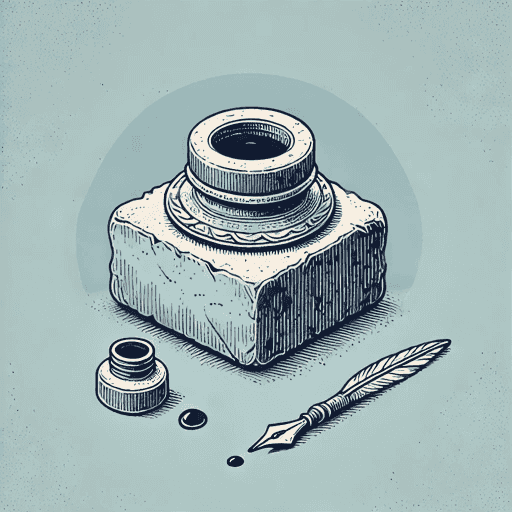
The five stone objects of the Omens are symbols of power. Throughout the narrative, the objects passing from person to person indicate a passing of power. The very first person to wield the objects was the abbess, who created them herself with her hammer and chisel. She then handed the objects to each Omen, giving them some power to wield as they pretend to be omnipotent gods.
Just as power can be used for good or evil, the objects can transport their wielders, but they can also be used for destruction. The Artful Brigand uses his coin for nefarious purposes until Rory kills him and takes the coin, the Harried Scribe hoards his inkwell until the group defeats him and takes it, and the Ardent Oarsman keeps his oar until Six manages to kill him and take it. The Faithful Forester is killed, but her chime remains in the noble families of the Chiming Wood, illustrating how the people of the Chiming Wood kept their power over the birke until the group finds the chime and takes it. The Heartsore Weaver surrenders her loom stone and her power back to Aisling when she refuses to continue to pretend to be a god. Benji seeks to take up the mantle and obtain all five of the objects because he wants to obtain more power as king. He pretends that he seeks to redistribute the power among the Stonewater Kingdom, but really, he seeks to hoard it for himself, demonstrating how easily power corrupts.
The Hammer and Chisel
The hammer and chisel are a symbol of control in The Knight and the Moth. The abbess used the hammer and chisel to create the magical stone objects that she gave to the Omens, the objects that she utilizes to keep control over them. The abbess also loans her hammer and chisel to her favored Diviners in an effort to exert extra control over them and keep them loyal.
Six views her hammer and chisel as a sign of trust from the abbess instead of the leash of control that it truly is. It is an effective leash, as Six hopes after Rory and the knights leave that she can return to normalcy, “that life w[ill] go back to normal as it always d[oes] after a Divination. [She will] take up [her] hammer, [her] chisel, mind the wall, and dream with the others until [their] service [i]s at an end” (83). Even after her jaunt to Coulson Faire, Six chooses to acquiesce again to the abbess’s control and even fantasizes about using the hammer and chisel to mend the cathedral wall. When Six leaves the cathedral, the abbess’s control over Six begins to slip, and Six even eventually uses the hammer and chisel, the very symbol of the abbess’s control, to destroy the abbess and her cathedral.
The Diviner Shrouds
The Diviner shrouds are a symbol of unseeing. Though the Diviners can see through the gossamer shrouds, as the material is not completely opaque, it metaphorically obscures the truth. Six accepts the shroud without question for the first parts of the novel, but when she divines for Rory, her vision is obscured in a new way: “I felt my shroud fall away. When I opened my eyes, I was no longer looking through gossamer, but the thin, veined wings of the moth” (80). The moth landing over Six’s eyes demonstrates how the abbess, or the Moth, works to hide the truth from the Diviners, tying the shroud over their eyes to keep them ignorant of the truth and docile. This leads to the death of many Diviners, as Six sees the massive tapestry that is “thin, sheer, and pale. Gossamer. Diviner shrouds” (350). The past Diviners’ inability to push back, remove their shrouds, and see the truth made it easier for the abbess to kill them without suspicion.
Aisling’s Spring Water
Aisling’s spring water is a motif that informs the theme of The High Cost of Power. When Six enters the spring to divine for Benji, the sensation is overwhelming; she thinks, “It, like everything in the cathedral, was cold. I shivered, the spring taking me into its frigid womb, lapping up the silk of my robe, rendering it translucent” (13). The water is cold, and it makes her robe see-through, causing her to appear nearly naked to the audience of knights and the king. Six’s fealty to the abbess and her willingness to drown force vulnerability upon her, nearly punishing her for being faithful to the Omens and being a Diviner. The same water that freezes and strips Six naked, dehumanizing her as merely a tool of the Omens, offers immortality to the Omens, at the price of the erosion of their humanity and the risk of turning entirely into stone, illustrating the price of their power.

Unlock the meaning behind every key symbol & motif
See how recurring imagery, objects, and ideas shape the narrative.
- Explore how the author builds meaning through symbolism
- Understand what symbols & motifs represent in the text
- Connect recurring ideas to themes, characters, and events