The Leaving
The Leaving
A modern alternative to SparkNotes and CliffsNotes, SuperSummary offers high-quality Study Guides with detailed chapter summaries and analysis of major themes, characters, and more.
Summaries & Analyses
Quizzes
NEWReading Tools
Symbols & Motifs
Avery’s Stuffed Animal (Woof-Woof)
Content Warning: This section of the guide includes discussion of kidnapping, trauma, death, and child death.
Woof-Woof is a symbol of lost innocence in three crucial scenes in the novel. First, he appears in the story’s prologue, a scene from Avery’s four-year-old viewpoint that sets the stage for upcoming mystery elements while also serving as a plant for Avery’s late-novel identification of the principal as the tip line caller. In this scene, Avery notices the sadness in Woof-Woof’s eyes; this observation reflects her own emotions and foreshadows the long years of joylessness her family experiences during Max’s disappearance.
Avery rediscovers Woof-Woof when she questions the meaningfulness of her academic and extracurricular awards and mementos. Clutching Woof-Woof tearfully, she disposes of her countdown-to-college calendar and her school awards. In this scene, she holds onto the stuffed dog as it becomes a symbol of her futile attempt to hold onto childhood.
Finally, Avery places Woof-Woof on Max’s casket at his funeral service as an acknowledgment of the childhood Max did not get to have. This action symbolizes her coming of age and shows that she is ready for future growth. She is finally able to let go of Woof-Woof and move forward into her future after the closure of Max’s funeral.
Lucas’s Camera
Lucas’s camera serves as a symbol of truthful identity in the novel. Over much of the rising action, each abductee finds a path to reconstruct their identity based on a talent or skill they rediscover after the return. Like Scarlett’s skill with sewing, Sarah’s talent for drawing, Adam’s ability to play guitar and sing, and Kristen’s capacity for writing, Lucas realizes he has a flair for photography.
Before being returned, Lucas leaves himself a clue to his talent for photography: the tattoo of a camera aperture on his thigh. Based on this clue, he shops for a camera, where a clerk notes his proper use of the viewfinder and intimates that he must be skilled in taking photographs. The camera he purchases feels right in his hands, a sign that his true identity is being revealed. Taking photos takes a prominent place in the action driving his character arc, some inspired by his intuitive sense of composition (Scarlett in the car) and others to document events (the trip to the Everglades house). In this regard, Lucas’s camera is a tool he uses on his path to the truth, and as such, the camera is a symbol that helps in developing the theme of The Search for Truth in a Web of Lies.
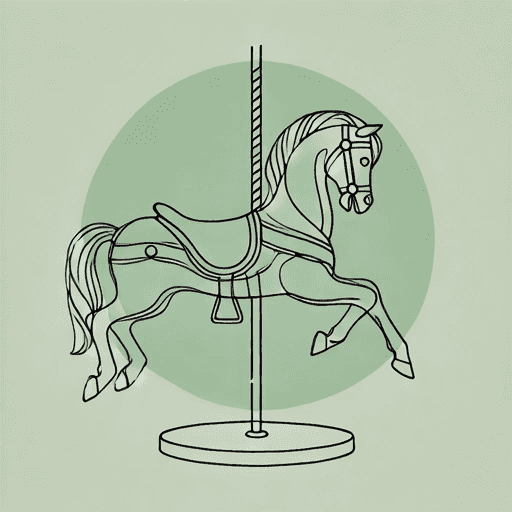
It is fitting that Lucas realizes that he took many photos of their recalled experiences and that eventually he discovers Louis Immerso’s face in the mirror of the carousel. By using his camera, which records reality and communicates the truth of a scene, to zoom in on and expose the perpetrator, he is freed from the desperate need to find answers and clear his name, and his sincere identity can more easily be seen.
Scarlett’s Coat
Like Luke’s camera, Scarlett’s coat serves as an important symbol of her identity in the novel. Even though her memory has been erased, she retains her love of sewing as a core element of her identity. As subjects of Louis Immerso’s experiment, the five test subjects forgot their identities recurringly as Louis Immerso and his lab administered memory-wiping drugs. Kristen’s journal indicates they “tried to bring clues” when they tried to escape to prompt memories later (391). This idea of clues is clearer when, after their failed escape attempt, Immerso returns the teens. This time, along with Scarlett’s swallowed penny and Lucas’s self-administered tattoo, the clues include the map Scarlett sews into the lining of her coat.
Scarlett sews a vintage-style quilted coat in her unremembered life at Anchor Beach; with its handstitched map that reveals the house in which they were kept, this coat symbolizes the distrust that she and the other abductees have in their memories, developing the theme of The Fragility and Reliability of Memory. Like Lucas, Scarlett leaves herself clues, an acknowledgment that she knows, on some level, about the memory erasure that is being perpetrated on her. Stitches in the coat lining represent Anchor Beach: the nearby power plant’s smokestacks, the pier, and an X marking the location of the house where the missing were held. Scarlett stitches this map knowing that her memory would be erased; the group later learns from Kristen’s journal that their memories were routinely wiped and consequently cannot be trusted. With its helpful map, Scarlett’s coat also serves an important purpose in the plot: It is key to finding the location where the group was kept.

Unlock the meaning behind every key symbol & motif
See how recurring imagery, objects, and ideas shape the narrative.
- Explore how the author builds meaning through symbolism
- Understand what symbols & motifs represent in the text
- Connect recurring ideas to themes, characters, and events