The Mirror and the Lamp: Romantic Theory and the Critical Tradition
58 pages • 1-hour read
M. H. AbramsThe Mirror and the Lamp: Romantic Theory and the Critical Tradition
A modern alternative to SparkNotes and CliffsNotes, SuperSummary offers high-quality Study Guides with detailed chapter summaries and analysis of major themes, characters, and more.
Index of Terms
Aeolian Harp/Lyre
An Aeolian harp is a stringed instrument, likely invented in the 17th century, that makes music when the wind blows through it. Romantic poets like Coleridge and Shelley reference it widely in both poems and criticism as the metaphorical representation of the poet’s creative process. Nature produces the music through the man-made instrument, just as poetry is created by the human mind from the experience of nature.
Aesthetics
Aesthetics is the philosophical study of what art is and what is fundamentally important about art in human though an experience. Abrams references aesthetics throughout his book, which broadens a discussion of poetry and literary analysis to coincide with philosophy. As his early summary of aesthetic thought from Plato through the 20th century shows, literary criticism has long been directly associated with discussions of art beyond poetry and fiction.
Artist
The artist is the person who creates the art, and one of Abrams’s four art co-ordinates. Abrams’s discussion of the artist draws on historical movements in literary theory and aesthetics that focus on the artist as the source of an art work’s importance and human value. The Expressive theories look first at the artist to explore how a work of art reflects humanity.
Audience
This is one of the four art co-ordinates that Abrams names to help differentiate schools of aesthetic and literary thought. In Pragmatic Theory, the audience (or reader, in relation to literature) is the primary focus of analysis. The primary concern in audience-based literary analysis is how the work of art affects and/or pleases the audience. In other words, the audience’s reaction is paramount to determining the value and import of the art work.
Expressive Theory
Expressive Theory is one of Abrams’s four approaches to literary theory that he argues is the dominant approach to Romantic literary thought. In Expressive Theory, the artist’s internal self, passions, and voice are paramount to determining the value of an art work. The Romantics believed that good poetry was the expression of the poet’s profound and natural feelings, which is the source of the name.
Lamp
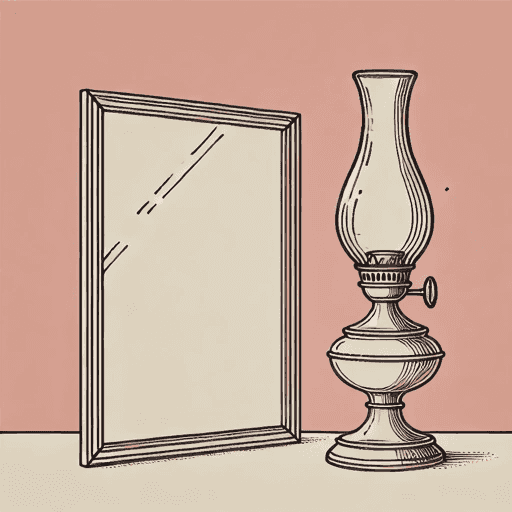
The Lamp is one half of the metaphorical construction Abrams identifies and reiterates throughout the book. While Mimetic and Pragmatic theory focus on how art reflects as a Mirror, Expressive Theory treats art as an enhancement or a highlighting of the important parts of reality. Therefore, the Lamp is added to the Mirror and poetry becomes not only a reflection or mimic of life, but the illuminated reality.
Lyric Poetry
Poetry is generally classified either as epic, dramatic, or lyric. Epic poems tell a story of a society or history, dramatic poems focus on interpersonal interactions, while lyric poems tend to be short, in first-person point of view, and focused on an individual emotional experience. Because “The majority of lyrics consist of thoughts and feelings uttered in the first person, and the one readily available character to whom these sentiments may be referred is the poet himself” (85), lyric poems invite a poet-centered reading unlike epics or dramas. Romantic poetry is largely, though not entirely, lyric in nature and connected to music rather than visual art.
Mimetic Theory
Mimetic Theory is arguably the beginning of Aesthetics as a field and certainly literary criticism in general. One of Abrams’s four co-ordinates, Mimetic theory holds that art mimics or reflects the real world and the universe. Although Pragmatic Theory and some elements of Expressive Theory likewise examine how poetry represents or depicts reality, Mimetic Theory is based on Plato’s dismissal of art as mere mimicry.
Mirror
The other half of the titular metaphor Abrams uses to describe the development of literary criticism is the mirror. This is the foundational metaphor for Mimetic Theory based on Plato and Aristotle: “we have Plato’s simple and obvious derivatives from the mirror as analogue. For example, a mirror-image is only a simulacrum of an object, forced deceptively to represent three dimensions by two” (34). The mirror represents the potentially inaccurate reflection art projects from reality, and that theory dominates criticism up to the 18th century.
Objective Theory
Objective theory is the literary perspective that follows Expressive Theory and colors much of the literary criticism of the early 20th century. The critical focus of Objective Theory is the object of the poem itself. Critics like T.S. Eliot focused their attention on the Work itself rather than the real world, the reader, or the poet.
Platonic Forms
Part of Plato’s theory of the metaphysical universe was that there is a plane of existence consisting of the perfect version of all things. The Form of a thing for Plato was its most perfect version that was inaccessible to human understanding or perception. The Platonic Forms were an inspiration for Shelley who saw the potential for poetry to access and reflect the Forms for human understanding.
Pragmatic Theory
Pragmatic Theory was the dominant school of literary critical thought from the Enlightenment through the 18th century. In contrast to the preceding Mimetic Theory, Pragmatic Theory focused on the Audience or reader to determine the value of art. Pragmatic Theory held that the best poetry provided moral instruction via pleasure to the reader or viewer.
Work
In Abrams’s co-ordinates of poetry, the Work figures prominently in Objective Theory. The Work can be any piece of art, but it is ultimately the object that contains the beauty that is studied. The Work itself is the source of evaluation of quality and use, not the Universe, the Audience, or the Artist.
Universe
The Universe was the focus of Mimetic Theory and represents all of reality, perceived experience, and any other sense information. Mimetic Theory, coming out of Plato initially and Aristotle secondarily argued that art imitated or reflected the Universe. The primary evaluative criteria for Mimetic Theory is how well a work of art accurately reflects the Universe as it actually is.

Unlock all 58 pages of this Study Guide
Get in-depth, chapter-by-chapter summaries and analysis from our literary experts.
- Grasp challenging concepts with clear, comprehensive explanations
- Revisit key plot points and ideas without rereading the book
- Share impressive insights in classes and book clubs