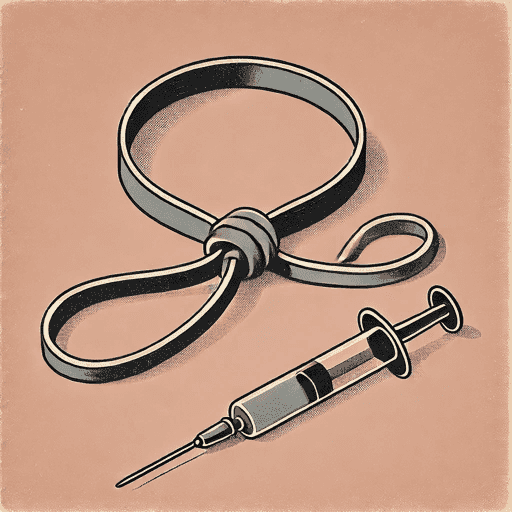
The Nurse's Secret
67 pages • 2-hour read
Amanda SkenandoreThe Nurse's Secret
A modern alternative to SparkNotes and CliffsNotes, SuperSummary offers high-quality Study Guides with detailed chapter summaries and analysis of major themes, characters, and more.
Chapters 41-50Chapter Summaries & Analyses
Content Warning: This section of the guide includes a discussion of graphic violence, illness, death, substance use and addiction, sexual harassment, cursing, and death by suicide.
Chapter 41 Summary
Una, increasingly suspicious of everyone at Bellevue, struggles to focus. That evening in the library, Dru reminds her not to jump to conclusions. Then, she insists they must obtain the pathologist’s report. Una volunteers to retrieve it alone.
The next morning, Una slips out before breakfast and sneaks into the morgue. She rummages through drawers until she the pathologist’s rough notes and sketches. Hearing approaching footsteps, she grabs pages dated the day of Deidre’s death and hides them beneath her apron. Using a trick Marm Blei taught her—judging people’s positions by the sound of their footfalls—she slips from the room unseen.
That afternoon, a new patient, Mr. Knauff, arrives from a medical ward, requiring a plaster splint for his fractured jaw. Dru arrives with him and shares a detailed transfer report. Once the second-year nurse leaves, Una shows Dru the stolen notes, which mention fixed lividity and broken fingernails. Dru theorizes the pathologist may have confused bruising for lividity and notes the fingernails suggest a struggle. She winces in pain and grips the bedsheets before the second-year returns and dismisses her.
Hours later, Dr. Allen arrives to splint Mr. Knauff. As he prepares to administer ether, Una notices a food stain on the patient’s shirt and realizes he may not have fasted. When she raises this concern, Dr. Allen becomes defensive and threatens to report her to Superintendent Perkins. Fearing dismissal, Una backs down and assists with the procedure.
Thirty minutes later, Mr. Knauff begins wheezing, and his lips turn purple. Despite Dr. Pingry performing an emergency tracheotomy and 20 minutes of artificial respiration, the patient dies. Nurse Hatfield sends Una to Superintendent Perkins’s office. There, Perkins explains that Dr. Pingry attributes the death to asphyxia caused by the patient eating before receiving ether. Under questioning, Una claims she was not told whether Mr. Knauff had eaten and had assumed he would have been made to fast. When Perkins asks who provided the deficient report, Una names Dru.
Chapter 42 Summary
Una agonizes over implicating Dru. Realizing the stolen notes are still beneath her apron, she burns them in a furnace to destroy evidence of their investigation. That evening at the nurses’ home, she overhears trainees saying Dru was expelled and fainted upon receiving the news.
When Una tries to go to the hospital, Nurse Hatfield intercepts her and confirms Dru fainted but reveals the primary cause as typhus, which Dru contracted from a patient two weeks earlier. Consumed by guilt, Una realizes she had been too preoccupied with her own troubles to notice Dru’s illness. Hatfield adds that Dru is being nursed in the Sturges Pavilion and that Perkins wants to see Una first thing in the morning.
The next morning, a sleepless Una reports to Perkins’s office. The superintendent reveals that during their meeting, Dru took full responsibility for Mr. Knauff’s death, confessing she had fed him and failed to relay that information because her illness had left her distracted. Perkins adds that Dru spoke very highly of Una’s character. Because of Dru’s testimony, Perkins has decided to let Una remain at the training school.
Sick with guilt, Una resolves to live up to Dru’s opinion of her. That evening, she sneaks into the Sturges Pavilion and sits with the unconscious Dru, holding her hand. She brushes dampened hair from Dru’s face and whispers a promise to somehow fix everything.
Chapter 43 Summary
The following week, Una is lonely without Dru and Edwin. The patient with the gunshot wound has grown gravely ill, his wound oozing pus. Dr. Pingry insists on open-air treatment, dismissing infection concerns. When Edwin returns from his symposium, he is shocked by the patient’s deterioration and argues for sanitary treatment with carbolic acid, but Pingry mocks him. The patient dies that afternoon.
While bathing the body, Una remembers identifying her mother’s burned corpse in the morgue after a tenement fire. She recalls how, as a child, she waited days for her mother to return, clinging to hope. When that hope finally hardened into hatred, reinforced by her drunken father’s bitter words, she had abandoned her grief. Now Una realizes she cannot blame her mother for seeking escape from their sad home after the war, nor her father for returning broken, nor her nine-year-old self for mistaking heartbreak for hatred.
Distraught, Una goes onto the ward’s balcony. For the first time in years, she cries, mourning her mother, recent deaths, and herself. Edwin finds her, and they discuss honesty. Una points out that he too has kept secrets to spare others’ feelings. As she is about to confess her own secrets, a second-year nurse summons her to Superintendent Perkins’s office.
In the office, Perkins, Nurse Hatfield, and Mrs. Buchanan are waiting. Hatfield formally accuses Una of stealing her silk scarf. They proceed to Una’s room to search it. The search of her wardrobe and bed yields nothing. After Hatfield’s accusation fails, including her attempt to search Dru’s belongings, which Una blocks, Perkins declares it unfounded and demands an apology. Then, Mrs. Buchanan finds Dr. Pingry’s engraved pocket watch among Una’s possessions.
Chapter 44 Summary
Having been expelled, Una wanders the streets with her valise, unsure where to go. She cannot return to the Points, where police still seek her for Traveling Mike’s murder. Three months at Bellevue had felt like a lifetime, and she realizes how much she had come to value her work as a nurse.
She finds refuge in a grimy two-cent restaurant in the Tenderloin, ordering stale beer and claiming an empty barrel in a dimly lit corner. Upon reflection, she is relieved that she did not confess her past to Edwin, preferring to preserve her memories of him. A man with stained teeth tries to flirt with her, but she fends him off.
The clang of a nearby ambulance bell triggers the memory of Traveling Mike’s murder in the alley. She recalls Deidre lighting a match and seeing a man in uniform crouched beside Mike’s body. The weapon had not been a belt or rope but a tourniquet—the kind used in ambulances. The killer’s dark jacket and short-brimmed cap belonged to an ambulance driver. Una suddenly realizes that the murderer’s was Conor McCready, the ambulance driver from Bellevue, whom she suspects also killed Deidre and another woman at the hospital.
Chapter 45 Summary
The next day, Una returns to Bellevue, determined to warn someone about Conor. She finds the ground-level storeroom and side entrance locked but avoids the main entrance. She enters through the unlocked basement door and navigates the dark, dank passages until she reaches the main hospital. On ward nine, she avoids Nurse Hatfield by pretending to be a visitor praying at a sleeping patient’s bedside. When Hatfield leaves, Una asks Nurse Cuddy to pass a message to Edwin, requesting he meet her in the operating theater at seven o’clock. Cuddy mentions that Dru has taken a turn for the worse.
Una meets Edwin in the empty operating theater. He immediately confronts her about stealing Dr. Pingry’s watch. So, Una confesses her entire past as a thief and how she joined the training school to hide from police. Edwin is shocked and hurt, feeling their relationship was built on lies. Then, Una tells him that Conor is a murderer, responsible for killing Traveling Mike, Deidre, and others. She admits she cannot go to the police because there is a warrant for her arrest. When she asks Edwin to act as a witness while she confronts Conor to elicit a confession, he refuses and leaves.
Chapter 46 Summary
The next morning, Una, whose boots were stolen from her lodging house, takes the train to see Barney at the Herald Building. A police officer boards the train, and Una recognizes him as the one who chased her at Grand Central Depot months earlier. She avoids being recognized by engaging him in conversation about their shared Irish heritage from County Clare.
At the Herald Building, Una is denied entry due to her lack of shoes, but Barney vouches for her. They go to the roof for privacy, where Una tells him everything about Conor. Barney agrees to help, seeing the potential for a great story. They plan for Una to lure Conor to a panel crib, a room with a secret revolving wardrobe, by claiming to meet a woman named Mrs. Bean who can identify the Bellevue killer. Meanwhile, Barney will hide inside the wardrobe as Una provokes a confession. Then, Barney will reveal himself and apprehend Conor. However, Una insists that Barney buy her a new pair of boots first.
Chapter 47 Summary
On Sunday, Una nervously attends mass. After the service, Conor waits for her at the church steps to walk her home, as usual. Then, Una puts their plan into motion, telling Conor about a female patient who claims to know the identity of a killer responsible for three murders, including one near the Points. Conor becomes agitated and presses for details, asking why the woman has not gone to the police. Una explains the woman is afraid due to her criminal past but has agreed to meet Una at a lodging house on Baxter Street that night after being discharged.
Playing the part of a damsel in distress, Una asks Conor to accompany her for protection in that dangerous part of the city. After a tense moment of consideration, Conor agrees to go with her that evening.
Chapter 48 Summary
At sunset, Conor picks Una up outside Bellevue’s gate in the hospital ambulance. During the ride, Una thinks she sees a hansom cab following them, but it soon disappears. Conor insists on bringing his medical bag, claiming he cannot leave it in the wagon, though Una suspects this is no accident.
They arrive at the lodging house on Baxter Street. The drunken landlady directs them to a room on the third floor. Inside, Conor inspects the wardrobe where Barney is hiding. When Una hears a noise from within, she blames it on rats. She begins provoking Conor by insulting the killer’s intelligence, breeding, and class.
Conor locks the door and closes the curtains, declaring that Miss Bean is not coming and that he recognizes Una from the alley. He kicks open the false back of the wardrobe, discovers Barney, and stabs him repeatedly with a trocar, a medical instrument shaped like a tube. Barney collapses, gasping from a punctured lung.
Una hurls a chair that splinters across Conor’s back and rushes to help Barney. She grabs a syringe and morphine from the medical bag. Conor attacks her, and they struggle violently. Though she slashes him with a scalpel, he overpowers her and pins her to the floor. He wraps a tourniquet around her neck and begins strangling her, ranting about the city’s filth.
On the verge of losing consciousness, Una manages to grab the morphine syringe and inject the full dose into Conor’s arm. He collapses on top of her. Una hears pounding and a cracking noise, then feels Conor’s weight lifted off and the tourniquet loosened before she loses consciousness.
Chapter 49 Summary
Una wakes at Bellevue with Nurse Cuddy attending her. Superintendent Perkins arrives with Detective Collins and Officer Simms. Collins reminds Una she faces charges for murder and assaulting an officer, but then reveals that Conor is in custody, believed responsible for five murders. The recovering Barney provided a written statement, and Edwin filled in remaining details. Collins says if Una cooperates with a statement and testimony, they will drop the assault charge against her. She is not under arrest.
After the police leave, Perkins confronts Una about her past. Una confesses everything, admitting she only came to the school to hide but grew to love the work. Perkins tells Una that Dru’s fever broke and she is recovering. Overjoyed, Una takes full responsibility for Mr. Knauff’s death and begs Perkins to allow Dru to remain in the program.
Perkins agrees to let Dru stay and offers Una a chance to continue her training unofficially. She can live at the nurses’ home and learn alongside the others, but she will not receive a diploma or pin at the end of two years. Una accepts, vowing to maintain an exemplary record.
Chapter 50 Summary
That evening, Una gets permission to walk on the lawn but instead sneaks into the Sturges Pavilion to visit Dru. She finds Dru awake and recovering, sipping broth. Una sits on the edge of her bed and apologizes for everything. Then, she confesses her criminal past, the lies about Maine, and how she joined the school to hide from police.
Instead of being angry or disgusted, Dru calls Una brave. She insists they remain roommates and immediately begins talking about catching up on their studies before falling asleep. Una returns to the lawn, where Edwin finds her and reveals he was the one who rescued her. He had followed Conor by cab, saw Una in a third-floor window, and then found her. He apologizes and asks for a second chance. Una reminds him of her criminal past and the rules against socializing with gentlemen, but Edwin insists he does not care about either. He wants to know the real her. Joking about all their hiding places in the hospital, they agree to start anew.
Chapters 41-50 Analysis
These final chapters resolve the central mystery by privileging Una’s grifter skills over conventional detective methods, a narrative choice that validates her past even as she transcends it. The investigation, initially inspired by Edgar Allan Poe’s detective C. Auguste Dupin, proceeds through an intuitive, visceral memory triggered by the clang of an ambulance bell, not through observation and evidence like Poe’s hero. Una’s epiphany that the murder weapon was a tourniquet, not a belt stems from her experience in the city’s alleys, not from clues in a book. The subsequent plan to entrap Conor relies entirely on her underworld knowledge of the panel crib, a space designed for deception, and her psychological insight into Conor’s class-based rage. The narrative thus rejects the intellectual, armchair detective archetype embodied by Dupin, favoring instead the practical, street-honed intelligence of its protagonist. This arc suggests that Una’s redemption is achieved not by erasing her past but by repurposing its skills for a moral cause.
The confrontation between Una and Conor, which is rooted in a violent enforcement of social hierarchy, propels the theme of The Performance of Social Class and Identity. Conor sees himself as a purifier of the city, targeting those he deems “immigrant filth, opium fiends” and other marginalized people he considers “boot scum” (340). His performance as a helpful, pious ambulance driver masks a deep-seated class hostility. Una, herself skilled at performing different roles, weaponizes this prejudice to unmask him. In the panel crib, she deliberately provokes Conor by attacking his class identity, insulting the killer’s intelligence, breeding, and legitimacy by calling him a “bastard” (336). Her strategy relies on the understanding that for a man like Conor, an assault on his social standing is more inflammatory than an accusation of murder. This dynamic inverts the power structure of 19th-century New York, allowing a thief from Five Points to dismantle the authority of a man who presumes to be moral and upstanding. The setting of the panel crib, a theatrical space built for criminal performance, becomes the ironic stage where Conor’s murderous identity is exposed.
Additionally, Una’s re-evaluation of her past, particularly her relationship with grief and memory, incites her emotional development and develops the theme The Intersection of Deception and Authenticity. The death of the patient with the gunshot wound, caused by Dr. Pingry’s negligence, triggers a long-suppressed memory of her mother’s death. This moment forces Una to confront the self-protective narrative she had constructed as a child, realizing she had mistaken “heartbreak for hatred” and had “never truly [mourned] her mother’s death” (301). This acknowledgment of her authentic feelings, rather than the hardened persona she adopted for survival, marks a pivotal shift. It allows her to break her own rule against crying, a sign of vulnerability that enables a deeper, more honest connection with Edwin on the balcony. This newfound emotional honesty is a prerequisite for her later confessions to Dru and Edwin, dismantling the façade of her Maine identity. Una’s character arc suggests that she must stop deceiving herself before she can form genuine bonds with others.
The climax and resolution of the novel hinge on an interplay of betrayal and loyalty, which solidifies Una’s path toward Finding Redemption Through Caregiving. Una’s decision to blame Dru for Mr. Knauff’s death represents a regression to her survivalist code, a moment where she prioritizes self-preservation above all else. However, this act of betrayal is met with a startling act of loyalty when Dru not only accepts the blame but praises Una’s character to Superintendent Perkins. Dru’s assessment of Una as “uncommonly brave and true of heart” (295) forces Una to confront the disparity between who she is and who she could be. Dru’s sacrifice thus becomes the catalyst for Una’s moral transformation, inspiring her vow to live up to Dru’s high opinion of her. This commitment is proven through her determination to unmask Conor, an act undertaken to protect the Bellevue community. Her reward is not a formal diploma but an unofficial place within that community, affirming that her redemption is earned through the care of others before herself.
The shifting symbolism of Bellevue Hospital mirrors Una’s internal transformation. Initially, the hospital is merely a strategic hiding place, its uniform a disguise and its rigid structure a form of confinement. It represents a temporary escape from her identity as a criminal. As she becomes immersed in the work, however, the space transforms into a crucible for her moral development, a place where she confronts death, systemic failure, and her own capacity for both betrayal and care. By the final chapters, Bellevue has become a home, the first she has known since childhood. Una notes that, “[t]he training program had given her a glimmer of life beyond surviving. Of what it was like to care about people beyond herself” (332). Her expulsion is devastating not because she has lost her cover, but because she has been exiled from a community and a purpose she has grown to value. Her unofficial reinstatement signifies her acceptance into this new family, cemented by Dru’s forgiveness and Edwin’s renewed trust. The hospital, once a symbol of concealment, ultimately becomes the site of Una’s authentic self-realization and the beginning of her new life.

Unlock all 67 pages of this Study Guide
Get in-depth, chapter-by-chapter summaries and analysis from our literary experts.
- Grasp challenging concepts with clear, comprehensive explanations
- Revisit key plot points and ideas without rereading the book
- Share impressive insights in classes and book clubs