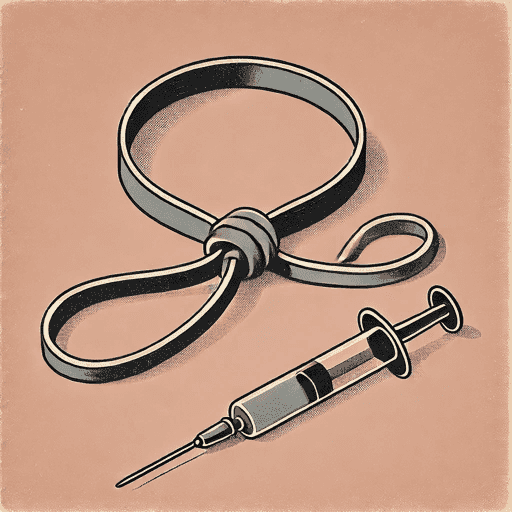
The Nurse's Secret
67 pages • 2-hour read
Amanda SkenandoreThe Nurse's Secret
A modern alternative to SparkNotes and CliffsNotes, SuperSummary offers high-quality Study Guides with detailed chapter summaries and analysis of major themes, characters, and more.
Character Analysis
Content Warning: This section of the guide includes a discussion of illness, death, religious discrimination, substance use and addiction, and gender discrimination.
Una Kelly
Una Kelly, the novel’s dynamic, round protagonist, is a cunning grifter whose journey from the slums of New York to the wards of Bellevue Hospital charts an internal transformation. Initially, her character is defined by a strict code of personal rules for survival, which she has developed over years of thieving under the tutelage of her mentor, Marm Blei. This code, predicated on self-preservation and distrust, is encapsulated in her primary maxim: “keep your head down and look out for yourself” (14). Una is a master of disguise and deception, skills needed to be a thief but which ironically allow her access into a world of respectability. Her decision to hide in the Bellevue Training School for Nurses is a calculated act of self-interest, yet this deception inspires a version of herself rooted in empathy and responsibility. As a result, Una’s journey explores The Intersection of Deception and Authenticity, as the role she performs unexpectedly forges a new, genuine identity.
Una’s character development is driven by the clash between her street-honed cynicism and the structured, ethical environment of the nursing school. Initially, she scoffs at the rigorous demands and moral expectations of Bellevue, viewing the profession as just another con. However, her direct engagement with patients forces a gradual shift in her perspective. Tending to the vulnerable, such as the man from Hell’s Kitchen suffering from delirium tremens or the patient with a gunshot wound, awakens a capacity for care she long suppressed. In fact, when she thinks of the latter’s family visiting him in the morgue after his death, “Tears mounted in the corners of her eyes” (299). This internal change is also evident in her relationships. Her friendship with the idealistic Drusilla Lewis challenges her rule of isolation and pushes her into acts of selfless loyalty. Similarly, her romantic involvement with Dr. Edwin Westervelt compels her to confront the chasm between her past and her present, pushing her toward emotional honesty and vulnerability for the first time.
Ultimately, Una’s transformation is completed when she risks her own safety to expose Conor McCready, the ambulance driver and serial killer. This decision marks her break from the code of pure self-preservation. Instead of fleeing to save herself, she acts to protect the community at Bellevue, demonstrating her full embrace of a nurse’s duty of care. By the novel’s end, Una accepts an unofficial nursing role, prioritizing the substance of the work over the superficial status of a diploma and pin. She tells Superintendent Perkins, “‘[T]here’s something wondrous … about seeing a sick patient get well and knowing that I had helped’” (345). This admission signifies a new, genuine identity, one forged not from her origins or through deceit, but through her actions and commitment to others, fulfilling the theme of Finding Redemption Through Caregiving. She evolves from a character who uses performance for survival to one whose actions define a genuine self.
Dr. Edwin Westervelt
Dr. Edwin Westervelt functions as Una’s love interest, a complex character who is both a product of New York’s upper class and a man striving to define himself against its rigid expectations. As a junior intern at Bellevue, he initially appears to be just another privileged physician, but he quickly reveals a principled and forward-thinking nature that sets him apart. Una notices that “[b]eneath his polished exterior, [there was] a certain grit” (138). This trait and his entire character is shaped by the burdensome legacy of his family; his grandfather was a renowned surgeon at Bellevue, while his father was a disgraced alcohol addict and war profiteer. This dual inheritance creates an internal conflict that drives much of his professional and personal development. Edwin’s desire to live up to his grandfather’s reputation is constantly at odds with his wish to forge his own path, one that embraces modern medical ideas.
Edwin’s professional integrity is demonstrated in his conflict with the arrogant Dr. Pingry. He champions the new principles of antiseptic surgery proposed by Dr. Joseph Lister, placing him in direct opposition to the older, more established physicians, like Pingry, who dismiss germ theory as “charlatan” work. This intellectual courage extends to his interactions with Una. He is one of the few who sees beyond her role as a subordinate, recognizing her astute observational skills and inherent intelligence. When he takes the blame for Una giving brandy to a patient, he saves her from expulsion and willingly defies the hospital’s strict hierarchy in the name of what is right. This action establishes him as a key ally for Una and highlights his developing moral compass.
Consequently, his relationship with Una is transformative for both characters. While he helps anchor Una to a new world of morality and trust, she challenges his preconceived notions about class and forces him to confront the limitations of his privileged perspective. He is drawn to her wit and spirit, qualities that stand in stark contrast to the “correctness” he observes in women of his own social standing. His willingness to see past her fabricated identity and eventually accept the truth of her past demonstrates a capacity for empathy and love. In the end, Edwin chooses to stand by Una, offering her a “new beginning” (352) that transcends social strata and past mistakes. His character arc shows a man moving out from under the shadow of his family to become his own person, defined by his own values and choices.
Drusilla ‘Dru’ Lewis
Drusilla Lewis, known as Dru, is a secondary character who acts as a foil and loyal friend to Una. An idealistic and book-smart young woman from a rural background, Dru embodies the model nurse trainee that Una is merely impersonating. She is driven by a genuine, almost reverent, calling to the profession, inspired by the writings of Florence Nightingale, and the first time Una meets her, Dru possesses a “warm, smiling expression [that] hid nothing” (93). Her earnestness and naivete initially contrast sharply with Una’s streetwise cynicism, highlighting the gap between the school’s ideals and Una’s deceptive reality. Furthermore, Dru possesses a vast theoretical knowledge of medicine and nursing, which complements Una’s practical intelligence and quick thinking. Their friendship becomes a central vehicle for Una’s development, as Dru’s unwavering trust and loyalty challenge Una’s self-imposed isolation and rules of self-preservation.
Despite her academic aptitude, Dru struggles with a significant personal obstacle: a debilitating fear of blood. This weakness makes her vulnerable and dependent on Una’s practical help, creating a bond of mutual support that solidifies their friendship. Una helps Dru confront her fear, while Dru provides Una with the knowledge necessary to maintain her nursing disguise. Dru’s character is not static; she develops from a timid and fearful individual into a more courageous one. Her decision to help Una investigate the suspicious deaths at Bellevue shows her willingness to take risks for what she believes is right. Her ultimate loyalty is proven when she takes the blame for the death of Mr. Knauff to protect Una, even though it results in her own expulsion and occurs while she is suffering from typhus. She tells Superintendent Perkins that Una is “uncommonly brave and true of heart” (295), showcasing both loyalty and honesty. Dru genuinely cares for her friend and will speak on her behalf even if it means her own dismissal. This act of self-sacrifice represents the pinnacle of her friendship and her embodiment of the nursing ethos, profoundly impacting Una’s own moral trajectory.
Marm Blei
Marm Blei is a formidable and complex figure who acts as both a mentor and an antagonist to Una. As the shrewd and authoritative leader of a crew of thieves, she operates a dry goods store as a front for her fencing operation. She takes a young, orphaned Una under her wing, teaching her the rules of thievery and the harsh pragmatism required to survive in the slums. In this capacity, she functions as a surrogate mother, providing Una with skills, protection, and a cynical worldview centered on self-interest and loyalty to the crew. Her Yiddish phrases and stern but occasionally affectionate demeanor make her a well-rounded character who commands respect and fear. However, Marm Blei represents the life and the moral code that Una must ultimately reject. Her primary rule is to look out for oneself above all else. When Una defies her by attempting to use a rival fence, Marm Blei embodies this rule by abandoning Una in jail, stating, “One rotten apple spoils the rest” (63). This act of betrayal is a critical turning point for Una, severing her ties to her past and forcing her to find a new path to survival, inadvertently setting her on the road to Bellevue and her eventual redemption.
Nurse Eugenia Hatfield
Nurse Eugenia Hatfield serves as a primary antagonist within Bellevue Hospital and a driver of the theme The Performance of Social Class and Identity. As one of the head nurses, she is a formidable and constant obstacle for Una. Her character is defined by her elitism, rigid adherence to rules, and overt prejudice. When she first meets Una, Nurse Hatfield “looked Una up and down the way Marm Blei inspected a piece of jewelry she thought might be fake” (83). This comparison highlights the woman’s distaste for anyone of a lower social station. She continues to display a deep-seated disdain for Una and is particularly critical of Una’s Catholicism. Nurse Hatfield embodies the class-based snobbery and social barriers that Bellevue, despite its charitable mission, has not overcome. She relentlessly scrutinizes Una’s work, searching for any minor infraction to justify her dismissal. Her suspicion that Una has stolen her scarf, which leads to the discovery of Dr. Pingry’s watch, is motivated not by evidence but by her predetermined belief in Una’s inferior character. As a static and flat character, she provides a consistent source of external conflict, forcing Una to be ever more diligent in her performance as a respectable nurse-in-training.
Conor McCready
Conor McCready is another antagonist, a character whose friendly exterior conceals a violent and self-righteous nature. As an ambulance driver for Bellevue, he initially presents himself to Una as a fellow Irish Catholic and a kind, trustworthy acquaintance. This guise allows him to move freely and unsuspected through the city and the hospital. In reality, Conor is a serial killer who targets individuals he deems morally corrupt—the “thieves and whores and drunks” (340) of the city’s slums. His murders are a twisted form of moral cleansing, and he uses his ambulance tourniquet, a device intended to save lives, as his weapon. Una first glimpses his true nature when she witnesses him murdering the fence Traveling Mike, though she does not recognize him at the time. His presence at Bellevue creates a constant, underlying threat that culminates in a direct confrontation when he murders Deidre. He represents the darkest side of self-righteous judgment, and his role in the novel forces Una to transform from a self-interested survivor into a protector of others.
Barney Harris
Barney Harris is a minor character who always supports Una. As a young, naive reporter for the New York Herald, he is intrigued by the slums and the people who inhabit them. His interest in Una is a mixture of professional curiosity and genuine affection, though he sees her through a romanticized lens as a victim of circumstance in need of saving. In fact, one of the first details revealed about him is that Una “owed him for giving her a false alibi” (15) to evade accusations of theft. Always an ally to Una, Barney’s generosity is unconditional. His investigation into a series of stranglings, including that of Big-nosed Joe, provides important foreshadowing for the mystery surrounding Conor McCready. Barney serves as a bridge between Una’s world and the respectable society she later enters. He is instrumental in her plan to get into Bellevue by forging the necessary application documents for her. Though his role diminishes as Una becomes more immersed in her new life, his ultimate attempt to help her confront Conor demonstrates his loyalty, even though his lack of street-smarts leads to a near-fatal outcome.
Deidre
Deidre is a minor, flat character who serves as a representation of Una’s former life as a grifter. As Una’s roommate and sometime partner in crime, she is “as beautiful as she is witless” (30), lacking the cunning and ambition that define Una. However, Deidre embodies the brutal self-preservation ethos of the slums; when arrested alongside Una, she quickly betrays her friend to save herself. Her reappearance at Bellevue as a drunken patient acts as a catalyst for the novel’s climax. Her attempts to blackmail Una and her subsequent murder at the hands of Conor McCready force Una’s past and present to collide, compelling Una to seek justice and fully break from her old identity.
Dr. Pingry
Dr. Pingry is a minor antagonist who embodies the arrogance and outdated practices of the established medical hierarchy at Bellevue. As a senior surgeon, he is pompous, dismissive of his subordinates and women, and deeply resistant to new scientific ideas, particularly Dr. Lister’s germ theory, which he derides as the work of a “charlatan” (265). His conflict with Edwin Westervelt over antiseptic methods highlights the broader struggle between tradition and progress in 19th-century medicine. His negligence and hubris directly lead to the death of a patient with a gunshot wound, serving as a stark example of the dangers of the old way of thinking and reinforcing the value of the careful, patient-focused nursing that Una is learning to practice. His stolen pocket watch, symbolic of his social status, also becomes a key plot device, leading to Una’s expulsion from the school.
Claire
Claire is Una’s cousin and a minor character who represents the aspirational “lace-curtain Irish” (69) community. Her life in a respectable Murray Hill rowhouse contrasts sharply with Una’s upbringing in the slums, and her attitude toward Una is a mixture of familial obligation and class-based disdain. She is more concerned with appearances and what her husband and neighbors might think than with helping her cousin in her time of need. By begrudgingly giving Una a place to hide in her cellar, she unwittingly provides the refuge necessary for Una to formulate her plan to enter the Bellevue nursing school, but her coldness reinforces Una’s sense of isolation and her belief that she must rely solely on herself.

Unlock analysis of every major character
Get a detailed breakdown of each character’s role, motivations, and development.
- Explore in-depth profiles for every important character
- Trace character arcs, turning points, and relationships
- Connect characters to key themes and plot points