The Obsession
The Obsession
A modern alternative to SparkNotes and CliffsNotes, SuperSummary offers high-quality Study Guides with detailed chapter summaries and analysis of major themes, characters, and more.
Summaries & Analyses
Quizzes
NEWReading Tools
Games
Symbols & Motifs
Content Warning: This section of the guide includes discussion of death and physical abuse.
The Root Cellar
The root cellar is the novel’s foundational symbol, representing the hidden evil that can fester beneath the surface of a seemingly ordinary life. It is the physical manifestation of the trauma that shapes Naomi’s identity, just as it is the catalyst for her entire story. Located deep in the woods in a place forbidden to the young Naomi, the cellar is a space that holds her father’s dark secrets. Before descending, Naomi imagines that it holds a birthday surprise, but her discovery of the captive Ashley shatters her innocence and exposes the monstrous reality of her father’s nature. The cellar symbolizes the violent duality of her father’s identity: the family man who provides security and the sadistic serial killer who tortures and murders. The “photographs of women taped to the walls […] naked and tied up and bloody and afraid” serve as a grotesque gallery of his secret life (12), a truth so terrible that it remains buried until Naomi unearths it. This discovery forces Naomi to confront a world where love and monstrosity coexist in the same person, a conflict that defines her subsequent struggle to trust others and redefine her own identity as one separate from the darkness of her origin. The cellar is where her old life ends and her new, haunted one begins.
Photography and the Camera
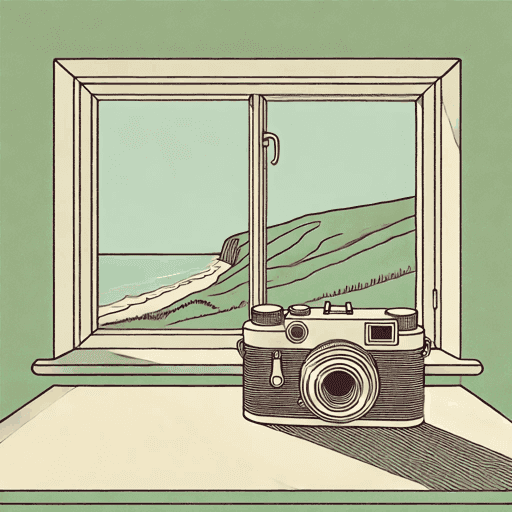
The recurring motif of photography represents Naomi’s primary tool for reclaiming her narrative and redefining her identity in a world that constantly tries to frame her through the lens of her trauma. After her father’s crimes are exposed, Naomi becomes a public spectacle; her image and story are sold by her mother and exploited by the media in books and films like Daughter of Evil. These public narratives trap her in the role of a victim. In response, Naomi embraces photography, an art form that gives her control of the lens. As a photographer, she chooses what to focus on, what to capture, and how to compose the image, allowing her to find and create beauty and order. This contrasts sharply with her powerlessness against the media, which “hype[s] it all over the talk shows, d[oes] in-depth interviews in magazines and newspapers. In those interviews […] Naomi’s name c[omes] up as often as her father’s” (51). Her work is a conscious act of agency, a way to establish a professional identity as Naomi Carson, the artist, rather than Naomi Bowes, the serial killer’s daughter. Photography becomes her method of processing the world on her own terms, turning her gaze outward to frame a new reality rather than remaining a passive image framed by her past.
The House on the Bluff
The dilapidated house on the bluff symbolizes Naomi’s fractured self and her conscious decision to stop running from her past, marking her turn toward healing and vulnerability. For years, Naomi’s life is defined by transience, moving from place to place to ensure that no one discovers her connection to her father. Buying the house is a profound act of defiance against this pattern; it is the first time she chooses to plant roots. The house is an “anchor,” and though it initially feels like a weight, it becomes her salvation. The physical act of rebuilding the house mirrors her internal process of self-reconstruction. As she works with Kevin to gut the old kitchen and repair the structure, she simultaneously dismantles her emotional defenses and learns to trust. She recognizes the house as hers the moment she sees its view, feeling an “indescribable sense of peace” and knowing that “no one could take this view, this sense of hers away” (83). This ownership of place is a critical step in owning her identity. By creating a permanent, safe home, she finally allows herself the vulnerability needed to form a new family with Xander, her friends, and Tag, the stray dog she rescues, transforming the house into a symbol of a future she has built for herself.

Unlock the meaning behind every key symbol & motif
See how recurring imagery, objects, and ideas shape the narrative.
- Explore how the author builds meaning through symbolism
- Understand what symbols & motifs represent in the text
- Connect recurring ideas to themes, characters, and events