The Teller of Small Fortunes
The Teller of Small Fortunes
A modern alternative to SparkNotes and CliffsNotes, SuperSummary offers high-quality Study Guides with detailed chapter summaries and analysis of major themes, characters, and more.
Summaries & Analyses
Quizzes
NEWReading Tools
Chapters 12-16Chapter Summaries & Analyses
Chapter 12 Summary
Content Warning: This section of the guide includes discussion of graphic violence, physical abuse, and death.
Tao and her companions stand at the entrance to the Splinthorn Woods, facing gnarled ancient trees and dark shadows. After leaving their wagons and mounts outside the forest, they enter carrying only what they need, including the flute Tao received from the Shinn shopkeeper in Craghorn. Inside the woods, they encounter eerie silence and unnatural sounds as they follow a narrow path. Eventually, they discover an enormous vertical wall of water standing impossibly in the forest clearing. When Mash tests it with his finger, it parts around his touch without wetting him.
The group passes through the water wall into a maelstrom of wind and sand. They struggle toward a hole in the ground at the center of the clearing and drop through it into a stone chamber below. Following a passage, they enter another chamber where they find a gleaming golden sphere in the center, guarded by a massive blind phoenix. They realize that they are meant to steal the sphere, though they are unsure how to get around the bird. Then, Kina recalls an old story she once heard about how a prince escaped from a phoenix by lulling it to sleep with music. Tao decides to play the Shinn flute, and soon enough, the phoenix falls asleep, allowing Silt to steal the sphere.
However, when Tao runs out of breath and stops playing, the phoenix awakens and confronts them. Speaking in a thunderous voice, the phoenix reveals that the golden sphere is actually its egg; it is also the last hope for its species, and it has guarded the egg for centuries. The friends begin to weep as they listen to the phoenix speak, and Silt returns the egg. Silt apologizes to Mash because they have now lost their reward and their chance to find Mash’s daughter, but Mash agrees that they cannot take the egg from its parent. The phoenix flies them back above ground, and they make their way to where Master Jacopo awaits. When they tell him they couldn’t take the treasure, he leaves them with no reward.
Chapter 13 Summary
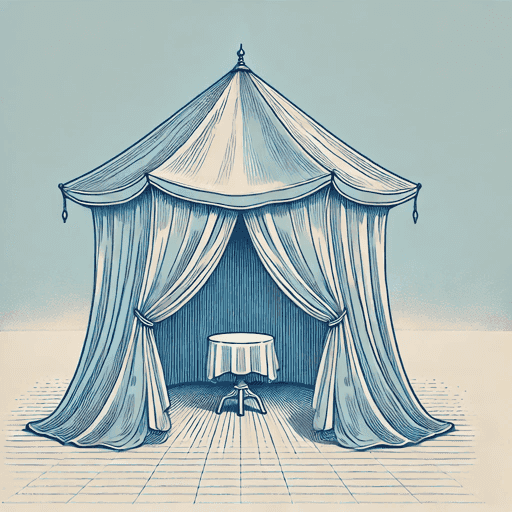
The next morning, Tao has made her decision to surrender herself to the Guild, but she says nothing to the others. They travel to the town of Burlton, arriving on market day. Tao sets up her blue silk tent and announces herself as The Teller of Small Fortunes, while Kina sells her newly invented “fortune cookies” nearby. Kina worries about Tao’s magic attracting the magefinder, but Tao assures her that she will tell only a few fortunes. Their business thrives, and they remain in Burlton for several days despite Mash’s concerns about staying in one place too long.
One night in the tavern, soldiers enter looking for the Shinn fortune teller while the magefinder waits outside. While her companions prepare to help her escape, Tao surprises them by surrendering willingly. She explains that she plans to join the Guild of Mages and use their resources to commission a kingdom-wide search for Mash’s daughter Leah. Despite her friends’ protests, Tao gives them her purse of silver and asks them to care for Laohu before leaving with the soldiers. The soldiers immediately mount her on a horse and ride away at a fast pace.
Chapter 14 Summary
Tao and her captors ride to Margrave, changing horses at way stations. Upon arrival, they travel through the Lower City’s crowded streets, then up through the Middle City to reach the Guildtower in the High City. There, they learn the High Mage is away, and Tao is ordered to stay at her stepfather’s home in the Silk Quarter until the High Mage returns in three days.
At Lord Desmond’s house, Tao has a tense confrontation with her stepfather, followed by an emotional reunion with her mother the next morning. Years of blame and resentment dissolve as her mother apologizes for making Tao believe she was responsible for her father’s death. Over the next three days, mother and daughter begin rebuilding their relationship, with Tao learning that her mother married her stepfather and brought them to Eshtera solely for Tao’s safety. Tao’s magical abilities would have put her in danger in Shinara, where magic of any kind was outlawed. Their discussions reveal that both were lonely in Eshtera and could have found comfort in each other if they had communicated more openly. At the end of the three days, the soldiers return to take Tao to the Guildtower.
Chapter 15 Summary
Meanwhile, Mash, Silt, and Kina decide to rescue Tao. They travel to Margrave, stable their wagons outside the city, and make their way to the Guildtower. Silt proposes a plan that the others find ridiculous, but reluctantly agree to follow. At the Guildtower, Silt rings the bell and tells Guild Examiner Hester that Kina is applying to join the Guild as a magical baker whose treats grant special abilities.
The skeptical examiner allows them inside but soon has them arrested for deception. They are placed in a holding cell, and Silt reveals this was part of his plan all along—getting arrested is an easier way to make it inside the Guildtower than breaking in past the guards and magical wards. He tries to pick their cell’s lock, but this fails against the magical lock, However, Fidelitus the cat, who had stowed away inside Kina’s basket, knocks a ring of keys off a table outside the cell. Kina provides a ribbon torn from her underclothes, and Silt uses this to retrieve the keys through the bars, allowing them to escape.
Chapter 16 Summary
Tao meets High Mage Melea. She is a tired-looking, bespectacled woman in her forties rather than the imposing figure Tao expected. Melea explains that the Guild needs Tao’s greater vision to help prepare for a possible war with Shinara. She reveals that knowing whether and when Shinara will attack would allow Eshtera to better allocate resources, potentially saving many lives. After negotiating with Melea and ensuring that the Guild will commission a search for Mash’s daughter in exchange for her cooperation, Tao agrees.
Melea takes Tao to the top of the Guildtower where the Bowl of True Sight awaits. A mage fills it with water that he pulls out of thin air, and it is then ready for Tao to use. She initially struggles to access her greater vision and listens as Melea explains that fear is the cost of power. This helps Tao confront her own fear of always being alone. Concentrating again, Tao places her hands on the Bowl and successfully accesses her greater vision. She sees Shinaran armies preparing for invasion but then witnesses rebellion breaking out within Shinara itself. Tao realizes the emperor’s armies will be diverted to fight internal battles instead of invading Eshtera. As the vision continues, she is overwhelmed by disturbing images of violence, including memories of her father’s death, and she collapses unconscious.
Chapters 12-16 Analysis
The Splinthorn Woods quest functions as a powerful moral crucible that reveals the true character of Tao’s companions, particularly Silt. When confronted by the phoenix defending its egg, Silt faces the defining question: “Will you, Siltarien Silvertongue? Is this who you are?” (210). The phoenix’s challenge cuts to the heart of identity, forcing Silt to confront whether thievery defines him or whether he possesses deeper moral principles. This encounter redefines Silt from a self-professed thief to someone who sacrifices personal gain for ethical considerations. His tearful admission that he “can’t do it” is evidence of his character growth from the thief he used to be (210). The novel constructs this test around the phoenix, a creature that symbolizes rebirth and renewal. Silt’s moral transformation requires confronting his past actions as well as the courage to redefine himself despite external expectations.
Tao’s reconciliation with her mother deepens the novel’s exploration of Finding a Sense of Home in Relationships. Her mother apologizes for ever blaming Tao for her father’s death, telling her: “You did not kill him. It was not your fault; it was never your fault” (239). These words dismantle the foundation of shame upon which Tao has built her adult life. As the two women talk and forgive one another, they discover that they were “both very lonely” in Eshtera (241) after moving from Shinara. Her mother regrets that they “could at least have been lonely together” (241). This reconnection allows Tao to integrate the disparate parts of herself: the young Shinn girl from Lianghe and the Eshteran fortune-teller. While Tao always felt uncomfortable in her stepfather’s mansion, her renewed connection with her mother transforms the place into something like home, and she is sad to depart when it is time for her to go to the Guildtower.
Her mother notices that Tao still wears the jade ji hairpin, which she has carried throughout her journey. It symbolizes both Tao’s connection to her heritage and her evolving sense of self. As Tao better understands her origins, she gains clarity about her present identity. Her mother affectionately tucks Tao’s hair into the ji, a gesture that acknowledges how Tao values this cultural and family heirloom that has reminded Tao of her mother and her cultural identity through these years. In this moment, the ji signifies healing and love.
These chapters also highlight the theme of The Weight of Foreknowledge as Tao confronts the fear that has kept her from fully embracing her abilities. High Mage Melea articulates this relationship plainly, saying: “Fear is the cost of power, Tao. Every mage is afraid. We just learn how to push past it—to use it instead of letting ourselves be imprisoned by it” (268). This philosophical stance reframes Tao’s reluctance to use her greater vision not as weakness but as an unresolved relationship with fear. The Bowl of True Sight serves as both literal tool and metaphor for self-knowledge, requiring Tao to confront her deepest fear of being “always alone” before she can access her deeper vision. Tao integrates the emotional growth she has experienced with her companions, and she gains the confidence she needs to access her full power. She tells herself, “I am Tao. […] And I’m not alone anymore” (270). Through this progression, Tao shows that acknowledging vulnerability can become a source of strength and that her fears were a test of emotional resilience.
Leong subverts traditional fantasy tropes through the complex portrayal of the Guild of Mages, which challenges simplified narratives of good and evil. Initially presented as corrupt oppressors, the Guild reveals itself as a pragmatic governing body with the people’s welfare as its primary concern. High Mage Melea demolishes Tao’s assumptions when she explains, “The Guild isn’t evil. And it’s not stupid, either […]. It’s just another arm of government filled with people like you or me who generally want to do what’s best for Eshetera” (257). This nuanced portrayal extends to Melea herself, whose power stems not from magical ability but political acumen. By presenting institutions and their representatives with complexity, Leong explores how governance requires difficult choices and compromises rather than heroic idealism, reflecting an idea rarely explored in fantasy literature.

Get in-depth, chapter-by-chapter summaries and analysis from our literary experts.
- Grasp challenging concepts with clear, comprehensive explanations
- Revisit key plot points and ideas without rereading the book
- Share impressive insights in classes and book clubs