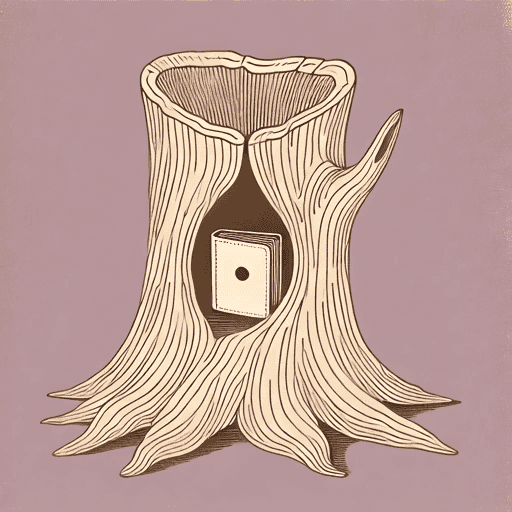
The Unworthy
63 pages • 2-hour read
Agustina Bazterrica, Transl. Sarah MosesThe Unworthy
A modern alternative to SparkNotes and CliffsNotes, SuperSummary offers high-quality Study Guides with detailed chapter summaries and analysis of major themes, characters, and more.
Important Quotes
“Some of them bite. They have flexible skeletons; they can flatten themselves and fit through tiny spaces, live without heads for days, survive underwater for a long time. They’re fascinating. I like to experiment with them. Cut off their antennae. Their legs. Stick needles in them. I squash them with a glass so I can linger over their primitive, brutal frames.
I boil them.
I burn them.
I kill them.”
(Page 1)
This passage comes from the opening paragraph of the novel as the narrator describes sewing cockroaches into Lourdes’ pillowcase to torment the other woman. Throughout the novel, insects are a symbol of the resilience of the natural world, and the narrator is fascinated with the cockroach’s ability to survive seemingly unlimited harm. Her interest suggests the narrator’s struggle to survive her own situation; however, the paragraph also illustrates the narrator’s unflinching brutality as she describes her cruel experiments with cold detachment. This introduction also foreshadows the narrator’s own entrapment in a brutal system of experimentation and punishment, aligning the insects’ suffering with that of the women under the Sisterhood. The grotesque experimentation evokes the theme of Misogyny, Oppression, and Organized Religion, as the narrator adopts the role of tormentor in a world where women are both the victims and enforcers of systemic cruelty. The narrator’s cold, observational tone further suggests a disconnection from empathy.
“They were beautiful, as only those brushed by God can be. The air was imbued with a sweet and fresh scent. The smell of mysticism.”
(Page 2)
At the start of the novel, the narrator believes completely in the Sisterhood’s doctrine. This passage describes the awe she feels in the presence of the Chosen during a ceremony in the Chapel of Ascension. She believes she can sense the proximity of God, indicating her faith in the Sisterhood. The reverent tone and saccharine diction (“brushed by God,” “sweet and fresh”) reflect the narrator’s indoctrination. The language of mysticism functions as a veil, masking the violence embedded in the system and emphasizing how beauty and divinity are weaponized.
“As I imagined the day I’d be consecrated as Enlightened (and not as Chosen, I don’t want to be Chosen), the day I’d be given the sacred crystal and the door would open for me, I heard a cry that was like a wail, and then a smothered scream, a scream like a growl, a growl like the silent lament of an animal lying in wait. I moved away from the door and ran.”
(Page 9)
In this passage, the narrator stands outside the door to the Refuge of the Enlightened, where the women chosen for the highest order of the Sisterhood live. The narrator longs to become Enlightened, but she fears becoming Chosen because of the “mutilations” they are subjected to. However, she crosses these words out, indicating a reluctance to face the truth of the violence and erroneousness of the Sisterhood’s theology. The scream that the narrator hears behind the door foreshadows the reality that the Enlightened are trapped behind the door, subject to the abuses of “Him,” the Sisterhood’s mysterious leader. The layered similes (“a scream like a growl...”) build a surreal auditory landscape, emphasizing the dissonance between indoctrination and intuition. The act of crossing out “mutilations” dramatizes the narrator’s inner censorship and fear, speaking directly to The Role of Language in Constructing Identity and Humanity. What she cannot name, she cannot fully confront.
“I know they would abandon me there, at the top of the Tower of Silence, with no food or water, alone, under the open sky, the crickets chirping, the sound hypnotic, ethereal, frightening. Far from the House of the Sacred Sisterhood.”
(Page 10)
Here, the narrator describes how the other women would not hesitate to make false accusations toward her that would land her in the Tower of Silence as punishment. This description of possible exile to the Tower of Silence reveals how women are pitted against one another in a closed system of punishment and control. The paranoia and betrayal reflect how Misogyny, Oppression, and Organized Religion suppress solidarity to maintain dominance. The absence of true sisterhood reveals a deeper loss of self, marking the system’s success in fragmenting identity and trust.
“We’re young women, with no marks of contamination; we haven’t aged prematurely like the servants and have no blotches on our bodies; we have all our hair and teeth, no lumps on our arms, no black sores on our skin. Some of the unworthy have offered the martyrdom of cleaning the servants’ pustules. They can’t hide their looks of disgust, their contempt. They carry out their sacrifices in silence.”
(Page 13)
In the House of the Sacred Sisterhood, “purity” is associated with physical beauty. The unworthy must be free of “contamination” from the outside world, and the lack of physical defects is thought to reflect a spiritual purity. These requirements speak to the objectification of women in patriarchal systems of oppression and reflect the male leader of the Sisterhood’s interest in the women’s bodies, not their spiritual well-being. Here, beauty is rendered as a marker of worth, suggesting how physical appearance becomes a spiritual currency within the Sisterhood. This reinforces Misogyny, Oppression, and Organized Religion, where patriarchal standards of purity dictate salvation. The silent performance of sacrifice by the unworthy also touches on The Role of Language in Constructing Identity and Humanity: Their expressions are suppressed, their disgust internalized, and their individuality erased.
“The stained glass was smeared with black paint. The glass with images of the erroneous God, the false son, the negative mother, the God unable to contain the avarice and stupidity of his flock, the God who let them poison the nucleus of the only thing that mattered. This God, who left us adrift in a poisoned world, cannot be named or looked at.”
(Page 23)
The Sisterhood is housed in a former monastery and remains haunted by the memory of the monks who lived there and their religion. The ecological collapse of the world is seen as proof of the monks’ god’s fallacy or inattention, so these half-visible reminders of the monks and their god serve to legitimize the Sisterhood and their god, who claims to protect the women where the “erroneous God” could not. The smeared stained glass literalizes how one belief system has overwritten another. The blackened windows symbolize the strategic rewriting of history and the obliteration of dissenting worldviews, gesturing also toward The Role of Language in Constructing Identity and Humanity.
“The marks are the remnants of the pustules, wounds, infections. The rashes are the filth of evil, the filth of collapse, the filth of failure. This filth absorbed from the sick earth has blighted them permanently, lest we forget that corruption lurks and the Enlightened are the only ones who can quell it. This filth, nesting in the servants’ skin, in their cells, is the anger of the sea, the fury of the air, the violence of the mountains, the outrage of the trees. It’s the sadness of the world.”
(Page 31)
The servants at the House of the Sacred Sisterhood are separated from the unworthy only by their physical defects. They bear the scars of the toxic outside world, and their inability to resist the contamination is thought to reflect their inner corruption. Their grotesque appearance is also a reminder of the danger that exists outside of the shelter of the Sisterhood, keeping the women’s belief in the Enlightened’s power strong. Through personification of nature’s “anger,” “violence,” and “outrage,” the novel evokes the larger backdrop of environmental and societal collapse. The repetition of “filth” emphasizes the cult's obsession with purity and punishment, revealing how organized religion in the novel weaponizes suffering to enforce oppressive hierarchies.
“He says God provided us with this secluded haven, this small, pristine Eden with clean water that surges from the center of the earth, or from the celestial and invisible hands of our creator. We don’t know, don’t understand, logically, how the miracle occurs, we just accept it. Without faith, there is no refuge.”
(Page 41)
This passage describes how “He,” the mysterious leader of the Sisterhood, controls the women’s access to information. They must take everything He says as fact, even if they don’t understand, and they have no access to outside information or construct their own beliefs or opinions. Furthermore, they are told that if they don’t believe, blindly and completely, they will not be protected, keeping them vulnerable and afraid. The biblical diction of “Eden” and “celestial hands” contrasts with the ambiguous origin of the miracle, drawing attention to how language shapes illusion and identity within the cult.
“A dragonfly perches on her stomach. I cover my mouth so I don’t cry out with joy. I haven’t seen one in years. I’d thought they were extinct. Through the transparent architecture of the dragonfly’s wings, through that fragile cathedral, I see the wanderer’s breath grow steady, though it’s still slow. She radiates an otherworldly light.”
(Page 47)
When the narrator sees Lucía in the woods for the first time, there is a dragonfly on her stomach. This is immediately a sign of hope for the narrator; it is the first indication that maybe there is still something of beauty in the world outside the Sacred Sisterhood, contrary to what she and the other unworthy have been led to believe. The metaphor of the dragonfly’s wings as a “fragile cathedral” reflects the narrator’s shifting sense of divinity, from institutional religion to the sacredness of nature and connection.
“Some say that long ago, before the great catastrophe, the Superior Sister was a climate migrant, that she was part of an army that fought in the water wars, the wars that coincided with the disappearance of many territories, many countries, beneath the ocean. Some whisper she’s not a woman, they say she could break your neck with one hand, crack your back in a single movement, that she was taught to breed edible insects in the millenary tribes, that He is her brother. I believe it all, except I know she’s a woman. I know because”
(Page 54)
This passage describes rumors about the tyrannical Superior Sister who manages the Sisterhood. She is a mysterious and imposing figure who inspires both awe and fear in the unworthy, and the women whisper about her life before the Sisterhood. This passage also alludes to the Superior Sister’s probable sexual assault of the women, as the narrator is sure the Superior Sister isn’t a man but declines to say why, cutting herself off and scratching out the explanation she was about to begin writing. The fragmented syntax and deliberate erasure of the final sentence reflect trauma’s impact on language and memory.
“[A]nd we lived on the roof of our house for days until the water went down, and sobbed when we saw our friends floating in the filth—Lispector, Morrison, Ocampo, Saer, Woolf, Duras, O’Connor—their pages soaked, useless, though their words were inside me, the words my mother urged me to love, even when I didn’t understand them; the shifting of the earth; the tornadoes; the winds of more than a hundred kilometers an hour; the fallen trees; the animals walking in circles for weeks, for months, nobody able to explain it, until they went mad from exhaustion and died; the destroyed city; the hailstones like fruit falling from the sky, exploding like bombs, projectiles of ice fracturing the fragile veil of civilization; the ruined crops; the extreme heat, fish cooked alive by the broiling sea, fish dying of thirst in the rivers, the droughts, the water wars, the shortages, the hunger, the thirst, the collapse, my mother dead in the same kitchen she’d danced in a few years prior.”
(Page 61)
When the narrator’s memories start to return, her words spill out in an unrestrained torrent. She describes the unrelenting catastrophes of the collapsing world, horror after horror that she was forced to endure. Her run-on sentence imitates the cascading effect of the natural disasters and the unraveling of her life and sense of safety. This passage also describes her mother’s love of literature and how she passed it on to her daughter. The allusions to writers take on an air of familiarity since they are referred to by last name only, and the specific allusions—to Clarice Lispector, Toni Morrison, Silvina Ocampo, Juan José Saer, Virginia Woolf, Marguerite Duras, and Flannery O’Connor—illuminate the specific literary world inhabited by the narrator and her mother, populated largely by women writers. Even as the world collapsed, books were essential to the narrator’s mother, a requirement for survival that now manifests in the narrator’s need to write. The sentence's breathless rhythm reflects the emotional toll of collapse, both global and personal.
“There are times I think that none of this matters. Why put myself in danger with this book of the night? But I have to because if I write it, then it was real; if I write it, maybe we won’t just be part of a dream contained in a planet, inside a universe hidden in the imagination of someone who lives in the mouth of God.”
(Page 72)
Here, the narrator describes her reasons for writing, even though it places her in significant danger. Throughout the text, the novel comments on the power of words to shape realities, and the narrator reiterates that theme here. Recording her memories legitimizes them, bringing back the self that is slowly being erased by the dogma of the Sisterhood. The surreal image of a dream within “the mouth of God” satirizes blind faith and underscores the narrator’s growing awareness of organized religion’s manipulation.
“She begged me, translucent yellow, like a wolf. But I knew too well that mercy was like silent dynamite; it lodged itself in your heart until it went off, and then there was no chance of gathering the pieces. The tarantula kids had taught me that. Without mercy you survive. Without mercy there’s more water for the others. Without mercy there’s time to read stories about women who fill candies with cockroaches. But with Circe I showed mercy. And she did with me. The white deer is not Circe.”
(Page 75)
This passage describes the narrator’s first meeting with Lucía. The narrator sees her as both a wolf and a white deer, indicating both the other woman’s beauty and toughness. These comparisons also associate Lucía with the outside world, setting her apart from the contrived reality of the Sisterhood. The passage also illustrates the narrator’s hesitation to connect with Lucía. Between the trauma she experienced in the outside world and the violence she is forced to endure and perpetuate at the Sisterhood, the narrator has lost her capacity for mercy. She has had to prioritize her own survival for so long that she struggles to find compassion for this new arrival.
“We looked at María de las Soledades, who hunched her shoulders and lowered her head. She no longer spoke words. She’d lost them all. One of the wounds from the spiked cilice had gotten infected. María de las Soledades covered her mouth with her hand, but day by day we saw her lips deform, saw them swell, festering with a whitish color. The stigma of disgrace.”
(Page 83)
María de las Soledades is an example of how the Sisterhood breaks women down. In the world of the novel, words have power, and María de las Soledades’s infected mouth and loss of the ability to speak coincide with her loss of strength and autonomy. She no longer has even the possibility of speaking up for herself.
“She was the maker of an entire universe, an inner universe, her own, and she was the sole inhabitant.”
(Page 88)
The other women exist completely within the Sisterhood’s world; they are beholden to the Sisterhood’s beliefs and caught up in the culture of cruelty, jealousy, and competition with one another. Lucía, however, is independent, autonomous. She plays by her own rules and sets her own terms, which presents a danger to the authority of the Sisterhood. Lucía’s resistance to cruelty not only sets her apart from the indoctrinated women, but reframes strength as mercy rather than domination. In a world governed by Misogyny, Oppression, and Organized Religion, this gentleness is radical. It reminds the narrator of a different value system, one in which The Redemptive Power of Love and Connection can disrupt cycles of brutality and lead to true spiritual insight.
“She had drawn a hexagon on a piece of paper and a question mark in the middle of it. She did things like that sometimes, encouraged me to think. It took hours, maybe days, before I finally answered that nature doesn’t make mistakes, that the structure had to be the best one to keep the honeycomb strong.”
(Page 95)
In this passage, the narrator describes a childhood memory of her mother teaching her about the structure of beehives. Instead of giving her the information outright, she made her daughter think hard and puzzle out the information on her own, teaching her critical thinking and problem-solving skills that suggest why the narrator remains resistant to the dogma of the Sisterhood. Her tendency toward free thought remains, even when she has suppressed all memories of life before the convent.
“It hurts to write about the tarantula kids, that’s why I didn’t remember them, why my mind had emptied before I came to the House of the Sacred Sisterhood.”
(Page 102)
Here, the narrator faces her memories and begins to understand why she forgot them. Her life before the Sisterhood was so full of loss, pain, and trauma that she repressed her memories, shutting her pain away because she was unable to process it.
“Someone screamed on the other side of the door. It was like a shrill cry, cutting. A wail? One of the Enlightened trying to chew shards of glass? I was startled.
It was then that I asked myself why I wanted to be Enlightened. Did I really want to be an emissary of the light? To live locked up? To be an intermediary between God and this contaminated world? Was my help necessary, my participation? Escaping from the House of the Sacred Sisterhood means death in the devastated lands. Are the miracles in this blessed space real? Or is it the water in the Creek of Madness that causes us to believe? To question means living in the desert. In a heaven with no God?”
(Page 109)
This marks an early rupture in the narrator’s belief system and engages with the theme of Misogyny, Oppression, and Organized Religion, as she begins to recognize the Sisterhood's doctrine as possibly manipulative rather than divine. She sees that belief can be a comfort, easier and safer perhaps than facing reality, but she starts to wonder for the first time if there might be some danger in blindly following the Sisterhood’s teachings. However, the narrator crosses these questions out, suggesting that this line of questioning is still too frightening and destabilizing to her worldview. Although she is questioning, she isn’t yet ready to face the possibility that the Sisterhood is false. The repeated rhetorical questions function as a literary device to mirror her escalating doubt, while the surreal image of “a heaven with no God” highlights the destabilizing effect of religious disillusionment.
“If someone finds these pages, the Superior Sister will break my fingers, yank out my eyes, lash me to obliteration. She’ll see to it that I die suffering new pain, atone with my blood. That’s why I tore and burned the pages that came before these, those that spoke of she who is below the earth, her mouth open, the insurgent, the disobedient one, Helena. That’s why I betrayed her. I told the others about the chain with the gold cross under her mattress. That’s why they buried her alive. That’s the very reason I began to write again, to run the risk, so I wouldn’t forget her, so I could retain in these words, in this attempt at capturing a life, a moment, a world, her smell, a scent like a sweet poison, like a sacred fire.”
(Page 111)
After making love with Lucía in the forest, the narrator is emboldened to record her experiences, despite the potentially devastating consequences. Before, with Helena, she wasn’t brave enough to follow through with writing her world into reality. She destroyed the evidence and betrayed Helena to her death. Now, however, she understands that a painful death is preferable to living a lie, and she is determined to record her experiences to make them tangible and impossible to forget. This entry illustrates the theme of The Role of Language in Constructing Identity and Humanity, as the narrator uses writing to restore Helena’s memory and construct a truer self. Her betrayal becomes a catalyst for her transformation, and her act of writing—“to retain in these words”—asserts language as an instrument of resistance. The imagery of a “sacred fire” and “sweet poison” deepens the symbolic intensity of this emotional confession.
“I cried in silence because words can’t capture a sacred moment. What to say when you’re in the presence of something majestic? No one had seen a firefly in decades. My mother had told me about them, because her father had told her about them, like a myth passed down through generations.”
(Page 114)
This passage describes the narrator seeing fireflies in the forest with Lucía. The sense of the divine that the narrator used to find in the Sisterhood, she now finds in nature. The insects, which the narrator believed to be long dead, suggest the beauty, resilience, and wonder of the natural world. The moment underscores The Redemptive Power of Love and Connection, as her intimacy with Lucía opens her to moments of awe that transcend religious doctrine. The passage also subtly engages The Role of Language in Constructing Identity and Humanity, as the narrator notes the firefly as a kind of inherited story—“like a myth passed down”—highlighting the oral tradition and generational memory. The quiet awe is heightened by the use of restraint in tone and the sacred silence described.
“We kissed inside the tree, in the dark hollow that smelled of the night, of something secret, of something lurking, hidden. She hugged me and it felt like I was inside an ancestral temple, a cathedral of wood and sap.”
(Page 118)
Love also begins to replace the Sisterhood as the narrator’s understanding of the divine. Being close to nature and connecting with another individual is more holy than anything the narrator has experienced in the Sisterhood; she feels like she is in a house of God. This imagery of “a cathedral of wood and sap” critiques the artificiality of the Sisterhood’s rituals and embraces a more embodied, natural spirituality. The passage aligns with The Redemptive Power of Love and Connection, as emotional and physical intimacy become conduits for meaning. It also furthers the critique embedded in Misogyny, Oppression, and Organized Religion by contrasting human connection with the sterile, punitive structure of institutional faith. The metaphor of the body as a temple is reimagined here with tenderness and reverence.
“She looked at the sky, the vulture, and smiled with her perforated, wounded, silenced mouth. I regretted not having helped her earlier, not having talked to her, having belittled her, which is why, when she stopped breathing, I touched the scars on her mouth, closed her eyes, and cried. Lucía took my hands so I wouldn’t feel so alone in my personal atonement.”
(Page 165)
As the narrator grows close to Lucía and begins doubting the Sisterhood’s dogma, she starts to see how her participation in the Sisterhood’s culture of violence and cruelty has harmed the women around her. When they arrive too late to save María de las Soledades, she understands the role she played in the woman’s suffering and feels ashamed. She is beginning to reconnect with herself and her humanity, which had become lost to the Sisterhood. The narrator’s remorse and tears function as a kind of secular confession, and the tactile details—the scars, the closed eyes—highlight her movement back toward empathy and recognition.
“These words contain my pulse. My breath. The music that radiates from the blood flowing through my veins. I’m in the tree hollow, in my woods. I understand now that the woods is not just trees, that it could never be reduced in that way; it’s the subterranean, microscopic life, the aerial life, all that reverberates with the splendor of a living cathedral. The light that filters through the leaves forms translucent columns, a radiant sea expanding. I can feel the aura, the power that pulses through the air. I can touch it. I can caress the warm, gleaming particles of light with my fingertips. I’m part of this pagan temple, this ancestral sanctuary.”
(Page 171)
After freeing Lucía, the narrator hides in the hollow tree in the forest, writing with her own blood, indicating how she is transferring herself onto the page that will live on after she dies. Referring to the woods as hers indicates how she has overcome the trauma of her past, of losing Circe in the metallic woods. Unlike the “useless” metallic woods, this natural place is full of complex, divine splendor, indicating how manmade realities can never replace the wonder of nature. She feels as if she is in a holy place, closer to God than she ever was in the Sisterhood. The act of writing with her blood literalizes The Role of Language in Constructing Identity and Humanity, as the narrator becomes text, body and story inseparable. The forest is no longer just symbolic; it becomes a sanctuary of transformation. Her intimate connection with the natural world speaks to The Redemptive Power of Love and Connection, while the contrast with the “metallic woods” critiques the sterile artifice of Misogyny, Oppression, and Organized Religion. The metaphor of the “living cathedral” elevates the natural world as the true site of spiritual authority.
“I saw the cogs of the lie, that there is no god, just his mouth insulting, just the hunger, just him and his hands, him and his voice of a sacred battalion, a blessed legion, a black wave that drags wails in its wake; […] I saw the enlightened swollen with sin, their wombs bursting with vice, and I wasn’t surprised at the proof of what had been apparent, that he was profaning them; and I kept still as I looked for Lucía until I saw her underneath him, enduring the abominable ritual, the superior sister watching them, her back to me and her leather whip in one hand, and then I covered my mouth to stifle a scream, and Lucía moved her head and gave me a look of surprise, desperation, and helplessness, a gaze that gave me strength, and with sudden speed I stabbed the superior sister in the kidney with my knife, took away her whip and, with the handle, struck her in the nape of her neck.”
(Page 172)
Here, the narrator describes what she saw behind the door of the Refugee of the Enlightened. She understands that all of the Sisterhood’s teachings were false, that the Enlightened were selected and isolated solely to be raped and abused by “him,” suggesting that the Sisterhood was merely a ruse for a single man to gain power and control over women’s bodies. As she writes, whether because of haste or intentionally, the narrator stops capitalizing words like “enlightened” and “superior sister,” stripping the Sisterhood of its legitimacy by removing proper nouns. “Lucía” becomes the only proper noun, the only thing that is real and named.
“Before they left, she hugged me again, and through her tears, she called me by my real name, kissed me one last time, and, in her translucent voice, said three words, but they weren’t words, they were a vibration of fire, fire that enveloped me like a river of light, a river of dazzling flowers.”
(Page 174)
The narrator is critically wounded freeing Lucía, and she forces the other woman to go on without her, making one last sacrifice that is finally meaningful. Lucía tells her that she loves her before she goes, but the narrator doesn’t write the word “love.” The sentiment, something so sacred, is the one thing that is always beyond words. This moment distills The Redemptive Power of Love and Connection into pure sensation—“a vibration of fire.” The narrator’s decision not to name the word reflects The Role of Language in Constructing Identity and Humanity: What cannot be spoken must still be felt. The sensory metaphors—“river of light,” “dazzling flowers”—imbue the farewell with holiness, replacing the false sanctity of the Sisterhood with the truth of emotional communion.

Unlock every key quote and its meaning
Get 25 quotes with page numbers and clear analysis to help you reference, write, and discuss with confidence.
- Cite quotes accurately with exact page numbers
- Understand what each quote really means
- Strengthen your analysis in essays or discussions