The Unworthy
63 pages • 2-hour read
Agustina Bazterrica, Transl. Sarah MosesThe Unworthy
A modern alternative to SparkNotes and CliffsNotes, SuperSummary offers high-quality Study Guides with detailed chapter summaries and analysis of major themes, characters, and more.
Character Analysis
The Narrator
The first-person narrator of The Unworthy is an unnamed woman living in a religious cult known as the House of the Sacred Sisterhood. When the narrator was a child, society collapsed after generations of ever-worsening climate crises, ecological disasters, and the advance of artificial intelligence. She grew up with a mother who managed to find beauty and joy in life despite their hardship and impressed a love of literature upon her daughter. However, after the “final blackout,” society never recovered. The narrator and her mother lost their books, their “friends,” in a flood, and the narrator left home after her mother’s death. The narrator joined up with a group that called themselves the “tarantula kids,” where she learned survival tricks and briefly found community. However, the tarantula kids were brutally murdered while she was out looking for food one night, leaving the narrator on her own again. She traveled alone, eating whatever she could find, until she met Circe, a cat that became her trusted companion. Circe and the narrator traveled together, sharing what little food they came across in the “ravaged world,” until they were attacked by men who raped the narrator and stabbed Circe to death. Circe’s death destroyed the narrator, and she spent an unspecified amount of time alone, wandering, starving, and dying of thirst until she reached the House of the Sacred Sisterhood. She was found by a woman named Helena, who nursed the narrator back to health despite the risk of being “contaminated” by toxins from the outside world.
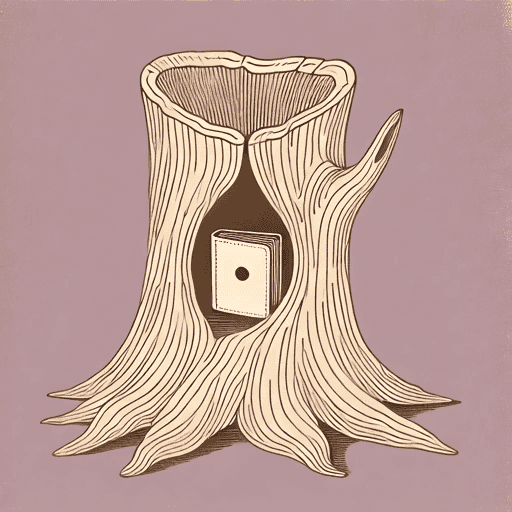
The narrator arrives at the Sisterhood with her ability to trust and connect fundamentally broken. Her experiences with the tarantula children and Circe have detonated in her heart like “silent dynamite,” leaving “no chance of gathering the pieces” (75). She believes that “[w]ithout mercy you survive” (76), a teaching that is reinforced by the brutality of the Sisterhood. After she is accepted to the Sisterhood, she and Helena share a room, and their relationship becomes close, if not explicitly sexual. They visited the hollow tree in the woods that the narrator later frequents with Lucía, but when Helena reads the narrator’s “profane sentences […] about her voice, her impure magnetism” (25), the narrator doesn’t hesitate to “betray” the other woman. She reports Helena’s secret cross, a symbol of the “erroneous God,” and the other woman is buried alive as punishment. The narrator has a dream-like memory of sneaking out to dig up the other woman’s body, “pleading for forgiveness, crying” (26), but mostly she blocks out the guilt, repeating the Sisterhood’s teachings that Helena “oozed indecency, debauchery” (24). She chooses self-preservation over mercy and connection and blocks out all memories of her life before the Sisterhood.
By the present day of the novel, the narrator has been fully indoctrinated into the Sisterhood’s dogma. She believes in her own impurity and is eager to become Enlightened by any means necessary. She exhibits a tendency toward cruelty, sewing cockroaches into Lourdes’s pillowcase, for example, and is “overjoyed” when she sees other women punished. However, she is also compelled to write even though it is dangerous and forbidden, engaging in self-discovery and even sometimes daring to question the teachings of the Sisterhood. She seems to understand, subconsciously at least, that the authoritarian dogma of the Sisterhood is gradually eroding her individuality and sense of identity, and writing is a way to hold onto her sense of self.
When Lucía comes to the Sisterhood, the narrator is struck by her beauty, but also her confidence and self-assuredness. The narrator’s understanding of the world is filtered through the teachings of the Sisterhood. She knows little to nothing for herself, just what she is told to believe by “Him” and the Superior Sister. However, as her memories begin to return and she starts to fall in love with Lucía, the narrator begins to question. As she rediscovers love, she rediscovers mercy and begins to atone not through violence and cruelty, but through compassion, mercy, and forgiveness. She finds the courage to love again, which ultimately allows her to break through the illusions and lies that the Sisterhood is built on.
The narrator is shaped by trauma and deprivation, but her defining quality is the aching persistence of her inner life. Even at her most cruel, she remains unusually introspective, always half-aware that something vital is missing. She is both victim and participant in violence, which gives her moral evolution greater weight. What makes her such a complex protagonist is her capacity for contradiction: She is deeply ashamed, fiercely loyal, easily jealous, and slowly capable of love. In a story filled with unspeakable brutality, her desire to feel again becomes a quiet act of revolution.
Lucía
Lucía is a wanderer whom the narrator finds in the woods and falls in love with. She immediately captivates the narrator with her “majestic” beauty and her self-assuredness. Unlike the other women, who live in the world of the Sacred Sisterhood, Lucía is the “maker” and “sole inhabitant” of her own “inner universe” (88). She is independent, a free-thinker who refuses to participate in the Sisterhood’s practices of cruelty. The narrator often describes her looking like a “white deer,” but her voice also holds “the yellow gaze of a wolf” (73); although she is compassionate, she is not naive. She has “experienced and accepted terror,” but remains “someone able to create beauty” (73). The other women in the Sisterhood are likewise frightened and enchanted by Lucía, especially as she seems to have special powers, such as the ability to walk on coals without being burned and command a swarm of wasps. Her admirers see these powers as “miracles,” while others see them as the work of dark witchcraft. Lucía is pure and beautiful, and the others see her as intense competition for the coveted positions of Chosen and Enlightened. Some of the unworthy, particularly Lourdes, begin to spread ugly rumors about Lucía, claiming she killed a Diaphanous Spirit using “dark, ancestral magic” (149). Lucía is “unperturbed” by these rumors, but the narrator doesn’t yet have Lucía’s “capacity for mercy” (151) and tries to take revenge on behalf of Lucía, feeding Lourdes the amanitas that lead the Superior Sister to beat and kill the other woman. When they sneak out to bury Lourdes, the narrator feels remorse, but Lucía never blames her for the other woman’s death.
Lucía helps the narrator to “feel things [she’s] forgotten, like mercy” (163). She opens her eyes to life outside of the Sacred Sisterhood and helps her to see the evil and brutality of their doctrine. When Lucía is chosen as Enlightened, the narrator knows she must rescue her. She enters the Refuge of the Enlightened to find “Him,” the supposed leader of the Sisterhood, raping the sequestered Enlightened, including Lucía. The narrator frees Lucía, although she suffers mortal injury herself, indicating that she has released the doctrine of self-preservation at all costs.
Lucía’s most striking trait is her moral clarity. She does not posture or perform righteousness; she simply refuses to participate in cruelty, even when it is rewarded. This quiet resistance makes her seem mystical to others, but her “miracles” are really extensions of her inner resolve. Lucía is brave, but not hardened; wise, but not cynical. Her strength lies in her ability to see suffering without absorbing its logic. In many ways, she serves as the narrator’s moral and emotional opposite, an embodiment of what it looks like to survive without losing the capacity for tenderness.
The Superior Sister
The Superior Sister is the antagonist and tyrannical mother superior of the Sacred Sisterhood. A “colossal” figure with a “magnificent and terrifying presence” (51), she is a symbol of how patriarchal systems of oppression pit women against one another. She wears “war boots” that remind the narrator of a soldier and often carries a whip that she uses “to educate [the unworthy] in the art of agony” (30). She is strong, capable of carrying other women easily, and “so resilient she could be immortal” (153). Rumors circulate about her life before the Sisterhood as the unworthy collectively “fear and admire her” (87). Some believe that she was a “climate migrant” and fought in the “water wars” as whole nations were swallowed up by the sea. Some whisper that He is her brother, and together they killed the monks who used to inhabit the House of the Sacred Sisterhood. The Superior Sister subjects the women to all manner of horrible punishments, from sexual abuse and beatings to burning and burying alive. No one, not even her “favorites,” like Lourdes, are safe from her sadistic rampages. Towards the end of the novel.
The Superior Sister is not just an enforcer of cruelty; she is a portrait of internalized patriarchy, having weaponized the pain she likely once endured as a woman. Her tyranny is calculated—she isolates women from each other, rewards betrayal, and ritualizes suffering to maintain control. Her persona is mythic, almost supernatural, but her power rests on fear and spectacle. Ultimately, she reveals how authoritarian systems use women as both victims and instruments of oppression, transforming them into enforcers of the very structures that dehumanize them.
Lourdes
Lourdes is one of the unworthy and a favorite to become Chosen or Enlightened. She is chosen for important honors and duties, such as dealing out “exemplary punishments” for the other unworthy and planning the Minor Saint’s funeral. This special treatment inspires jealousy in the other women, especially the narrator, who dreams of seeing Lourdes fail and even longs to kill her at times. She is “radiant and pristine,” beautiful, unblemished, and free of “signs of contamination” on the outside, but the narrator suspects she is “rotten on the inside” because she remains unworthy (35). When Lucía arrives, Lourdes sees the other woman as competition and tries to sabotage her, first by planting a wasp nest in her cell, then by spreading rumors that “Lucía is a witch who turns into a cockroach at night” (132). However, these tactics backfire when the narrator feeds Lourdes amanitas, causing her to dance naked in the garden and incur the Superior Sister’s wrath. The Superior Sister beats Lourdes in the forest; the narrator and Lucía try to save her, but the next morning, she is hanging dead from the tree. Even though she spent much of the time hating Lourdes, the narrator feels “pain coursing through [her] bones” (153) at the sight of the other woman’s body, indicating the maturation of her compassion and empathy.
Lourdes represents what happens when power is dangled as a reward for obedience in a corrupt system. She is desperate to ascend and clings to proximity to authority, even as it destroys her. On the surface, she is poised and devout, but underneath, she is brittle—driven by fear, competition, and the need to matter. She is not irredeemably cruel; her malice is a learned behavior, modeled by the Sisterhood. Lourdes’s downfall is tragic because it mirrors the narrator’s potential path, and her death becomes a pivotal moment of awakening for those left behind.
Circe
Circe is a cat that becomes the narrator’s cherished companion during the unspecified period of time before she arrives at the House of the Sacred Sisterhood. The narrator names her after the sorceress from Greek mythology who turns men into animals, a story by Argentine writer Julio Cortázar about a woman who feeds her boyfriend candies filled with cockroaches. She sees Circe not as a cat but as a companion, a little “sorceress” or “enchantress” whose purr is a “magical sound” that soothes the narrator. Circe is presented in such a way that it isn’t immediately clear what kind of creature she is, or even if she is an animal or a human. She and the narrator are both wary of one another, but they slowly begin to trust and rely on one another, becoming “a pack of two” (130). Their brief companionship comes to a tragic end when Circe is stabbed to death by a group of violent men. Her death devastates the narrator and remains one of her most significant traumas from her time outside the Sacred Sisterhood. Their relationship illustrates how love and companionship can transcend species.
Circe is the narrator’s last tether to innocence and affection before the Sisterhood. Her mysterious presence blurs the line between reality and symbol, functioning as a source of comfort, agency, and memory. Circe’s loyalty is silent but absolute, and her presence humanizes the narrator during her most desolate period. Her brutal death shatters the narrator’s sense of safety and catalyzes her descent into numbness. In the narrator’s inner cosmology, Circe remains a sacred figure and a memory of love uncorrupted by doctrine.
María de las Soledades
María de las Soledades is one of the unworthy who is broken by the Superior Sister’s sadistic punishments. She is different from the other women, who complain that she smells “of chemicals, fermented fat, rotting vegetables” and doesn’t “deserve to be among [them]” (22). When she was accepted to Sisterhood and renamed, she asked to be called “Rain,” making the other unworthy hide their laughter at this ridiculousness. As punishment, the Superior Sister carved the word into María de las Soledades’s back, leaving a permanent scar. Her misfortune intensifies when she lets a giggle slip out during a ceremony in the Chapel of Ascension. The Superior Sister fits her with a spiked cilice that leaves her with a gruesome infection in her lips. Over the course of the novel, she “loses” her ability to speak; her lips blacken in “the stigma of disgrace” (83), and she becomes increasingly weak. When she cannot hold in a cough during another ceremony, the Superior Sister sends her to the Tower of Silence without food or water. The narrator “judge[d] her silently” (22) along with the rest of the unworthy, but she agrees to go to the tower to rescue her with Lucía. They find María de las Soledades barely alive, and she stops breathing in the narrator’s arms as she cries with regret for “having belittled her” (165). María de las Soledades illustrates how oppression silences and eventually kills the vulnerable.
María de las Soledades embodies the fate of the gentle in a world that demands hardness. Her childlike hope, as seen in her chosen name “Rain,” marks her as other, and her silence—both forced and chosen—becomes a metaphor for the erasure of those who cannot conform. Though she barely speaks, she functions as a moral mirror in the novel: The narrator’s initial judgment of her reveals internalized cruelty, and her later grief reveals growth. María is not weak; she is fragile in a system designed to crush fragility.

Unlock analysis of every major character
Get a detailed breakdown of each character’s role, motivations, and development.
- Explore in-depth profiles for every important character
- Trace character arcs, turning points, and relationships
- Connect characters to key themes and plot points