This Is Not About Us: Fiction
52 pages • 1-hour read
Allegra GoodmanThis Is Not About Us: Fiction
A modern alternative to SparkNotes and CliffsNotes, SuperSummary offers high-quality Study Guides with detailed chapter summaries and analysis of major themes, characters, and more.
Chapters 1-4Chapter Summaries & Analyses
Content Warning: This section of the guide includes discussion of death, bullying, and substance use.
Chapter 1 Summary: “Apple Cake”
Seventy-four-year-old Jeanne Rubinstein is in hospice care. Her older sisters, Helen and Sylvia, come to her house to say goodbye. Neither can believe that their baby sister is on her deathbed. They talk to Jeanne, updating her on the family, including news of their children and grandchildren. Helen has two daughters, Pam and Wendy, and Sylvia has one son, Richard. Jeanne has two children herself, Steve and Dan, both of whom she thinks look awful when they arrive. Jeanne listens to her sisters talk, but she barely responds.
As Jeanne drifts in and out of consciousness, Sylvia and Helen argue about the funeral arrangements. Helen thinks they should ask Jeanne her wishes, and this upsets Sylvia.
Later, Dan and his wife Melanie, as well as Helen’s daughter Pam, come for a visit. Jeanne lies in bed watching them all “vying for attention” (9). Finally, she tells her sons that she wants to be cremated instead of buried in the plot near their late father. She also doesn’t want the rabbi involved.
Helen and Sylvia argue about Jeanne’s wishes again. Helen thinks they should have a traditional ceremony despite Jeanne’s wishes. Distraught, Sylvia stays up late, baking. The next day, Jeanne is delighted with the apple cake that Sylvia has made, but Helen is upset that Sylvia used her recipe. An argument ensues.
Meanwhile, Jeanne’s strength returns. The nurses gave her only a few days to live, but Jeanne has decided that the only thing she wants is to live. Her family is unsure if they should return home and come back to town for the funeral later. Finally, the rabbi visits. Jeanne informs him of her desire to be cremated and asserts her lack of disinterest in a religious funeral. An upset Helen insists that Jeanne change her mind on this matter because Helen will want to visit Jeanne at the cemetery. Jeanne acquiesces.
The family calls Dan and Melanie’s daughter Phoebe and demands that she come and say goodbye to her grandmother. The family thinks that Phoebe’s absence might be the reason why Jeanne hasn’t died yet. Phoebe finally arrives with her boyfriend Christian.
After Jeanne dies, Helen insists on a traditional memorial and burial. A fight between the sisters ensues, and Helen ultimately wins out. Sylvia feels even more upset upon hearing Helen’s eulogy, as she believes that it doesn’t do Jeanne justice.
Afterward, the family sits shiva for a day. When Helen discovers that Sylvia has baked more apple cake using her recipe, her anger resurges and she storms out. A years-long grudge ensues. Despite the family’s efforts to reconcile the sisters, they do not make amends.
Chapter 2 Summary: “New Frames”
Sylvia and Lew’s son Richard is divorced from Debra. Since their split, Richard has lived alone and they have shared custody of their daughters, Sophie and Lily. Finally, he starts dating a 25-year-old woman named Corinne, whom he met at a bar. Corinne changes how Richard sees the world. Even his dentist notices that he is happier. Corinne also encourages Richard to take care of himself, beginning with a new haircut. He hasn’t done anything for himself because he has been balancing work, an “angry ex, two daughters, a giant mortgage” (27), and his rent. Although Debra broke up with him, Richard is somewhat grateful to be on his own. He can even smoke cigarettes without worrying about Debra’s scolding.
Richard tries to avoid Debra when he picks up the girls on the weekends, but he also likes stopping in to see their dog, Max, whom he thinks Debra unfairly took in the divorce. One day, Debra finds him petting Max and confronts him about Corinne. She insists that the relationship is unhealthy for the girls and suggests that she meet with Corinne. Richard takes offense and refuses to let the two women communicate.
While Richard is at the skating rink with the girls, Richard’s mother, Sylvia, calls to say that she is going into the hospital for vertigo. Richard understands that she expects him to come, so he rearranges his plans and takes off work to race to Boston to see her. When he arrives, he discovers that all of Sylvia’s tests are negative.
Back at home, Richard feels guilty and glum and tries to put off seeing Corinne. She comes over anyway, insisting on helping him. She suggests that he get a new pair of glasses. The next day, Richard gets a new prescription and new frames, replacing his old wire pair for a plastic pair. Corinne is thrilled with his new look. Over the following days, Richard notices how differently people respond to him in his new glasses. Lily is the only one who doesn’t like the change.
Not long afterward, Corinne informs Richard that Debra has contacted her. He also learns that Debra and Sylvia are still talking. Frustrated with Debra’s meddling, Richard confronts her. They argue about their relationship and the girls. Debra accuses Richard of letting Corinne distract him from the girls. Soon afterward, Richard breaks up with Corinne. No longer wearing the new glasses, he tells her that he needs to focus on his daughters.
Chapter 3 Summary: “F.A.Q.s”
After breaking up with Christian, 21-year-old Phoebe returns home to stay with her parents, Dan and Melanie, for her college winter break. Since her departure, her parents have fallen back into their old ways. They no longer compost, eat healthily, or keep chickens, all of which were pursuits that Phoebe had spearheaded.
For the first several days, Phoebe does nothing but sleep in her room with the door closed. Dan and Melanie are glad that she is home, but they worry about her. Dan thinks they should give her space, but Melanie tries to intervene and comfort her, suggesting that Phoebe might be pregnant. Phoebe scoffs and pulls away, refusing to open up about what is bothering her.
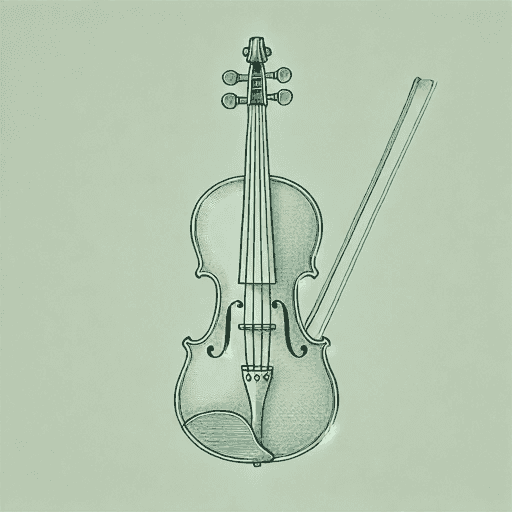
Then one night, Phoebe’s cousins Zach and Nate visit, along with their parents, Steve and Andrea. Phoebe’s aunt and uncle are shocked when Phoebe announces that she doesn’t know if she wants to finish her final semester of college; she also mentions that she has quit playing the violin. (Jeanne left Phoebe her prized violin, whereas she’d left Steve and Andrea’s boys nothing. Phoebe has also always been a talented musician.)
After her family’s visit, Phoebe takes a long walk by herself. When she returns, she feels the presence of Jeanne’s violin in her closet.
Over the following days, Phoebe starts sleeping less. She buys organic groceries and starts making her homemade granola again. Then she takes the bus into town and starts busking with her grandmother’s violin. She uses the little money she makes to buy herself the sorts of sweets that she usually never eats. Then one day, her uncle spots her busking at the station and reports back to her parents. They are hopeful that she is getting over her breakup, but they worry about her future. Phoebe assures them that she is fine. Then one day, Melanie and Dan show up at the station and film Phoebe playing. They offer to take her out for lunch, but Phoebe declines, insisting that she get back to her life.
Chapter 4 Summary: “Ambrose”
Richard and Debra’s younger daughter Lily starts writing a story about a girl who turns into a swan. She works on the story in any free moment she has. Meanwhile, she longs to live in what she sees as the “olden” days. One night, Lily overhears Debra talking to Richard on the phone and worrying about her mental health.
Lily is also in ballet. She tries hard to excel, but she often feels upset when she is late or makes a mistake. Her teacher is often unkind. Sometimes, Lily hides and falls asleep at the dance studio.
During one weekend at Richard’s house, Lily tells her dad that she wants to live in a different era. She also mentions feeling depressed. Richard encourages her, but Lily begs to be homeschooled, insisting that she learns better in a one-on-one setting. Richard insists that she prove that her tutoring sessions with Megan are really more productive than school. However, during her sessions, Lily still can’t focus.
Soon afterward, Debra drives Lily and Sophie to dance class. Sophie stalls while getting ready, which makes Lily late, as her class starts first. In the car, Lily is upset and refuses to go into the studio. Debra finally encourages her to go join her class. Inside, a relieved Lily discovers that she has a substitute instructor. She sneaks in and starts dancing, suddenly able to let go of her emotional turmoil.
Chapters 1-4 Analysis
In the opening chapters of the novel, the members of the Rubinstein family encounter a range of domestic and familial disputes that introduce The Tension Between Personal Autonomy and Familial Expectations. In Chapter 1, “Apple Cake,” Sylvia and Helen conflict over their differing opinions on the arrangements for their younger sister Jeanne’s memorial and funeral services. Each sister wants to have a part in remembering Jeanne, but their disagreements disrupt their former kinship and complicate how they see themselves. Even more crucially, because these conflicts erupt before Jeanne has died, her two older sisters allow their disagreement to taint their last moments with Jeanne.
Family tensions are also laced throughout Chapter 2, “New Frames,” for as Richard’s attempts to remake his life after his divorce from Debra, he must also balance his commitments to his young daughters and remain on speaking terms with his ex-wife. Similarly, the storyline of “F.A.Q.s” highlights Phoebe’s return home from college, which forces her to choose between her parents’ expectations and her own dreams for the future. In Chapter 4, “Ambrose,” sixth-grader Lily feels trapped by her academic and extracurricular responsibilities, longing to work on her private writing project instead of upholding her typical school-aged duties. While the protagonists in these four scenarios are markedly different, they all find themselves caught between who they want to be and how their families expect them to behave. As a result, they are all forced to question whether to pursue their own desires or to simply accept the roles that have been assigned to them.
Throughout these chapters, the author uses imagery and symbolism to capture her primary characters’ internal struggles. In Chapter 1, for example, the repeated image of the apple cake represents the continuation of family tradition. Although the recipe purportedly originated with Helen, the cake has become Sylvia’s trademark—her way of contributing in times of need. In this way, Sylvia uses the cake to express herself and to show her devotion to her family in the days surrounding Jeanne’s death. However, the cake also becomes the primary source of conflict in this chapter, as Helen feels that Sylvia is co-opting her identity by making the cake and passing it off as her own. Because this chapter (like all the chapters in the book) also functions as a standalone short story, the lingering bitterness of this sisterly dispute will echo through the family in the chapters to come.
In Chapter 2, Richard struggles with The Challenges of Navigating Family Conflicts even as he seeks to reinvent himself in the wake of his divorce. To this end, his new glasses represent his desire to create a new identity that is untouched by his relationship to his ex-wife. However, after Debra divorces Richard, he is left “scrambling to buy kitchen utensils” (26) and take care of other family basics. Once he starts seeing Corinne, he assumes a more carefree demeanor, which the glasses come to represent. As the narrative states, when he goes to pick up the new frames, the “errand [feels] ordinary [and] gray” (39), but when he leaves “with his new lenses […] the world change[s]. The train, the streets, the smallest details [are] precise. Revelation. Upgrade!” (39). Reveling in the new look that the glasses give him, Richard also alters his perception of reality; he feels buoyant, energetic, and unfazed by the sorts of conflicts which normally disrupt his peace of mind. This version of Richard has autonomy over his life, his decisions, and his emotions. However, he ultimately gives up the glasses—and his newfound autonomy—when Debra indirectly pressures him to break up with Corinne, citing his daughters’ well-being. He thus reverts to his old self: a person whom Debra and his daughters find more predictable. Deflated by this outcome, Richard feels that his familial responsibilities have denied him his independence and agency.
In Chapters 3 and 4, Phoebe and Lily similarly struggle to balance who they know themselves to be with how their family members perceive them. When Phoebe returns home for winter break, she chafes under her parents’ roof and their watchful gaze as they analyze her behavior and worry over everything she does. These constraints ultimately immobilize Phoebe, and her embrace of the violin becomes a way for her to break free of this scrutiny. The later images of her busking with her grandmother’s violin at the station and eating sweets in secret are emblematic of Phoebe’s true self—a perfect balance between family tradition and youthful liberation. She wants to be free to make decisions without calculation and to pursue an endeavor that matters to her. While her parents still expect her to tend chickens and make organic granola, embodying a responsible, diligent, and progressive persona, Phoebe has begun to forge a newer, more authentic path for herself. Similarly, Lily uses her private passion of writing to cultivate a stronger sense of self, and this new interest offers her a retreat from reality and helps her process her complex experience of the world. As she explores a freer form of expression that feels more natural and fluid, she begins to question the more rigid worlds of school and dance, both of which represent others’ expectations of her.
In all four chapters, the primary characters try to reconcile their own desires with the expectations of their loved ones. No matter how the characters confront this conflict, their family proves to be a powerful force in their lives and their choices. Much like the structure of the novel itself, the characters’ families offer an overarching umbrella by which they define themselves, but the protagonists also find that—much like the distinct, standalone short stories of the book—they are also individuals with their own needs, rules, and motivations.

Unlock all 52 pages of this Study Guide
Get in-depth, chapter-by-chapter summaries and analysis from our literary experts.
- Grasp challenging concepts with clear, comprehensive explanations
- Revisit key plot points and ideas without rereading the book
- Share impressive insights in classes and book clubs