This Is Not About Us: Fiction
52 pages • 1-hour read
Allegra GoodmanThis Is Not About Us: Fiction
A modern alternative to SparkNotes and CliffsNotes, SuperSummary offers high-quality Study Guides with detailed chapter summaries and analysis of major themes, characters, and more.
Chapters 5-9Chapter Summaries & Analyses
Content Warning: This section of the guide includes discussion of mental illness, substance use, graphic violence, anti-gay bias, animal cruelty, and animal death.
Chapter 5 Summary: “Kumquat”
In the months after Jeanne’s death, Helen does her best not to judge her family’s behaviors. She tries not to begrudge them their happiness or to focus on what could have been, and she resolves not to speculate on what might have happened if her daughters had had children; if Wendy had married a man instead of her wife, Jill; or if Pam weren’t single. Even so, Helen still refuses to talk to Sylvia.
Helen and Sylvia have held season seats at the orchestra, but now Helen refuses to attend any performances that she thinks Sylvia and Lew will attend. In the meantime, she attends her book club, serves on the library board, and keeps in touch with her daughters. Then one night, Phoebe and her new boyfriend Wyatt appear in Sylvia and Lew’s seats beside Helen and Charles at the orchestra. Phoebe explains that she and Wyatt are living on the road and stopped by to see Sylvia, who gave them the tickets. Helen tries to hide her offense.
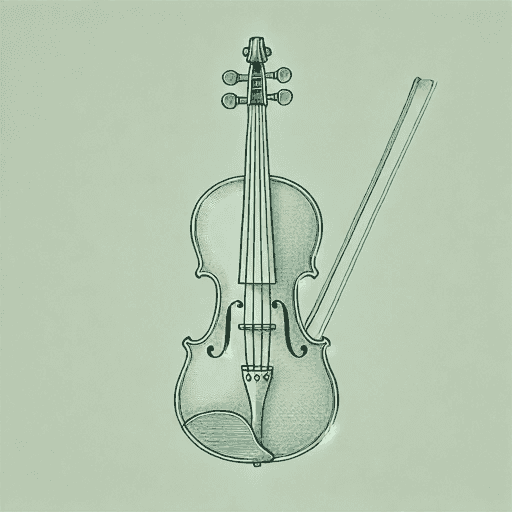
Before parting ways at the end of the performance, Helen asks Phoebe about Jeanne’s violin. Phoebe admits that the fingerboard is damaged from overplaying. She tried to fix it herself, but it is still in disrepair. An incensed Helen insists on paying for comprehensive repairs. They drop the instrument off at Leonid’s shop. Helen then confronts Phoebe about living on the road with Wyatt and dropping out of school to busk. Phoebe tries to explain, thanks Helen for the repairs, and leaves. Helen chastises herself for pushing Phoebe away.
Back at home, Helen and Charles talk about Phoebe, whom Helen fears having offended. Charles suggests that Helen stop speaking her mind so freely, as people don’t usually want to hear the truth. Helen discusses the matter with her rabbi as well and resolves to keep her opinions to herself from then on.
When the repairs are finished, Helen and Phoebe meet again at the shop to collect the violin. Although the price is astronomical, Helen covers the expense as promised. Phoebe tests out the repaired violin, enchanting Helen with her music. Suddenly, Helen feels as if nothing matters and that all of Phoebe’s choices are right. The spell breaks when Phoebe stops playing. Helen says goodbye to Phoebe, holding back everything she wants to say.
Chapter 6 Summary: “Wendybird”
During the women’s marches following Donald Trump’s election in 2016, Wendy knits a “pussy hat” for her sister Pam and mails it to her. However, Wendy never hears from Pam. Wendy’s wife Jill urges her to contact Pam about the package, but Wendy is reluctant to do so. Pam never treats Wendy how she wants to be treated, but Wendy can’t stop trying to engage with her family.
As more days pass without word from Pam, Wendy begins to worry that something is wrong with her sister. She calls Helen, who informs her that Pam’s cat has died. Wendy draws Pam a picture of her late cat and mails it to her with a sympathy card. Several days later, Pam texts Wendy to thank her for the package. Jill thinks that Pam’s text is dismissive and suggests that Wendy end the relationship, but Wendy feels sorry for Pam because she is single and has depression.
Before Helen’s birthday, Wendy and Jill make plans to attend the annual celebration. Sylvia has been disinvited because she did “something unforgivable, involving a cake” (103). Wendy feels obligated to attend but confronts Helen about her estrangement with Sylvia. Helen doesn’t want to hear Wendy’s opinions.
The next day, Pam arrives late for Helen’s birthday party. During a lull in the event, Jill takes Pam’s dog outside and is shocked to discover the dog playing with the “pussy hat” that Wendy made. Later, Jill stays up late with Pam, sharing drinks and talking, and confronts Pam about her unkindness to Wendy. Jill threatens to kill Pam’s dog if Pam doesn’t start showing Wendy gratitude for all she does for her. Pam shares a story about a time when she and Wendy were children and Wendy saved a sick bird.
Shortly after Wendy and Jill return home, Pam writes to Wendy, thanking her for another recent gift. Wendy shows the effusive message to Jill, who insists that this is how Wendy deserves to be treated.
Chapter 7 Summary: “Redemption Song”
Dan and Melanie host the first night of Passover celebration, and Steve and Andrea host the second. The brothers find the holiday challenging because their late father Irving “had been a [Holocaust] survivor, and he’d [always] ruined the holiday for everyone” (113). Before the event, the couples discuss the menu and worry about their respective nights. Melanie is irritated with Dan’s bad attitude and insists that he is traumatizing everyone else because of his bad memories of the past.
Meanwhile, Dan and Melanie worry about Phoebe attending the holiday with her new boyfriend. They still don’t understand her decision to stop school and disapprove of her lifestyle of living in a van and playing music around the country with Wyatt.
The Rubinstein family gathers together, and the holiday traditions begin. Arguments quickly ensue between Steve and Dan. Dan tries defending Phoebe, but she only gets frustrated with him. An irritable Dan excuses himself, insisting that he is sick.
The next day, Phoebe invites him on a walk. They discuss yesterday’s events, and Phoebe begs him to attend seder at Steve’s despite his frustration. Then they discuss Phoebe’s upcoming travel plans.
At Steve’s, the family shares the seder plate and reads the Exodus story. Then they each share ideas about what freedom means to them. After the dinner, Dan and Steve sit together and sip wine, discussing what their parents would say and do if they were still alive to see this celebration.
Chapter 8 Summary: “Sheba”
Jamie lives in Boston with two roommates and works as a dogwalker. One day, her friend introduces her to a young man named Simon, whom she thinks Jamie would like. Jamie is surprised that they get along so well and agrees to let Simon accompany her on her walks. She introduces him to all the dogs, and they share pleasant conversation. One day, Simon comes over and accidentally leaves the gate open. One of Jamie’s canine charges, Sheba, escapes and runs away.
Jamie panics when she discovers that Sheba is missing. Simon blames himself, but Jamie assumes responsibility. They search everywhere for Sheba. Finally, one day, a man on the street tells Jamie that he has the dog and will only return her if Jamie pays him $200 in cash. The dog is well enough but a bit battered, and the man doesn’t let her and Jamie go easily.
Jamie takes Sheba home, apologizing profusely to her owner, Hal. She tells Hal that she can’t keep walking Sheba because she is too irresponsible. Hal refuses to accept Jamie’s resignation.
Chapter 9 Summary: “Tanglewood”
Sitting with her son Richard on his porch, Sylvia recalls the many times when she and her sisters would picnic at Tanglewood with their families. Sylvia laments how much has changed, and Richard’s attempts to reassure her are unsuccessful. He realizes that he and his mother have similar personalities and parenting styles.
Sylvia and Lew stay overnight with Richard and the girls. The next morning, Phoebe and Wyatt show up unannounced while the family is having breakfast, and the mood instantly changes. The girls are thrilled by their cousin and her boyfriend’s arrival, showing them their room and dollhouse. Lily is particularly pleased that Wyatt is interested in her things. Afterward, the family shares apple cake and enjoys pleasant conversation.
The mood dampens as soon as Sylvia announces that they are all going to Tanglewood. Lily and Sophie hate these outings, as they dislike the music and the necessity of sitting stiffly in chairs on the lawn. During the concert, Richard repeatedly scolds them for texting and bickering with each other. Finally, at the behest of his parents, Richard takes the girls aside, scolds them, and takes their phones. He feels bad when they say they’re bored, because he privately feels the same way, but he doesn’t think he can tell them this. He ends up taking them home early.
Back at the house, the girls hear the rest of the family return home. Richard worries that his parents will scold him for the girls’ bad behavior, but they don’t. Instead, they drink champagne and exclaim over the concert with Phoebe and Wyatt.
Hours later, Phoebe and Wyatt tipsily head up to bed, stumbling over Lily at the top of the stairs. Wyatt tells Lily to go to bed, promising to play his cello for her so she can sleep. Everyone else lies in their beds, wondering about the racket, but Lily lies back and imagines the music as vines wrapping around her body.
Chapters 5-9 Analysis
Chapters 5-9 offer new glimpses of the Rubinsteins’ intricate dynamics, exploring The Challenges of Navigating Family Conflicts. As each standalone short story adds a new layer to the broader family story, the characters’ overlapping experiences create additional complexities that inform each individual’s challenges, revelations, and inner mindsets. Chapters 1 through 4 depict narrative scenarios surrounding Sylvia, Richard, Phoebe, and Lily, while Chapters 5 through 9 narrow in on Helen’s, Wendy’s, Dan’s, Jamie’s, and Sylvia, Lily, and Richard’s experiences. All of the chapters are written from the third-person perspective, which creates cohesion between the individual narratives. In each chapter, however, the third-person narrator is limited to just one or two characters’ viewpoints, while others’ inner thoughts are left unknown. This tactic conveys the sense that even within a close-knit family, some aspects of people remain essentially unknowable.
All five chapters follow a similar narrative arc, beginning with an internal conflict and ending with a change of heart, and this pattern suggests that those who manage to sacrifice their pride can interact with their family in more sustainable ways. In Chapter 5, “Kumquat,” Helen learns that her habit of speaking her mind often comes at the cost of damaging her relationships with her family members. Per the suggestions of her husband and rabbi, she decides that “the less said the better” (92), and the story outlines her struggle to hold to her new resolution. Throughout the chapter, she feels as if everything she does and says is poorly received, and this is particularly true in the context of Phoebe’s damaged violin. Helen wants to invest in her grand-niece’s life, but she does not know how to do so without delivering a sharp commentary on Phoebe’s choices and ultimately offending her. In an attempt to remedy this dynamic, she pays an exorbitant amount of money to fix Jeanne’s old violin, implicitly giving Phoebe her blessing for her choice to live as a traveling musician with her boyfriend Wyatt. In the end, Helen sacrifices her outspoken nature in order to make peace with Phoebe.
The pattern of making allowances for family persists as the stories unfold, for in Chapter 6, Pam also ends up making a concession in order to remedy her strained dynamic with her sister, Wendy, who often finds that her loving gestures to Pam are unappreciated. Even as the conflicts of this story reiterate the complications of navigating family dynamics, the narrative also explores The Myriad Forms of Love and Caregiving. Wendy has spent years investing in her family with little reciprocity or acknowledgement; the narrative states outright that “[f]amily was her addiction” and that “[s]he could not stop loving them” (98). In this light, the image of the dog-chewed hat contrasts sharply with the surrounding images of Wendy knitting the hat, drawing her sister pictures, and writing her thoughtful cards, and it is clear that Pam is often careless with her sister’s acts of caregiving.
Although Wendy tries to demonstrate her care via gift-giving, Pam takes advantage of her generosity and actively scorns it, for she fails to acknowledge the gifts and even goes so far as to let her dog maul the handmade hat. While the story is predominantly limited to Wendy’s point of view, the narrative ultimately resolves with Pam’s change of heart. In the wake of Jill’s heated demand that she treat Wendy with respect, Pam begins to show her sister more gratitude for her kind gestures. Because Wendy cannot stop loving Pam despite her failings, it is ultimately Pam’s responsibility to change her character. Jill therefore functions as a literary device that activates this change—for she takes the dramatic action of threatening Pam’s dog in order to spur her toward reconciling with her sister. Chapters 5 and 6 both demonstrate that conflicts can only be resolved when at least one individual deigns to soften their stance and allows the relationship to begin healing.
This same principle applies to the conflicts central to Chapters 8 and 9. In Chapter 8, “Sheba,” Jamie is so devastated over temporarily losing Sheba that she tries resigning from her dog-walking duties. However, Sheba’s owner Hal shows Jamie grace and forgiveness, refusing to uphold a rigid moral code and giving Jamie a second chance. Wyatt and Phoebe extend this same grace to Lily in Chapter 9. Although they know that Lily disrupted the concert at Tanglewood by bickering with Sophie, they do not scorn or punish her when they all return to the house. Instead, Wyatt offers her love and care by playing his cello for her until she falls asleep. In these ways, the characters take care of each other, offering reassurance when their loved ones feel alienated, disappointed, or discouraged.

Unlock all 52 pages of this Study Guide
Get in-depth, chapter-by-chapter summaries and analysis from our literary experts.
- Grasp challenging concepts with clear, comprehensive explanations
- Revisit key plot points and ideas without rereading the book
- Share impressive insights in classes and book clubs