This Must Be the Place
46 pages • 1-hour read
Maggie O'FarrellThis Must Be the Place
A modern alternative to SparkNotes and CliffsNotes, SuperSummary offers high-quality Study Guides with detailed chapter summaries and analysis of major themes, characters, and more.
Symbols & Motifs
Reflections
Content Warning: This section discusses death, grief, and trauma.
The reflections motif is peppered throughout the text and represents the duality of the self. A reflection offers two seemingly identical images of a person, but mirror images are inherently not identical. This sense of someone split in two is indicative of The Dissociative Nature of Trauma. At the beginning of the novel, Claudette can’t see Daniel clearly because “the glass is opaque with the reflections of clouds” (14)—the reflections of the past cloud Daniel’s judgment and create a gulf between Claudette and Daniel. When Niall and Phoebe drive to meet Daniel, Niall is “watching his rearview mirror” (65), as he watches the past throughout the novel. When Claudette is getting her makeup done in India, “she avoids the eye of the woman in the mirror: she resembles her yet is not her” (199), connecting her experience as an actress to dissociation.
Marithe sees her reflection in the bottom of the well just as Phoebe sees herself in the photo of Marithe—the reflection metaphor ties the girls together over space and time. When Daniel is in the worst phase of his grief over Phoebe, “he spends a great deal of time avoiding mirrors” to avoid facing his trauma and his response to it (297). The sand desert in its ability to reflect light is also a kind of mirror; Daniel is finally ready to see his trauma clearly, which allows him to unify his life again.
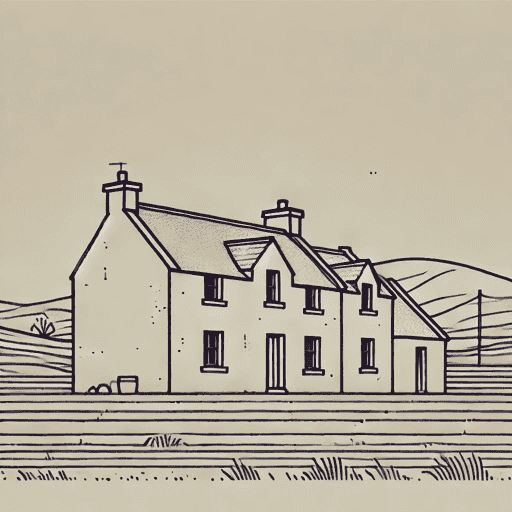
The Donegal House
The Donegal house is a symbol that represents Claudette’s isolation as well as the domestic haven that she and Daniel discover together. As Claudette heals and grows in her safe space, the house changes as well. Lucas’s initial sense of the house is of something dead and decaying, full of ghosts, but Claudette sees its potential for the future. Lucas owns the house on paper, so it represents the protection he offers. Although he sees everything that needs to be repaired in the house, when he stands in the nursery looking at Claudette and Ari, “he feels, for the first time ever, not quite the presence, but the possibility of another child” (180).
The house, with all its previous lives and all the things that need repair, offers a hopeful vision of the future to both Lucas and Claudette. When Daniel first comes to the house, she’s only been able to make a livable space in two rooms, space for her and Ari. Daniel makes improvements and fixes various elements of the house, and they create a home that accommodates not just the three of them but Marithe and Calvin later. Daniel must leave the house to pursue his secrets, and he can’t stay there as he battles his demons. The “Time Capsule” room remains in the same state as the house when Claudette first bought it, as though she must hold onto part of her past self to maintain her identity. Her choice at the end to fix the entire house represents her willingness to move beyond her isolation and connect fully with Daniel.
Seismology
There are several metaphors, as well as locations, that either directly or indirectly involve seismology, a motif in the novel relating to The Isolating Effect of Secrets. Niall is a seismologist and studies how tectonic plates affect earthquake activity. Anything that is unstable within the Earth can cause disasters on the surface of the Earth, just as the secrets in the Sullivan family push their way to the surface, creating division and disasters. Daniel describes himself at the beginning of the novel as “riddled with holes and caverns, like a limestone landscape” (33).
Daniel gives Niall a gyroscope, which is one of the tools seismologists use to measure earthquake activity, and Niall associates his last clear memories of his father with that tool. Niall is always watching his family for cracks and fractures and potential shakes. The footnotes in Niall’s chapter indicate the necessity of looking beneath the surface to fully understand and appreciate what is visible. The past traumas that Daniel and Claudette experience create a shaky foundation for their relationship and family, and when the plates shift and come into conflict (Daniel’s secret with Claudette’s experience of betrayal), the family is the surface that is shaken. Daniel and Rosalind compare Niall’s identity to the purity of the salt desert—a place so clear that it allows Daniel to acknowledge what he must accomplish to win back Claudette.

Unlock the meaning behind every key symbol & motif
See how recurring imagery, objects, and ideas shape the narrative.
- Explore how the author builds meaning through symbolism
- Understand what symbols & motifs represent in the text
- Connect recurring ideas to themes, characters, and events