To Bleed a Crystal Bloom
To Bleed a Crystal Bloom
A modern alternative to SparkNotes and CliffsNotes, SuperSummary offers high-quality Study Guides with detailed chapter summaries and analysis of major themes, characters, and more.
Summaries & Analyses
Quizzes
NEWReading Tools
Symbols & Motifs
Content Warning: The section of the guide includes discussion of graphic violence, self-harm, emotional abuse, physical abuse, and cursing.
The Safety Line
The Safety Line is a symbol of Orlaith’s psychological imprisonment, representing the self-imposed boundaries created by trauma. This invisible line that she dares not cross is a manifestation of her internal restrictions, physically mapping the limits of her fear. As a symbol, the line illuminates the theme of Trauma as the Architect of Identity. Orlaith’s anxiety about the consequences of crossing it echoes her unacknowledged fear of confronting her unresolved past. The boundary separates the safety of her current ignorance from dangerous truths and memories. The Safety Line also physically embodies The Fine Line Between Protection and Imprisonment as the protagonist’s strict adherence to its limits protects her from dangers beyond the castle grounds while also isolating her from society. The Safety Line echoes Rhordyn’s confinement of Orlaith to the tower, but is more constraining than the barriers Rhordyn constructs. While Orlaith circumvents the tower’s locked door by escaping from her window, her refusal to cross the Safety Line, even to retrieve a treasured sword, demonstrates the rigidity of her internal imprisonment.
As the narrative progresses, Orlaith’s faith in the Safety Line’s protection wavers as she witnesses breaches of its boundary. The selkie attack during Orlaith’s training occurs within what should be a protected environment, yet her blood draws these predatory creatures directly to her, nearly resulting in her and Baze’s deaths. This incident reveals that the true source of danger is not external space but Orlaith herself—her body, her blood, and her latent power—none of which can be constrained by an invisible perimeter. Similarly, Mishka’s death on the castle grounds after being fatally wounded by Vruks demonstrates how danger can penetrate the very space Rhordyn claims to control. This intrusion exposes the Safety Line’s inability to defend against escalating threats from the wider world.
Orlaith’s journey toward freedom requires her to dismantle the internal barrier of the Safety Line. Her decision to finally step over the line to board Cainon’s ship is a significant act of rebellion against the stifling inner barriers that control her. It signifies her first true step toward reclaiming her life from the grip of the past.
Blood
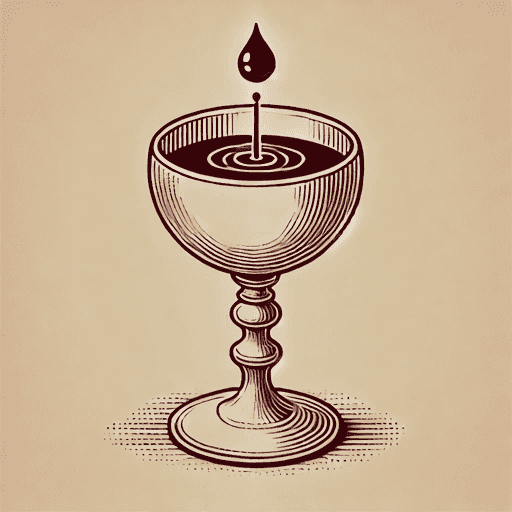
The recurring motif of blood signifies life, sacrifice, control, and the corrupting power of secrets. It is the novel’s most vital fluid, physically manifesting the bonds, debts, and violent history connecting the characters. This motif is most clearly established through Orlaith’s nightly ritual of bloodletting. Her reflection that “this blood, this little act of self-harm, it’s not for me. It’s for him” (16) frames the ritual as an intimate act of devotion. However, this secret transaction establishes a toxic dynamic of submission and domination. Rhordyn’s refusal to explain why he requires her blood transforms the act into a one-sided transaction in which knowledge and power remain entirely under his control, highlighting the theme of The Corrupting Power of Secrecy and Lies. Blood becomes a currency of control, representing the profound inequality in their relationship. It simultaneously binds Orlaith to Rhordyn through a sense of purpose while highlighting her powerlessness, as her role is defined by the sacrifice of her life force without comprehension.
Through Orlaith’s character, the meaning of blood expands from an expression of submission to the key to her true identity. The Vruk massacre, from which Rhordyn initially rescues Orlaith, is defined by carnage and blood, linking it directly to her early trauma. However, its ultimate significance lies in her Aeshlian lineage. In the prologue, Rhordyn’s visceral reaction to the taste of Orlaith’s blood reveals its supernatural importance, as he marvels that “The taste of her blood is a bolt to my brain. My heart. My fucking soul” (13). This moment frames their entire 19-year relationship as being predicated on the secret contained in her blood. Rhordyn’s response to it suggests a hidden power within Orlaith that has been intentionally suppressed.
The Glamour Necklace
Orlaith’s glamour necklace operates as a central symbol of deception, embodying the novel’s exploration of The Corrupting Power of Secrecy and Lies and The Fine Line Between Protection and Imprisonment. A gift from Rhordyn, the necklace appears to be an object of care and intimacy, a constant and reassuring presence that Orlaith associates with both his affection and her unknown past. Yet this apparent comfort conceals its true function: the magical suppression of her Aeshlian form. The necklace does not simply hide Orlaith from others—it hides her from herself. In doing so, it becomes the physical manifestation of the central lie shaping her existence. What Orlaith experiences as safety is in fact a carefully maintained illusion, one that restricts her self-knowledge and reinforces her dependence on Rhordyn. The necklace represents the “gilded cage” she lives in, a beautiful object that keeps her a prisoner of a fabricated reality. Embodying a lifelong deception, it denies Orlaith her heritage and autonomy under the pretense of keeping her safe from a hostile world.
The necklace’s symbolic weight is intensified by its origin. It was a dying gift from her mother, Aravyn, who begged Rhordyn to take it “For h-her” (6), framing it as a final, desperate act of maternal protection. This context complicates its role, introducing a tension between intention and outcome. What begins as an attempt to safeguard Orlaith becomes an instrument of prolonged concealment and control. For Orlaith, the necklace is a lie she physically wears, a constant suppression of her true self. Learning its function shatters her perception of Rhordyn’s care and reveals the depth of his control. Ultimately, removing the necklace is a crucial act of rebellion and self-reclamation. By rejecting its glamour, Orlaith chooses to confront the dangerous truth of her identity rather than continue living in the suffocating safety it provides.

Unlock the meaning behind every key symbol & motif
See how recurring imagery, objects, and ideas shape the narrative.
- Explore how the author builds meaning through symbolism
- Understand what symbols & motifs represent in the text
- Connect recurring ideas to themes, characters, and events