Train Dreams
41 pages • 1-hour read
Denis JohnsonTrain Dreams
A modern alternative to SparkNotes and CliffsNotes, SuperSummary offers high-quality Study Guides with detailed chapter summaries and analysis of major themes, characters, and more.
Summary and Study Guide
Overview
Set mainly in the early 1900s, Denis Johnson’s 2011 novella, Train Dreams, presents snapshots in the life of Robert Grainier, a laborer in the Northwest frontier. Working in the logging and railroad industries while living a remote life in the wilderness, Grainier navigates a harsh world while contending with grief. A finalist for the Pulitzer Prize in Fiction in 2012, Train Dreams tackles themes including Industrial Progress and the Erosion of Wilderness, The Symbiosis of Grief and Solitude, and Memory as Hindrance and Help.
This guide is based on the 2011 Farrar, Straus and Giroux print edition of the text.
Content Warning: The source material and this guide feature depictions of substance use, death, racism, rape, child abuse, child death, child sexual abuse, graphic violence, animal cruelty, sexual content, and pregnancy termination.
Language Note: The source text uses the term “Indians” and anti-Indigenous slurs to refer to Indigenous Americans and “Chinaman” to refer to Chinese laborers. This study guide reproduces this harmful language only in quotations; elsewhere, it refers to Indigenous people and Chinese laborers.
Plot Summary
In Idaho in 1917, Robert Grainier is a young man working on the Spokane International Railway. As coworkers carry a Chinese laborer who is believed to be a thief, Grainier jumps in to help. They bring the man to the top of a bridge to drop him to his death. However, the man wriggles free and flees, shouting what sounds like curses.
Afterward, Grainier walks home, picking up medicine for his wife, Gladys, and infant daughter, Kate. Later, he wakes to the distant sound of a train and finds Gladys feeding Kate. While they discuss the baby, Grainier is unnerved by the look Kate gives him.
A month later, Grainier witnesses a train cross the bridge. Three years later, now 35, he works on the Robinson Gorge Bridge in Washington and then joins the Simpson Company’s logging team. An older man named Arn Peeples imparts wisdom until he is hit in the head by a branch and dies from a fever. In a flash forward to 45 years later, Grainier watches workers on a bridge and marvels at how much progress has been made.
The narrative flashes back to Grainier’s early life. Alone at the age of six or seven, with no recollection of his parents, he took a train to Idaho to live with his aunt and uncle’s family, where his earliest memory was witnessing the mass deportation of Chinese laborers. After dropping out of school in his teens, he often fished on the Kootenai River. One day, he stumbled upon a fatally injured itinerant man named William Coswell Haley. He explained how he used to be an honest worker, but after he repeatedly raped his young niece, she became pregnant and then died at the hands of her irate father. Haley fled and lived along the railroad ever since. Grainer gave the man water but told no one about Haley.
Grainier’s back story continues with details about how he met Gladys Olding and fell in love. They married and built a cabin in the woods. The narrative flashes forward a few years to the present, when Grainier returns from a job to a wildfire in the Moyea Valley. Desperate, he cannot find his wife and daughter. Acknowledging that they died, he plans to rebuild their home.
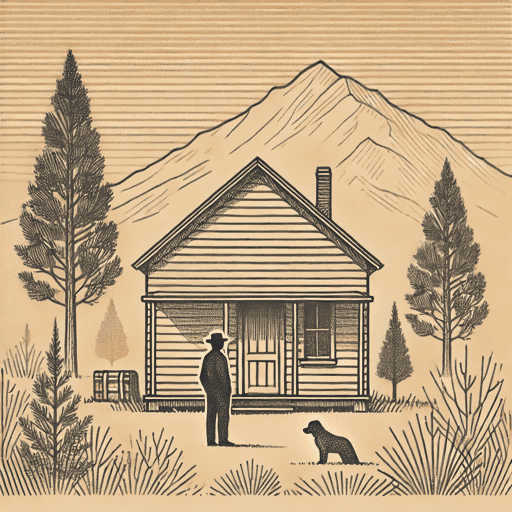
However, after seeing the devastation, he returns to town until spring, when he camps nearby and has visions of Gladys’s possessions. Living meagerly, he befriends a dog and hopes for more visions. Eventually, he rebuilds the cabin. The narrative flashes forward a few years to the day that Kootenai Bob, an Indigenous man, dies. Drunk for the first time, he passes out on train tracks and is dismembered by multiple trains.
As the years pass, Grainier can no longer meet the physical demands of logging, so he works in town. After witnessing an unfortunate death, he eventually establishes a hauling business. Once, he transports a man whose dog saved his life, and another time he conveys a different man whose dog shot him. It is from the latter that Grainier learns of the wolf-girl, a creature who supposedly roams the frontier with a pack of wolves.
Grainer’s nightmares of Gladys and Kate continue. He also frequently dreams of riding a train and wakes to the distant sound of one. One morning, Gladys’s spirit appears. Without speaking, she shows him what happened in the fire: She ran, with Kate strapped to her body, but when she tried to scale a rocky cliff, she fell to the rocks below. Unable to move her legs, she released Kate so she could crawl away before the river swept Gladys to her death.
Remaining unmarried, Grainier now lives in his cabin year-round and has a successful hauling business. Once, he goes to the fair in Spokane and is unsettled by an airplane ride. Then he works with a friend, Eddie Sauer, on the railroad in Meadow Creek. After a month, Eddie hires him to help move Claire Thompson, a widow whom Eddie is hoping to marry, from Montana to Idaho. Despite good intentions, Eddie upsets Claire, so he takes up with a Kootenai woman instead. Before they all part, Claire calls Grainier a hermit.
Years pass. Despite Grainier’s age, he still lives in his cabin because of an event that happened long ago: One night, he stood in his doorway as animal cries filled the air. Suddenly, a pack of wolves raced through his yard, leaving one behind. It was the wolf-girl, and she was injured. Terrified, he realized that the wolfish creature was Kate. She did not recognize him. Carrying her inside, he reset her broken leg. In the morning, she ran off. Grainier vowed to follow but never did.
The final vignette is set in 1935, during a hot and rainless summer. Lonely without his dog, Grainier experiences intense sexual lust. At the county fair, he intends to buy a new puppy but runs off when he is terrified by the desire he feels. In town, he sees advertisements for films like Sins of Love, and at home, he dreams of them. One day, he walks for hours trying to shake the lust. It finally passes.
Two weeks later, Grainier purchases a new dog. A quick flash forward reveals that Grainier, who never remarries, lives to be 80. In 1968, Grainier dies in his cabin, only to be found months later by hikers. However, in 1935, on the day he buys the dog, he goes to the theater and sees a wolf-boy take the stage. The audience laughs until his howl makes their bones tremble and sounds like ships, trains, and opera. Then the stage goes dark, and everything is gone.

Unlock all 41 pages of this Study Guide
Get in-depth, chapter-by-chapter summaries and analysis from our literary experts.
- Grasp challenging concepts with clear, comprehensive explanations
- Revisit key plot points and ideas without rereading the book
- Share impressive insights in classes and book clubs