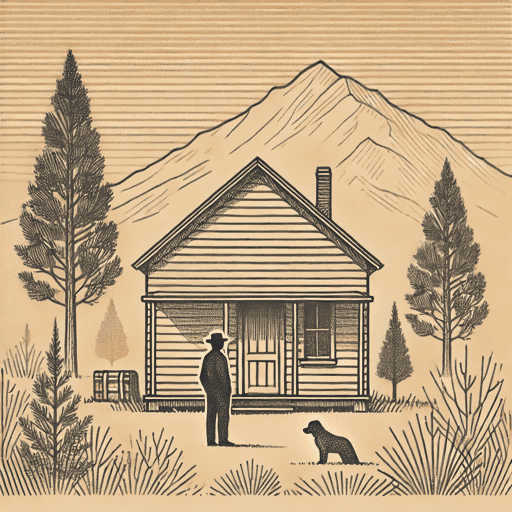
Train Dreams
41 pages • 1-hour read
Denis JohnsonTrain Dreams
A modern alternative to SparkNotes and CliffsNotes, SuperSummary offers high-quality Study Guides with detailed chapter summaries and analysis of major themes, characters, and more.
Symbols & Motifs
Trains
Trains symbolize life’s journey and the inevitable passage of time. Grainier notes that “he’d started his life story on a train ride” to live with his aunt and uncle (24). Later, when Grainier and Gladys are living in the cabin in the woods, the narrative states that “many nights they heard the northbound Spokane International train” (8). The frequency of the locomotive running is indicative of the passage of time and how life moves forward unceasingly. On lonely nights long after the fire, he often hears trains in his dreams, which blend with “the sound of Spokane International fading up the valley” (76). In his dreams, when he rides the train, he catches glimpses of his childhood, so when he wakes to the sound of the locomotive, the link between past and present is reinforced. Because he dreams of his past and wakes to his present, the train, which runs throughout to connect the two times, represents his life’s journey and the passage of time.
Kootenai Bob’s brutal death on the railroad tracks also emphasizes how life goes on despite tragedy. Drunk, he falls unconscious over train tracks and “four or five came over him” before anyone discovered what had happened (55). In the days that followed, the train blew its horn, “proceeding slowly through the area on orders from the management, who wanted to give the Kootenai tribe a chance to collect what they could of their brother without further disarrangement” (98). After Kootenai Bob’s death, the trains do not cease running. They only slow down while the search for his remains continues, signifying that life goes on without regard for death and tragedy. Like Grainier, who must deal with the grief of losing his family, the Kootenai people gather Bob’s remains and mourn but then must carry on with their own lives.
Dogs
Dogs and wolves are symbols of survival. When Grainier asks his wife if Kate knows as much as a puppy, Gladys responds, “A dog-pup can live by its own after the bitch weans it away” (9). Her reply focuses entirely on a dog’s survival instinct, implying that it is more advanced because of its ability to survive on its own so quickly, emphasizing the importance of survival above all else.
This message is reinforced by the appearance of the little dog at Grainier’s campsite by the river. She lives with him but disappears for days at a time, emphasizing her independence and ability to stay alive on her own. The text’s use of dogs to represent the ultimate survivor is further supported through the story of a man Grainier transports to medical care. The man accidentally detonated dynamite and was only saved by his dog: “For half a day the animal had made such a nuisance of himself around the saloon that one of the patrons had finally noosed him and dragged him home and found his master extensively lacerated and raving from exposure” (63). In this case, the canine’s instincts save a human life. In a crossover between the human and animal world, Kate Grainier’s survival with the wolf pack exemplifies the canine connection to staying alive. As a toddler, Kate’s chances of living after her mother’s death were minimal, yet by aligning herself with wolves, she survives.
This connection between dogs and life is further fortified through Grainier’s own experience. In 1935, when feeling loneliness settle over him, Grainier notes that “his little red dog had been gone for years, had grown old and sick and disappeared into the woods to die by herself, and he’d never replaced her” (105). Although the dog does not survive, Grainier connects the presence of the animal to his own well-being and survival. Without the dog, he is “made of lead—thick and worthless” (105), indicating how, without the dog’s companionship, he feels as if his life lacks value. He knows he must get a new dog, and weeks later, he does. The new pup becomes “his friend for many years” with Grainier himself living “more than eighty years” (113). Johnson links the acquisition of a new dog with the fact that Grainier lives a long life, punctuating the text’s use of the animal as a symbol of survival.
Fire
Although not always a positive force in the text, fire symbolizes rebirth and change. In the autumn, after the valley burns, Grainier wanders to his old home and “marvels at how many shoots and flowers had sprouted already from general death” (45). The following spring, he notes, “the ground about was healing” (51). The sprouting and healing signify rebirth and new growth after death and tragedy. The ash-covered ground, though appearing barren, actually provides nutrients that help the new growth. By noting that the ground is healing, Grainier links this natural cycle to his own process of starting anew within his own grieving process.
Later, the fresh start manifests differently, which Grainier discovers when Gladys’ spirit visits and reveals what happened during the fire. Gladys shares that “she’d lost her future to death and lost her child to life. Kate had escaped the fire” (79). Despite the destruction the fire causes, like Grainier, the baby survives to begin a new life. Over time, Grainier understands “that the valley wouldn’t slowly, eventually resume its condition from before the great fire. Though the signs of destruction were fading, it was a very different place now, with different plants and therefore with different animals” (97). Although life is restored after the fire, it cannot be the same as before, much like Grainier’s life will differ without his family. Ultimately, even though the world is not the same, it is thriving, making the fire’s destruction symbolic of rebirth.

Unlock the meaning behind every key symbol & motif
See how recurring imagery, objects, and ideas shape the narrative.
- Explore how the author builds meaning through symbolism
- Understand what symbols & motifs represent in the text
- Connect recurring ideas to themes, characters, and events