51 pages • 1-hour read
Under a War-Torn Sky
A modern alternative to SparkNotes and CliffsNotes, SuperSummary offers high-quality Study Guides with detailed chapter summaries and analysis of major themes, characters, and more.
Literary Devices
Point of View
Point of view refers to the perspective from which a story is told. In this case, it is told by a limited third-person narrator. The narrator knows about the thoughts, feelings, actions and motivation of a limited number of characters, often just one, as in this case. The viewpoint character is Henry, and everything is seen through his eyes or through his memories. Other characters are known only by what they say and do and what Henry thinks and observes about them. The third-person narrator can be recognized by the use of the pronouns “he,” “she,” and “they” to refer to the characters, instead of a first-person “I.”
Foreign Languages
The author includes many French and German words, phrases, and sentences, almost always as direct speech. Usually in popular fiction, phrases in a foreign language would be translated in parentheses immediately after they occur, but L. M. Elliott does not translate them. Instead, in the narrative and dialogue that follow, the general meaning of the words is conveyed, although not an actual word-for-word translation. Henry, who does not have much French, sometimes expresses initial puzzlement before figuring out the meaning from facial expression, tone of voice, and situational context, added to the small amount of French he does know.
The advantage of this technique is that at first the reader who does not read French goes through the same puzzlement as Henry does before figuring out the sense from the paragraph that follows. For example, after Henry has unwittingly put Pierre in a dangerous situation, Pierre’s mother reproaches him and speaks of how important Pierre is to her: “Tu ne dis jamais le mettre en danger!,” adding, “Il est tout pour moi! Comprenez-vous?” (120). The paragraph that follows offers Henry’s interpretation of what she said: “Henry understood her face. Her boy was her life. She couldn’t bear it if something were to happen to him.” He captures the general sense although not the exact meaning. A translation might be, “You never tell him to put himself in danger!” and “He’s everything to me! Do you understand?”
Another example comes later in the same chapter when at dinner the grandfather says, “Je te jure, Marie, il va nous apporter de la malchance” (143), which means, “I swear, Marie, he’s going to bring us bad luck.” Henry figures this out for himself, thus helping the reader in the process: “He could tell the grandfather had said he was bad luck.”
Foreshadowing
Foreshadowing is a literary device that occurs when an event or something a character says suggests, usually without making it explicit, something that will take place later in the book. The significance of the foreshadowing may not be obvious at the time or known to the character who speaks it, or the narrator may not overtly bring attention to it. The element of foreshadowing may therefore only become clear after the event it hinted at takes place.
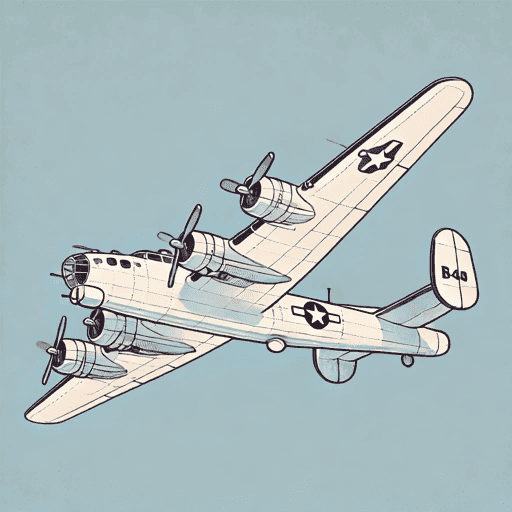
Foreshadowing occurs several times in this novel. The first is at the beginning, when Henry seems to be in his B-24 bomber; the engines have caught fire and the plane is going down. It turns out that Henry is having a nightmare, but the dream foreshadows, in outline rather than detail, what will take place later that day in Chapter 4.
In Chapter 12, Henry dreams that he is being severely bitten on the heel by a huge, snarling German shepherd. This foreshadows a later incident, in Chapter 19, when he is imprisoned and the Nazi officer is ready to set his dog on him. There are some differences: The dog is a Doberman, not a German shepherd, and in spite of the implied threat, the dog ends up ripping the flesh off a bone, rather than from Henry’s heel.
A third foreshadowing occurs in Chapter 18 when a British officer tells Henry that their new guide needs to be watched carefully. He is Spanish not French and is a former smuggler, although he likely has no love of Hitler and has been well paid by the British to act as their guide. When later in that chapter the guide betrays his charges for money, the foreshadowing of his betrayal becomes more clear.
Flashbacks
In a novel, a flashback is an interpolated scene that describes an event that took place before the time the story starts—in this case, before March 1944. A flashback can be a fully developed scene or a brief memory described by one of the characters. In this novel, there are numerous brief flashbacks presented in the form of Henry’s memories of his life with his family on the farm. Often these are stimulated by something Henry is experiencing that takes his mind back to earlier days.
In Chapter 6, for example, when his leg throbs from his injury and he does not have the strength he needs, he thinks back to a time when he was 14. He had been out ploughing the fields but was bitten by a water moccasin. Feeling nauseous and afraid, he still managed to summon the strength to ride the mule to the farmhouse and get help. This memory helps him to deal with the present situation: He has done it before; he can do it again.

Unlock all 51 pages of this Study Guide
Get in-depth, chapter-by-chapter summaries and analysis from our literary experts.
- Grasp challenging concepts with clear, comprehensive explanations
- Revisit key plot points and ideas without rereading the book
- Share impressive insights in classes and book clubs