51 pages • 1-hour read
Under a War-Torn Sky
A modern alternative to SparkNotes and CliffsNotes, SuperSummary offers high-quality Study Guides with detailed chapter summaries and analysis of major themes, characters, and more.
Character Analysis
Content Warning: This section contains discussion of death, animal cruelty and death, torture, and a brief reference to death by suicide.
Henry Forester
The novel’s protagonist, Lieutenant Henry Forester, is a 19-year-old copilot in the US Eighth Air Force, the youngest pilot in his squadron. He joined the Air Corps two weeks after graduating from high school, choosing not to take up a college scholarship he had been awarded. Henry grew up with his parents on a 150-acre farm in Richmond, Virginia. He is close to his mother, Lily, but often intimidated by his harsh father, Clayton. He keeps a picture of his pretty friend Patsy, who lives on the neighboring farm, pinned up beside his cot in the barracks where he is stationed in England.
Henry is more than six feet tall, with straight blond hair, although he looks younger than his age. He does not have much beard to shave in the mornings and is once referred to as being “babyfaced” (9), which draws attention to his naivety and relative innocence at that start of the novel. Henry is a polite young man who consistently demonstrates kindness and empathy for others—traits that will prove especially important to his journey through Nazi-occupied territories. Despite his youth, Henry has made 14 bombing missions during the war and is about to embark on his 15th when the novel opens. He is an experienced pilot who is respected by his crew. His captain, Dan MacNamara, tells him he is the steadiest copilot he has known.
When Henry is shot down over France, he faces a nightmare situation that will test his courage and resilience in ways far beyond anything he could have imagined. He learns how to improvise and adapt to whatever new situation comes up, and he also reveals in his actions his decency and willingness to put himself in harm’s way to protect his friends and helpers. As the months go by, Henry matures in understanding; he becomes acutely aware of the fragility and uncertainty of life, realizing that all goodbyes are potentially final ones in war-torn Europe. His strength, determination, and good fortune, as well as the constant help he receives from the Resistance, ensure that he eventually gets back home.
Lilly and Clayton Forester
Lilly and Clayton Forester are Henry’s mother and father. They appear directly in the novel only in the last chapter, when Henry returns home. In all other contexts, they appear in Henry’s memories while he is in Europe.
There is a close bond between mother and son. Lilly is warm, optimistic, and affectionate. She and Henry have shared many hugs. When Henry was growing up, she taught him to help everyone he could, which is a lesson he takes seriously throughout the novel. She is very appreciative of the natural world, but she often looks worried due to the hard life on the farm and the strain of living with a difficult husband. She has a well-developed religious sense, which also influences Henry, who often says prayers for the safety of both himself and others.
Clayton is a difficult figure in Henry’s life and is often harshly critical of Henry. Henry refers to him as an “old jerk” (72) who has mocked his son as a “weakling” (125). Henry tried to win his father’s respect by joining the Air Corps, but Clayton criticized him for throwing away his college scholarship. Henry does, however, acknowledge that Clayton is a good farmer who kept his family from going hungry during the Depression. Sometimes Henry’s attitude softens and he realizes that his father was trying in his own way to help him face the hardness of life, and this has stood him in good stead during the war. When Henry returns home for Thanksgiving, he and Clayton share a warm hug, suggesting that father and son might now build a healthier relationship together.
Patsy
Patsy is Henry’s longtime friend and love interest back in Virginia, where she lives on a neighboring farm. Patsy does not appear directly in the novel until the final chapter, but Henry often thinks of her during the narrative. He had kissed her the previous summer, just before graduation, and after that he developed a longing for her. She later wrote him a letter in which she talked about that kiss in very romantic fashion. His feelings for her continue to grow while he fights in the war. He is drawn to her beauty and feisty personality, calling her “a real spitfire” ( 7). He is reminded of Patsy when he meets Claudette, who has the same type of personality. When Henry gets home for Thanksgiving, Patsy is there, and he embraces and kisses her, which implies they have a romantic future together.
Billy White
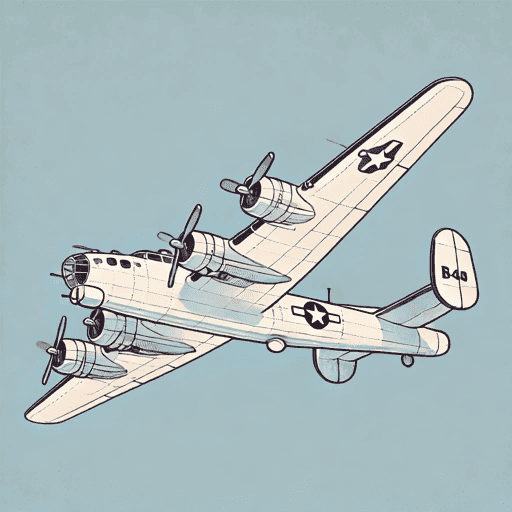
Billy White is a copilot of Battling Queen, a B-24 bomber plane. He is six months older than Henry but has been on fewer bombing missions. Billy comes from a wealthier family than Henry; he attended a fee-paying high school but was flunking out of college and decided to join up. He and Henry have an uneasy relationship: Billy likes to boast about his success with women and refers derisively to Henry as a “farm boy.” Henry replies in kind; their mutual taunting is good-natured but has an edge to it.
Billy’s plane explodes during the mission and he bails out. Henry, witnessing this, says a prayer for Billy’s safety, which shows Henry’s loyalty to all of his comrades. He and Henry meet up again later at the Resistance camp, and they learn to respect each other. Billy tells Henry about his family, explaining that his father was a commodities broker who died by suicide after the business crashed in the Depression. Henry helps Billy in the trek across the Pyrenees when he is too weak to go on, but Billy is shot and killed by a German soldier after their guide betrays them.
Madame Gaulloise
Madame Gaulloise is a member of the Resistance. She is an attractive, stylish, middle-aged woman with “glossy dark hair” (83) and “a generous, warm smile” (85). She helps Henry to get across the border from Switzerland to France, where she accommodates him for a week in her luxurious home before arranging for his further passage. German officers court her but she outwits them and keeps them at a distance, ensuring that they do not detect her activities, which include smuggling Americans like Henry out of Switzerland as well as hiding Jewish civilians fleeing from the Nazis. She tells Henry that she plays “a high-society coquette to disarm [her] enemy and keep [her]self a mystery” (91). This works with the German officers, since they think she is something she is not.
Madame is a cultured, refined woman who loves art and music. She plays the piano and paintings line the walls of her mansion. She knew Picasso and implies that at one time they were lovers. As he gets to know her, Henry enters a world of art and culture that he has never before encountered; he is fascinated by it and wants to learn more. Later, Madame is arrested by the Germans and is imprisoned in Lyon. Henry finds this out from the Gestapo officer, and he is horrified at the thought that Madame may now be “beaten down, filthy, starved” (218). However, it appears that she remains defiant under pressure, as the Nazis are struggling to get any information out of her.
Pierre
Pierre is an eight-year-old French boy who lives with his mother and grandfather. His father is dead. When Henry is wandering the countryside, Pierre approaches him and leads him to safety in the family barn, well away from German patrols. He brings Henry food and they strike up a friendship.
Henry becomes very fond of the boy in the one month of their acquaintance, and they agree to help each other learn the language of the other. The boy knows all about the war and does everything he can to help the Resistance. When he and Henry are out checking the rabbit traps, they reach a three-pronged road sign. Pierre twists the signs so they point in the wrong direction in order to confuse the Germans. When the Germans arrest his mother, Pierre is sent to an abbey where the monks will look after him. Henry worries about the boy’s welfare but never manages to learn any more about what happened to him. Henry returns to Europe to find Pierre in the sequel to Under a War-Torn Sky.
Pierre’s Mother
Pierre’s mother, a widow, is devoted to caring for her young son on the family farm, where she lives with the boy’s grandfather. She is small and pretty, with dark eyes. Henry puts her age at 26 or 27. She is also a dedicated member of the Resistance, storing and distributing weapons and supplying food. She hides Henry at the farm for a month, despite the risk. When Henry goes out with Pierre to check the rabbit traps, she gives Henry a British Sten gun in case they run into German troops.
When the Germans discover her activities, they imprison her at a German garrison in Grenoble. Henry finds out later, from a member of the Resistance, that she revealed no names during her interrogation and is now in a prison for women at Ravensbrück in Berlin, where conditions are very bad. Henry fears for her future.
The Gestapo Officer
The unnamed Gestapo officer who interrogates Henry is cold-hearted, cruel, and ruthless. With a mouth that is “thin and twisted with hatred” (200), he gives a face to the despicable inhumanity of the Nazi regime. Having been educated at Cambridge University, he speaks perfect English, and he demands to know the names of Henry’s French contacts, especially Madame Gaulloise. He is sadistic and orders the torture of Henry. He also torments Henry by threatening to set his large dog on him, then later kills the dog as an act of further intimidation and cruelty. Henry shoots and kills the officer after grabbing his gun as they travel by car on the road to Lyon, where Henry was to be handed over to the Gestapo. The officer’s cruelty and bloodlust contrasts with the compassionate, humane values Henry represents.
Claudette
Claudette is 17 years old and a member of the Resistance. Henry meets her when she catches him stealing cherries from a tree in her orchard. She reminds Henry of Patsy, as the two girls share a bold, fiery temperament. Claudette was a novice (nun-in-training) before the war, and her mother was killed by the Nazis, who then stole everything from her home. As a result, she is bitter and angry and hates Germans and wants to kill as many of them as she can. She speaks roughly to Henry but also shows him kindness, taking him into her house and offering him food. The next day, she gets fresh clothes for him.
Claudette has a boyfriend, André, who is killed in a clash between German soldiers and the maquis. Claudette is overwhelmed with grief and refuses to release his body for burial, waving a gun at her companions and even trying to take a shot at Henry. Eventually, she calms down, and she and Henry become fond of each other as they work together at the Resistance camp assembling explosives. All in all, Claudette embodies the passion, fury, and righteous anger of the Resistance, even though her impulsive nature sometimes threatens to lead her into danger. She is thus a contrast to the camp leader Martin, an older man who pursues the Resistance cause with equal determination but with a calmer, more measured deliberation that speaks of his maturity and experience.

Unlock analysis of every major character
Get a detailed breakdown of each character’s role, motivations, and development.
- Explore in-depth profiles for every important character
- Trace character arcs, turning points, and relationships
- Connect characters to key themes and plot points