Uprooted
A modern alternative to SparkNotes and CliffsNotes, SuperSummary offers high-quality Study Guides with detailed chapter summaries and analysis of major themes, characters, and more.
Summaries & Analyses
Quizzes
NEWReading Tools
Games
Chapters 1-6Chapter Summaries & Analyses
Chapter 1 Summary
Content Warning: This section includes discussion of rape, illness, graphic violence, death, and animal death.
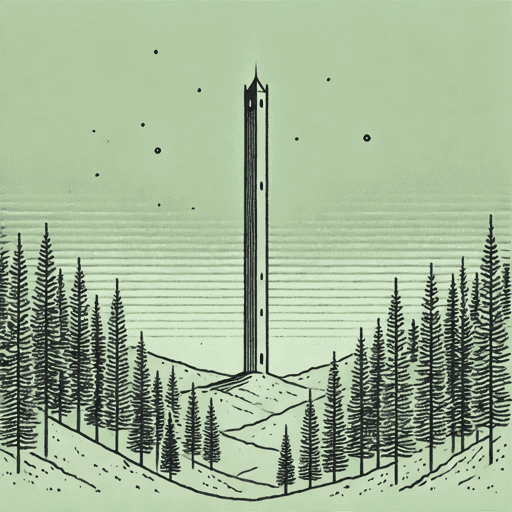
A young woman named Agnieszka lives in Dvernik, a town in a valley on the border of the deadly Wood. The lord of the valley is a wizard called the Dragon. For 100 years he has lived in an isolated tower above the valley. The villagers fear the Dragon but acknowledge his importance. The Wood constantly encroaches on the villages, corrupting crops, infecting people, or stealing people away. The Dragon’s magic is the only thing that protects them. In exchange, every 10 years, he takes a 17-year-old village girl as a servant. Each girl emerges from the Tower at the end of her service unharmed but restless and unable to stay in her village, instead leaving for Kralia, the capital city of the broader kingdom of Polnya.
The Dragon always takes the best girl. The villagers know that this year the Dragon will choose Kasia, Agnieszka’s closest friend, who is beautiful and brave. Kasia’s mother takes special care to prepare her. Agnieszka is gangly, plain, wild, and somehow always dirty. Her parents have never feared that the Dragon will choose her.
During the harvest festival, the Dragon appears to inspect each girl. He pauses at Agnieszka and holds a ball of fire out in his hands, ordering her to pick it up. Startled, she does so, surprised when it does not burn her. The Dragon seems annoyed but announces that he will take her. Then he takes Agnieszka’s arm and pulls her into thin air.
They arrive inside the tower. The Dragon leaves Agnieszka alone, and she wanders the Tower until she finds a simple room with a bed, table, and washstand. A window looks down over the valley, with the river called the Spindle running down the middle and disappearing into the Wood. Though Kasia always believed the previous girls when they said the Dragon did not touch them, Agnieszka is suddenly afraid that they lied. She fears what the Dragon will expect of her and imagines him coming to assault her.
She heads down the tower’s long spiral staircase and runs into the Dragon, who drags her down to the kitchen on the lowest floor and leaves her. Agnieszka finds a note left by a previous servant girl, explaining that she must cook the Dragon’s meals and leave them in the library. She is not a great cook but does what she can, puts the meal on a tray, and climbs the stairs. However, she becomes lost, and by the time she arrives, the meal is cold and congealed. The Dragon sneers at her. She retorts that if he finds her inadequate, he can let her leave.
The Dragon grabs her hand, holding it out over the cold food, and speaks a magic word, “lirintalem.” He orders her to repeat it. She does so and is shocked when the food becomes a perfectly prepared hot meal. She feels weak. He dismisses her, and she returns to her room.
Chapter 2 Summary
For days, Agnieszka cooks meals and leaves them in the library. Soon, her fear turns to boredom. One evening, she sneaks a book out of the library. She tries to read it but does not understand it. Suddenly, the Dragon appears and takes the book, demanding to know who sent her. She is confused and denies the accusation.
Then she tears free and runs down the stairs to the Dragon’s laboratory, hiding behind a table and shattering a spell jar. Gray smoke rises from the jar, and her body turns to stone. The Dragon enters and decides that she is not a spy— “only a witling” (30). He speaks an incantation, and her body unfreezes. Agnieszka explains that she only wanted a book to read. He scoffs, saying it is not possible that she chose Luthe’s Summoning by accident. Then he realizes that is precisely what she did.
He points at her clothing—a dirty homespun dress she found in a box—and remarks that her appearance offends him. He speaks a word, “vanastalem,” ordering her to repeat it. When she does, her dress changes into an enormous silk gown. Again, she feels weak and exhausted. Exasperated, the Dragon dismisses her.
For weeks, she wears a different homespun dress each day and the Dragon casts the vanastalem spell, changing each one. The spell leaves her exhausted each time. The Dragon never explains why he casts this spell or others that he makes her repeat. Often, the spells go wrong, and the Dragon reacts with annoyance. Agnieszka does not understand why he blames her for the spells he casts. She consoles herself that he must have done this with the other girls, all of whom survived the experience.
Over time, her weakness lessens. She runs out of homespun dresses and searches for sewing supplies. In a basket of thread, she finds another note, this one assuring her that the Dragon just wants company but only on his own terms. Moreover, it will not occur to him to give her anything, such as clothes, but she can find items in the guest chambers and alter them to suit her needs. She realizes with horror that the Dragon never used the vanastalem spell on the other girls. She is the only one.
Chapter 3 Summary
The next morning, the Dragon orders Agnieszka to clear the breakfast tray and return to her room until he calls for her. Stunned, she leaves, only realizing later that she still has the tray. From her window, she sees a carriage. A handsome man steps out, and Agnieszka recognizes him as Prince Marek of Polnya, the younger son of the king. Though his older brother, Sigmund, will inherit the throne, Marek is famous for his heroic deeds, like leading battles in the wars against the neighboring kingdom of Rosya. Marek and the Dragon speak in the library, and Agnieszka eavesdrops from the stairs. She momentarily considers asking the prince to save her but, realizing that the prince will not care about her, instead runs back to her room.
That evening, Marek enters her room. He kisses her and reaches down to lift her skirts. Agnieszka struggles and he laughs, ripping her dress. Panicking, she uses vanastalem to change her torn dress into an elaborate gown. Marek calls her a witch. She grabs the serving tray and smashes it over his head until he crumples in a heap.
The Dragon bursts in, sees the prince unconscious with blood running down his face, and demands to know what Agnieszka has done now. The Dragon sends her to his laboratory for a healing potion, which he pours down Marek’s throat while speaking an incantation. Marek’s wounds heal. Relieved that he will live, Agnieszka cries.
Agnieszka accuses the Dragon of turning her into a witch. He says he has not done anything but teach her simple charms and cantrips. Suddenly she understands that he has not been casting spells on her but teaching them to her. He explains that it is the law that any identified as possessing the gift must be taught magic. He did not want to choose her, but once he sensed her power at the harvest festival, he had no choice.
The Dragon uses a spell to alter Marek’s memory: He will believe he seduced Agnieszka and leave satisfied in the morning. The Dragon adds that Marek wants him to enter the Wood and find Marek’s mother, Queen Hanna. Twenty years ago, a prince from the neighboring kingdom of Rosya came on a peace mission and seduced the queen. They ran away together and entered the Wood, hoping to cut through it to Rosya on the far side. However, no one who enters the Wood lives, and they are presumed dead. The Dragon says that the queen is not dead. However, there is no way to save her, and Marek refuses to listen to reason.
Chapter 4 Summary
Agnieszka’s magic lessons continue. She is less afraid, but she is not a good student. She has difficulty memorizing even the simplest spells, and the results are destructive and messy. Lessons often end with the Dragon “splutter[ing] himself into exhaustion” and sending her away (55). Agnieszka wishes she were better because she now understands that the Dragon’s frustration stems from a love for beauty and a genuine joy in magic that he wants to share. Despite knowing this, she is glad to complete her lessons as quickly as possible and escape to her room. Moreover, she is uncomfortable with the thought that she has always possessed this power without knowing it.
The Midwinter festival arrives. Agnieszka mourns that she cannot be with her family for the traditional meal. Two days later, a rider arrives with a message from the baron of the Yellow Marshes, the neighboring province. The baron requests the Dragon’s assistance with a monster attack. The Dragon leaves Agnieszka in the tower, warning that he will be gone for a week.
That night, Agnieszka sees beacon fires lighting a trail from Dvernik to the tower. The beacons serve to warn of attack or request the Dragon’s aid, and with the Dragon is gone, she decides she must go instead. She gathers potions from the laboratory. Then, because the great doors are barred, she makes a rope out of her dresses and climbs out her window. She walks to Olshanka, the nearest village, and demands a ride to Dvernik. The villagers laugh until she uses the vanastalem spell to make a beautiful gown. Then they take her seriously.
Chapter 5 Summary
On the road to Dvernik, Agnieszka runs into Kasia riding toward the tower. Agnieszka tells her about learning magic, and Kasia is unsurprised, remarking that strange things often happened around her as a child. Then, Kasia explains that the Wood has infected a farmer named Jerzy and his cattle. When they arrive in Dvernik, they gather the infected cattle to burn using a bottle of fire-heart that Agnieszka took from the Dragon’s laboratory. It is priceless and powerful, and the Dragon will punish her for using it.
Then Agnieszka and Kasia visit Jerzy. He is tied to his bed, infected with Wood-sickness. It has turned his skin green and rotting, his nails black, and his teeth yellow. Wood-sickness is usually incurable, though she has seen the Dragon heal it once. She uses the same healing potion the Dragon used on Marek, but it does nothing. She sees the Wood watching her out of Jerzy’s eyes. When she realizes she cannot heal him, she uses a gray smoke potion instead, turning him to stone and halting the progress of the infection. She hopes that the Dragon will be able to save Jerzy when he returns.
Agnieszka and Kasia leave. Kasia says that at the time of the harvest festival, she was prepared for the Dragon to take her and could not bear watching him take Agnieszka away instead. As they are talking, monstrous wolves attack from the Wood. Agnieszka uses every spell she can recall, but the wolves continue to advance until the Dragon suddenly appears, shouting a spell to push the wolves back. One wolf claws at him, tearing into his arm.
He scares the wolves away, but the wound on his arm glows with infection. He tells Agnieszka they must return to the tower and teaches her the spell to move instantly through the air. Agnieszka gives the bottle of fire-heart to Kasia and tells her to send someone to check on them at the tower. If they cannot prove they are safe, she must burn down the tower. Agnieszka knows that if the Dragon becomes infected with Wood-sickness and goes on a violent rampage, they will all be lost. Then she speaks the spell and drags the Dragon back to the tower.
Chapter 6 Summary
The spell brings Agnieszka and the Dragon to Agnieszka’s room. The Dragon’s wound is green, and he is unconscious. The corruption fills the room with a sickly rotting wood smell. Agnieszka rushes around the library, where she finds an old journal filled with notes that she recognizes as the Dragon’s handwriting. She finds a healing spell with vague instructions and uses instinct to complete the potion.
Finished, she runs to her room and pours the mixture over the rotting wound. The journal suggests many chants, and she tries them all until one feels right, singing the words to the melody of an old song. She feels the magic take hold. The green rot disappears, and the Dragon wakes up. Shocked and appalled, he exclaims, “[Y]ou impossible, wretched, nonsensical contradiction, what on earth have you done now?” (86), and storms out of the room. Agnieszka falls asleep, exhausted from the magic.
In the morning, the Dragon says the journal she used is filled with useless notes that have never worked. He demands to know precisely what she did and takes detailed notes as she describes her process. However, she insists that she followed instinct, explaining, “There’s isn’t only one way to go […] You’re trying to find a road where there isn’t one. It’s like—it’s gleaning in the woods. […] You have to pick your way through the thickets and the trees, and it’s different every time” (88).
The Dragon thinks this is nonsense and decides that she must have a knack for healing magic. Agnieszka asks if she might be able to help Jerzy now. The Dragon insists that she should not have been able to heal him with only minutes of corruption and will certainly not be able to remove days’ worth of rot from Jerzy.
The Dragon tries to teach her advanced spells, but none work. She wants to work with the journal she used before. The journal, the Dragon explains, was written by the infamous witch Old Jaga 500 years ago. Many wizards have tried to replicate the spells without success. The Dragon bought the journal years before, but his added notes only catalog failures. He believes the spells are nonsense. Agnieszka’s success, however, suggests otherwise.
Agnieszka performs spells from the journal, each one working perfectly. However, when the Dragon copies her process, the spells fail. She tells him that the path she took through the hedges is not the same path that will work for him, and he furiously shouts, “[T]here are no hedges!” (93). Despite this sulking, he gives Agnieszka a collection of similar spellbooks. Each one is useless to him but comes easily to her. She studies them obsessively.
One day, the Dragon shows her an illusion spell to try. She creates the incomplete illusion of a rose in her hand. He puts his hands around hers and creates a better rose, telling her to match him. She can feel the magic and begins to twine his and hers together. The rose illusion explodes into a mass of vines and flowers. The Dragon stares at her, and she pulls away self-consciously.
Chapters 1-6 Analysis
The first chapters of Uprooted are densely detailed, containing an enormous amount of world-building and exposition, including the composition of the valley and its villages, the dangers of the Wood, the way magic functions in this world, and the political milieu of the kingdom of Polnya. All this information contextualizes the characters and their motivations while also helping to establish the stakes in the forthcoming conflict.
The first chapter introduces the protagonist and narrator, Agnieszka, whose coming-of-age arc is central to the novel. Her first-person narration provides a viewpoint on the setting and plot that is deeply influenced by her poor, rural upbringing and her lack of knowledge of the outside world. Her characterization of other important figures—such as Kasia—provides particular insight into her own personality and concerns. The first chapter makes Kasia’s significance in the novel obvious at once, as Agnieszka’s narration lingers over descriptions of Kasia’s many gifts, the depth of their friendship, and the village’s certainty that the Dragon will choose Kasia as his newest servant girl. Despite the girls’ closeness, Agnieszka’s thoughts about her friend hint at insecurity regarding her own ability to conform to feminine norms (of beauty, grace, etc.), thus establishing the theme of Overcoming Envy to Reach Self-Acceptance.
The Dragon’s selection of Agnieszka, the novel’s inciting incident, does little to assuage her insecurities. Coupled with his brusqueness, the choice mystifies rather than reassures her; her remark that he can dismiss her if he is dissatisfied with her cooking again suggests the sense of inadequacy that Agnieszka struggles with and its relationship to traditional gender norms. Meanwhile, the Dragon emerges as the second most important character. The first chapters describe the Dragon in immense detail, including his behavior, his role in the valley, and the rumors surrounding him. In fact, the novel’s opening sentence introduces not Agnieszka but the Dragon, explaining that he “doesn’t eat the girls he takes, no matter what stories they tell” (3). This opening line does three things at once. First, it establishes the threat of the Dragon in connection to the classic fairy tale trope of sacrificing, or in this case stealing, girls. Second, Agnieszka’s dismissal of the more lurid aspects of the rumors begins to reveal some of Agnieszka’s character—e.g., her willingness to think for herself. Finally, this sentence introduces the motif of stories while distinguishing them from the truth.
In addition to introducing several major characters, these early chapters establish the primary conflict between Agnieszka and the Wood. At first, the threat of the Wood is vague, filling Agnieszka’s narrative with an ominous and lingering atmosphere of dread. However, the incident with Jerzy and the cattle makes the vague horror of the Wood concrete, visceral, and immediate while introducing the symbolism and imagery surrounding the novel’s exploration of The Corrupting Influence of Power; the noxious effects of the Wood on the body of anyone who comes in contact with it mirrors the novel’s portrayal of moral rot.
The novel also contains several subsidiary conflicts—separate episodes within the overarching plot, each of which provides Agnieszka with a challenge that helps her grow while also adding tension and complexity to the primary conflict. For example, Prince Marek’s importance to the narrative is not immediately apparent in his brief appearance in Chapter 3, though the Dragon foreshadows his later significance when he discusses the fate of Queen Hanna. Incidents like this one and Jerzy’s sickness appear disconnected, more like a series of little adventures rather than a single cohesive narrative, but each one contributes to the growing tension and threat associated with the Wood.
The most crucial mini conflict in this first section is the interpersonal clash between Agnieszka and the Dragon. The narrative at first presents the Dragon as an antagonist. To Agnieszka, the Dragon represents power and danger—not only the danger of magic but also of a nobility far removed from the everyday concerns of the villagers. He is distant and cold, and she believes he is using her as a conduit or vessel for spells, an act that would affirm her suspicions about the nobility’s dehumanization of villagers like herself. The incident with Marek marks a shift in their relationship, as she comes to understand that the Dragon has not been casting spells on her but teaching them to her. She also begins to see beneath his cold, aloof exterior to the complex person beneath. Thus, the Dragon shifts out of the antagonist role and into the classic fairy tale archetype of the strange but wise magical mentor, in the style of Merlin from Arthurian legend or Gandalf in The Hobbit.

Get in-depth, chapter-by-chapter summaries and analysis from our literary experts.
- Grasp challenging concepts with clear, comprehensive explanations
- Revisit key plot points and ideas without rereading the book
- Share impressive insights in classes and book clubs
Related Titles
By Naomi Novik






Featured Collections
Challenging Authority
View Collection
Hate & Anger
View Collection
Jewish American Literature
View Collection
Medieval Literature / Middle Ages
View Collection
Power
View Collection
Romance
View Collection
The Best of "Best Book" Lists
View Collection
Valentine's Day Reads: The Theme of Love
View Collection