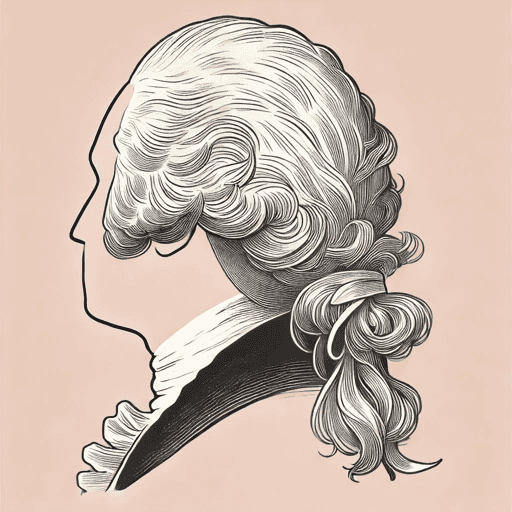
Washington: A Life
59 pages • 1-hour read
Ron ChernowWashington: A Life
A modern alternative to SparkNotes and CliffsNotes, SuperSummary offers high-quality Study Guides with detailed chapter summaries and analysis of major themes, characters, and more.
Background
Authorial Context: Ron Chernow’s Narrative Craft and Revisionist Lens
Ron Chernow is one of the most respected American biographers of the early 21st century, known for his ambitious and accessible portraits of towering American figures. His body of work includes The House of Morgan (1990), Titan: The Life of John D. Rockefeller, Sr. (1998), Alexander Hamilton (2004), Grant (2017), and Washington: A Life (2010), which won the Pulitzer Prize for Biography. Across these works, Chernow consistently explores the nexus of personal ambition, institutional power, and national identity. His Washington biography follows this pattern, using extensive archival research to humanize a figure long trapped in a one-dimensional popular mythology.
Chernow approaches Washington not merely as a historical subject but as a psychological study. Drawing heavily on the newly cataloged Washington Papers—a trove of letters, diaries, financial records, and correspondence—Chernow unearths emotional tensions behind the public reserve. He challenges sanitized portraits of the “Father of His Country” and instead paints a man whose lifelong struggle for self-mastery shaped his public leadership. Critics have noted that Chernow’s approach to Washington reflects a blend of psychological inquiry and cultural revisionism, bringing nuance to a figure long viewed through mythic or symbolic lenses. What unites Chernow’s work is his ability to link personal contradictions to historical consequence: Washington’s inner reticence becomes a virtue in the fragile new republic, just as Hamilton’s financial daring accelerates nation-building at the cost of partisan rupture.
Chernow’s portrayal of Washington emerges from—and contributes to—a shifting historiographical landscape. Earlier works, like James Thomas Flexner’s four-volume biography (1965–1972), emphasized Washington’s heroic stature, while later authors such as Joseph Ellis (His Excellency, 2004) offered more streamlined, psychological portraits. Chernow builds on both but differentiates himself through depth and narrative technique. His focus on the contradictions of liberty and bondage reflects a broader scholarly trend, noted by historians like Annette Gordon-Reed and Ira Berlin, toward reexamining the Founders through the lens of enslavement, race, and systemic inequality.

Unlock all 59 pages of this Study Guide
Get in-depth, chapter-by-chapter summaries and analysis from our literary experts.
- Grasp challenging concepts with clear, comprehensive explanations
- Revisit key plot points and ideas without rereading the book
- Share impressive insights in classes and book clubs