Washington: A Life
Washington: A Life
A modern alternative to SparkNotes and CliffsNotes, SuperSummary offers high-quality Study Guides with detailed chapter summaries and analysis of major themes, characters, and more.
Summaries & Analyses
Quizzes
NEWReading Tools
Games
Key Figures
George Washington
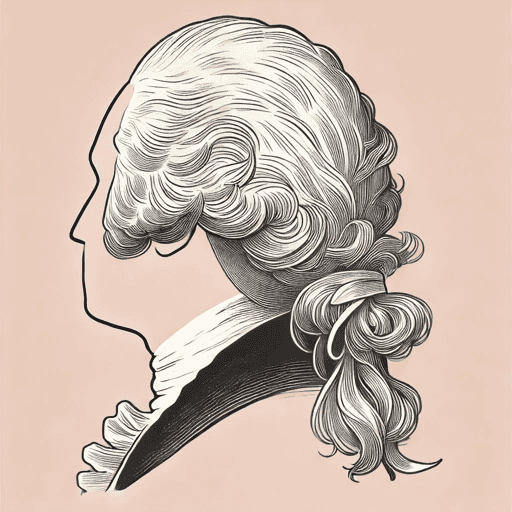
George Washington (1732–1799) is the central figure of Chernow’s biography and the defining presence in early American history. A Virginian landowner, militia officer, Revolutionary War general, and the first president of the United States, Washington shaped the political and moral foundation of the American republic. In Washington: A Life, Chernow’s primary goal is to complicate the marble figure, offering a nuanced portrayal of a man who was by turns ambitious, reserved, calculating, emotionally guarded, and deeply concerned with legacy.
Throughout the book, Washington’s life is presented as a study in self-mastery—his transformation from impulsive youth to disciplined leader is key to Chernow’s interpretation. Washington is shown to be acutely aware of image and precedent; whether leading troops at Valley Forge, accepting the presidency, or manumitting enslaved people in his will, he acts with strategic forethought. At the same time, Chernow does not shy from contradictions: Washington is an enslaver who comes to question the institution, a nationalist wary of faction, and a military figure who yearns for peace. His careful dance between authority and humility anchors the book’s recurring themes of leadership, legacy, and restraint.
Martha Dandridge Custis Washington
Martha Washington (1731–1802), born Martha Dandridge, was the wealthy widow of Daniel Parke Custis before marrying George Washington in 1759. Her fortune and social status played a crucial role in enabling Washington’s rise from provincial planter to national figure, bringing him both economic stability and influence among Virginia’s elite. In Washington: A Life, Martha is portrayed as a loyal and pragmatic partner, deeply engaged in the practicalities of estate management and the ceremonial demands of public life, though she preferred the quiet of Mount Vernon to the formal role of first lady.
Chernow emphasizes Martha’s role not only as a domestic figure but as a political one. Her presence at winter encampments like Valley Forge helped sustain morale among officers and men, and her hospitality became a symbol of unity and dignity. Her own experiences—particularly the loss of her children, Patsy and Jacky—add a layer of personal sorrow that runs beneath the surface of Washington’s public achievements. Chernow also examines her unease with emancipation after George Washington’s death, noting that she freed the enslaved people earlier than his will required, but under pressure and fear. In this way, Martha serves as both a stabilizing force and a window into the era’s limitations for women and enslaved people.
Alexander Hamilton
Alexander Hamilton (c. 1755–1804) was Washington’s indispensable wartime aide, political confidant, and the architect of the early American financial system. In Chernow’s narrative, Hamilton functions as Washington’s most intellectually aligned and strategically daring partner—particularly in forging a strong federal government. He drafts major policy papers, lobbies Congress, manages wartime correspondence, and later, as Secretary of the Treasury, engineers national credit and the assumption of state debts.
The relationship between Hamilton and Washington anchors many chapters, illustrating how Washington relied on Hamilton’s brilliance while tempering his impulsive tendencies. The mutual respect between them stands in contrast to Washington’s more strained relationships with other cabinet members, especially Jefferson. While Hamilton often acted as Washington’s political surrogate—publishing defenses of administration policy under pseudonyms—Chernow notes that Washington was not a passive follower of Hamilton’s lead; instead, he weighed competing advice carefully and made decisions independently, even as he recognized Hamilton’s unique gifts. The eventual fallout over personal scandals and political divisions highlights the fragility of even their close alliance. Hamilton’s presence in the book underscores many of its central tensions: loyalty and ambition, public unity and partisan divide, ideology and pragmatism.
Thomas Jefferson
Thomas Jefferson (1743–1826), author of the Declaration of Independence and later Washington’s Secretary of State, plays a complex and increasingly antagonistic role in the biography. Chernow depicts Jefferson as both philosophically idealistic and politically calculating. While Jefferson initially maintains cordial ties with Washington, their relationship frays as the political divide between Federalists and Democratic-Republicans hardens. Jefferson’s support for the French Revolution, his covert sponsorship of anti-administration newspapers, and his deepening feud with Hamilton all contribute to Washington’s growing distrust.
Chernow does not vilify Jefferson but shows how his actions embody the emergence of partisan politics, something Washington resisted to the end. As a foil to Hamilton, Jefferson offers a vision of agrarian republicanism and states’ rights—views that appeal to Washington’s Virginian roots but clash with his Federalist evolution. The biography shows how Jefferson’s ideological rigidity, paired with a willingness to attack from behind the scenes, strains not only his working relationship with Washington but also the stability of the early republic. Jefferson’s presence in the narrative helps illustrate how even well-intentioned political visions can produce deep conflict when filtered through ambition, secrecy, and factionalism.
Lafayette (Marie-Joseph Paul Yves Roch Gilbert du Motier)
The Marquis de Lafayette (1757–1834) was a young French aristocrat who became one of Washington’s most beloved allies during the Revolutionary War. His military contributions, personal loyalty, and symbolic connection to France made him a pivotal figure in the Continental cause. Chernow emphasizes the emotional bond between Lafayette and Washington, portraying it as paternal and mutually transformative. Lafayette admired Washington’s integrity and leadership, while Washington saw in Lafayette a surrogate son and symbol of international legitimacy.
Lafayette’s influence extends beyond the battlefield. He acts as an informal diplomat, bridges ideological gaps between France and the US, and maintains a lifelong correspondence with Washington. Later in the biography, his abolitionist views and experimental emancipation colony in Cayenne serve as a moral counterpoint to Washington’s own slow reckoning with enslavement. Lafayette also represents the romantic idealism of the revolutionary moment, which Chernow contrasts with Washington’s more sober realism. His role in the biography adds emotional depth and highlights the transatlantic dimensions of the American Revolution.
Edmund Randolph
Edmund Randolph (1753–1813) served as Washington’s Attorney General and later Secretary of State after Jefferson’s resignation. A moderate Virginian with legal expertise and ambivalent political instincts, Randolph is portrayed by Chernow as earnest but cautious—often caught between the increasingly bitter factions in Washington’s cabinet. His tenure becomes controversial when a leaked French dispatch (the Fauchet letter) appears to implicate him in misconduct, leading to his forced resignation and public defense in a heated pamphlet war.
Randolph’s significance in the biography lies in how his fall illustrates both Washington’s insistence on honor and transparency, and the mounting foreign policy pressures surrounding neutrality, diplomacy, and French influence. Chernow paints Randolph as a casualty of political complexity and wartime paranoia. His removal also underscores Washington’s growing willingness to assert executive control, even at the cost of long-standing relationships. Randolph’s fate offers insight into the fragility of trust within the early American government and the stakes of maintaining a unified front amid rising international and domestic tensions.

Unlock analysis of every key figure
Get a detailed breakdown of each key figure’s role and motivations.
- Explore in-depth profiles for every key figure
- Trace key figures’ turning points and relationships
- Connect important figures to a book’s themes and key ideas