Way of the Warrior Kid

Jocko Willink, Illustr. Jon Bozak

40 pages 1-hour read

Jocko Willink, Illustr. Jon Bozak

Way of the Warrior Kid

Fiction | Novel/Book in Verse | Middle Grade | Published in 2017

A modern alternative to SparkNotes and CliffsNotes, SuperSummary offers high-quality Study Guides with detailed chapter summaries and analysis of major themes, characters, and more.

Chapters 6-10Chapter Summaries & Analyses

Chapter 6 Summary: “The Program Begins”

Content Warning: This section of the guide includes discussion of bullying.


Marc is suddenly awakened by a clanging noise—he wonders if he’s being attacked by aliens, but instead it is Jake, ordering him out of bed while banging a broomstick on a metal can. Jake orders Marc to do pushups and then takes him outside (while it is still dark) to teach him a variety of exercises. Marc protests that he is a “WEAKLING,” but Jake insists that he will get stronger with good habits. Moreover, as long as Marc can wake himself up early, there won’t be any further need for the broom and garbage can. Afterward, Marc realizes to his surprise that he appreciated the morning’s activities: “[D]oing all those exercises in the morning actually made me feel better all day. […] So even though the early wake up and exercising was kind of rough, I really liked the way it made me feel for the rest of the day. It was worth it!” (36-37).

Chapter 7 Summary: “What It Means To Be a Warrior”

Marc quickly adapts to waking up early, but Jake reminds him that getting up to exercise does not make someone a warrior, nor does fighting an enemy or being in the military. What matters is the Warrior Code, standards of conduct that a person must maintain through their efforts. At the house, Jake gives him a binder full of different warrior codes, including that of the Navy SEALs, which teaches “loyalty to country, team, and teammate […] responsibility for your actions and the actions of your teammates […] excel[lence] as warriors through discipline and innovation” (41). The Vikings called for being brave, aggressive, prepared, a good merchant, and organized when in camp, while the US Army Rangers declare, “[G]allantly will I show the world that I am a specially selected and well-trained solder” (43). The United States Marine Corps preaches honor, courage, and commitment, while the US Army Warrior Ethos pledges, “I will always place the mission first. I will never accept defeat. I will never quit. I will never leave a fallen comrade behind” (46). The code of Bushido from the samurai era of Japan champions virtues like “integrity,” “compassion,” “honesty and sincerity,” and “duty and loyalty” (47). Finally, the medieval European code of chivalry looks “to protect the defenseless,” “to live by honor and for glory,” “to guard the honor of fellow knights,” and “to respect the honor of women” (48). Impressed by this list, Marc starts to think about making his own and what it would be like to follow it.

Chapter 8 Summary: “A Gift of Strength”

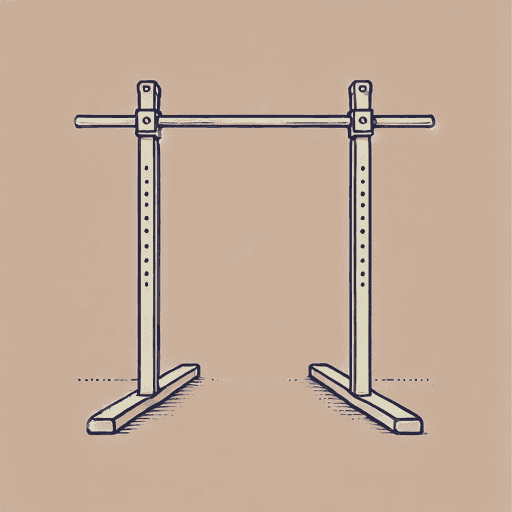
Marc gets up early, as he has grown accustomed to, and Jake storms in and announces that he has a present for him. Jake tells him to look in the garage, and after some brief confusion, Marc notices that Jake has installed a pull-up bar. At first, Marc is apprehensive: “I already knew that I couldn’t do a single pull-up. And now here I was with Uncle Jake about to see exactly how weak I really was!” (52). He climbs up to make an attempt, but after struggling mightily, he still can’t complete a pull-up. Undeterred, Jake gives him another box to step onto, and Marc hoists his chin over the bar and holds the position for as long as he can. He repeats this a few times, and once he is too tired to continue, Jake tells him that the only way to learn how to do pull-ups is by doing pull-ups; he assures Marc that with practice, he’ll be able to do 10 by the end of the summer. Marc returns to the box and lifts his chin above the bar once more.

Chapter 9 Summary: “The Eights”

Marc’s training shifts from physical strength to mental strength to knowledge, such as recognizing the needs of the human body (especially under stress), reading a map, understanding electronics, and speaking other languages. Marc learns that a crucial part of being a warrior is knowing “how to OUTSMART the enemy. You can’t do that if you aren’t SMART!” (59). Then Jake starts teaching him how to learn. Marc says he has trouble learning the multiplication tables for eights, so Jake has him make his own flash cards. With practice, Jake is eventually able to memorize each multiple of eight, and Jake tells him, “You’re not DUMB. You just need to APPLY yourself” (62). Everyone has things that they are good at almost naturally, but with everything else, it takes work and practice.

Chapter 10 Summary: “Jiu-Jitsu”

Jake takes Marc to a jiujitsu class at a mixed martial arts (MMA) gym. They do a takedown drill, where pairs of students try to grab one another and wrestle them to the ground. A boy by the name of Thor is able to take Marc down quickly despite being smaller. Marc loses each round with different partners, but he is encouraged because they don’t win because of size but because “they know something” (69). His first day of jiujitsu is rewarding despite the challenges: “[F]or the first time in my life, I realized that I could learn a skill that would give me the ability to defend myself and my friends from guys like Kenny. FREEDOM!” (70).

Chapters 6-10 Analysis

This set of chapters introduces the foundational elements of Marc’s warrior training. It begins suddenly with a predawn wakeup and a grueling set of exercises that leave Marc exhausted but also satisfied. Before he can learn what it means to be a warrior, he must experience some of its core features: a constant readiness to face the unexpected, breaking out of one’s comfort zone, and pushing the body and mind beyond what might seem possible. Most importantly, Marc must establish a routine that will help him to develop these habits until they become something close to second nature—an idea central to the novel’s contention that Discipline Equals Freedom, as it is within the structure of these habits that Marc begins to exceed his prior limitations. 


Once Marc gets a taste of the experience, Jake introduces him to the intellectual portion of warrior training, which begins with understanding The Warrior Code as a Model for Excellence. A non-warrior, especially a child, might be inclined to think, as Marc does, that a warrior’s primary task is “fighting the enemy” or “being in the military” (38-39). This makes sense insofar as the term itself connotes someone engaged in war, but for Jake, a warrior is living in a way that even people who are not actually going to face any combat can and should adopt. Combat aside, the novel suggests that warriors deserve admiration because of the way they train their bodies, minds, and souls. Indeed, it is this common impulse toward excellence that makes it possible for Jake to speak of a “Warrior Code” in the singular at all: There is overlap among the various codes, which partly reflects the fact that many of them are drawn from different branches and special forces units of the US military, but there are also areas of divergence that stem from the different eras and cultures the codes originated in, and Marc’s interest in crafting his own code implies that such rules can be highly individualized while still serving their basic function. 


One of the most relevant provisions to Marc comes from the SEAL Code, which ends with “earn your trident every day” (41). A trident, the weapon of Poseidon, the Greek god of the sea, is the insignia of the SEALs. This again reflects an emphasis on ongoing improvement: Even after becoming a SEAL, one must continuously demonstrate that they deserve it by following the other provisions of the code, including preparedness, readiness to lead, and always doing one’s best. This dovetails with the novel’s message on Confidence and Humility as Mutually Reinforcing, which is arguably the central lesson Marc must learn given his initially low self-esteem. Several of the codes also emphasize service to others, whether one’s fellow warriors, the vulnerable, or one’s country. This too is relevant to Marc’s situation, as his newfound desire to protect not only himself but also his friends from bullying demonstrates.


Once he has an understanding of what it means to be a warrior, Jake begins intellectual as well as physical training. He learns that “a warrior’s best weapon is his mind. They have to use their minds to figure out how to beat the enemy: how to catch them off guard. How to attack where the enemy is weak” (59). Even if the enemy is only multiplication tables, memorizing equations is a way to hone the mind and build confidence. Jiujitsu is a way to combine the mental and physical aspects: While it requires the use of the body, Marc promptly learns that the fight goes to the skillful rather than the strong and that skill comes from an open mind and readiness to learn from one’s mistakes. Marc may not feel like much of a warrior as he’s thrown down onto the mat again and again, but his willingness to keep getting up shows that he is a dedicated learner, which the novel stresses is more important.

blurred text
blurred text
blurred text

Unlock all 40 pages of this Study Guide

Get in-depth, chapter-by-chapter summaries and analysis from our literary experts.

  • Grasp challenging concepts with clear, comprehensive explanations
  • Revisit key plot points and ideas without rereading the book
  • Share impressive insights in classes and book clubs