Yaqui Delgado Wants to Kick Your Ass
Yaqui Delgado Wants to Kick Your Ass
A modern alternative to SparkNotes and CliffsNotes, SuperSummary offers high-quality Study Guides with detailed chapter summaries and analysis of major themes, characters, and more.
Summaries & Analyses
Quizzes
NEWReading Tools
Symbols & Motifs
Elephant
Content Warning: This section of the guide includes discussion of bullying and physical abuse.
Piddy’s repeated references to elephants emphasize that the animal symbolizes comfort, particularly as she grapples with The Impact of Bullying on Mental Health. The day Yaqui hurls chocolate milk at her, Piddy walks to her old apartment: “My feet must have gone on autopilot. I’m like one of those African elephants that finds her way home, no matter how far she’s roamed” (43). Home is somewhere a person feels safe and loved. The old building is that place for Piddy. Comparing herself to a roaming elephant represents comfort because, like the animal, Piddy has navigated to a safe space without thinking. At school, when Ms. Shepherd reads Piddy’s writing aloud, she is embarrassed because she does not want to draw attention to herself: “Let’s face it: standing out can only make a new kid public enemy number one. Then what? I’ll be accused of being stuck-up and a suck-up. Better to blend into the herd. (Elephant wisdom never fails.)” (31). By associating anonymity at a new school with elephants, Piddy reinforces the idea that elephants, and their accompanying wisdom, provide solace. It is safer if she does not stand out and blends with the herd of students.
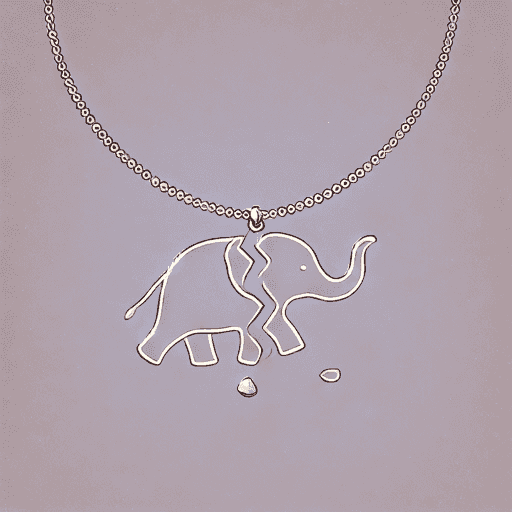
Furthermore, the physical presence of her elephant charm necklace also comforts her. Piddy acknowledges this explicitly while packing: “I moved the jade elephant on my chain back and forth nervously. Sometimes the sound of my necklace makes me feel calm” (19). The sound and touch of the charm can “calm” Piddy, which is evident not just at home but also at school. Therefore, when Yaqui steals the elephant necklace, Piddy is panic-stricken. When she cannot find her elephant necklace, it causes her hands to shake, her face to feel hot, and her neck to feel cold. These physical symptoms reflect her despair and discomfort at losing the necklace. Now, without the charm and the comfort it provides, surviving Yaqui’s bullying seems impossible.
When she does get it back, damaged and disfigured, Piddy thinks it useless, yet it gives her the strength to finally admit the truth to Mr. Flatwell. Before revealing Yaqui’s name, Piddy takes “out [her] elephant charm and put[s] it on Mr. Flatwell’s desk. It has no trunk. The sides are chalky and ruined. It’s nothing more than a trinket” (237). Although damaged and called a mere trinket, the charm still comforts her because she summons it at this moment. Its battered state represents Piddy’s shakiness; ultimately, though, the charm provides her with the strength to advocate for herself and speak up about Yaqui’s torment of her.
Piano
Clara’s piano represents acceptance, for it is neither played nor acknowledged until mother and daughter come to terms with each other and their past. Clara does not play the instrument because it is associated with Agustín. Piddy notes, “Our piano is a relic from when my parents were together, so I don’t know why Ma keeps it if she won’t play it. Lila says Ma used to play a mean tumbao, but now she acts like the Steinway is just a place to prop up knickknacks” (51). The memories of Agustín and his connection to the piano are too painful for Clara. Rather than facing the past and continuing to do something she loves, she represses it altogether.
However, when Piddy and her mom sit at the piano, Clara finally reveals the full truth to her daughter and shares a picture of Agustín taped inside of the instrument. By opening the piano and sharing the photograph with Piddy, Clara finally accepts the past instead of pushing it away. It is only once Clara speaks of Agustín and Piddy tells her mother about the bullying that they can move forward; this coincides with Clara agreeing to teach Piddy how to play the piano.
Salón Corazón
Gloria’s business, Salón Corazón, is a motif that represents Community as a Support System. Piddy explains that Gloria only has one rule for her employees and that is to “make her clients happy” by being a “comforting relief” (59-60). Keeping things light and happy makes customers feel safe and cared for. Furthermore, Gloria provides coffee and snacks and allows the clientele to linger long after receiving services. The place is “a beehive of gossip and harmless arguments shouted over the sound of the dryers. Sometimes it’s so crowded in here, you can hardly move” (60). By creating a social hub, Gloria provides a communal space for these women, giving them a respite from their everyday lives. This respite is supportive and healing in the case of both Piddy and Clara, for it is in the salon that Piddy confesses everything to her mother, and there, they celebrate the news that Piddy has been accepted to McCleary.
However, within this community is Fabio, Gloria’s vicious dog. His presence does not negate the network of support, but rather, highlights that just because a person has a community of support does not mean that there are no challenges or injustices. Medina underscores this when Vanesa arrives at the salon to deliver Yaqui’s challenge; the problem of bullying still exists, but Lila is there to provide safety for Piddy. Although Piddy does not realize it, the salon represents the vast network that has her back no matter what.

Unlock the meaning behind every key symbol & motif
See how recurring imagery, objects, and ideas shape the narrative.
- Explore how the author builds meaning through symbolism
- Understand what symbols & motifs represent in the text
- Connect recurring ideas to themes, characters, and events