Always Remember: The Boy, the Mole, the Fox, the Horse and the Storm
29 pages • 58-minute read
Charlie MackesyAlways Remember: The Boy, the Mole, the Fox, the Horse and the Storm
A modern alternative to SparkNotes and CliffsNotes, SuperSummary offers high-quality Study Guides with detailed chapter summaries and analysis of major themes, characters, and more.
Character Analysis
Content Warning: This section of the guide includes discussion of mental illness.
The Boy
The boy is the protagonist and emotional center of the book, the animals around him largely serving to offer wisdom and support during his journey. The boy is an everyman figure who evokes the human struggle with anxiety and self-worth; in particular, he embodies the quiet fears of not being enough, of being at fault, or of being unlovable. His face is drawn without features, which underscores his role as a symbolic figure rather than a specific individual and allows readers of all kinds to project themselves onto him.
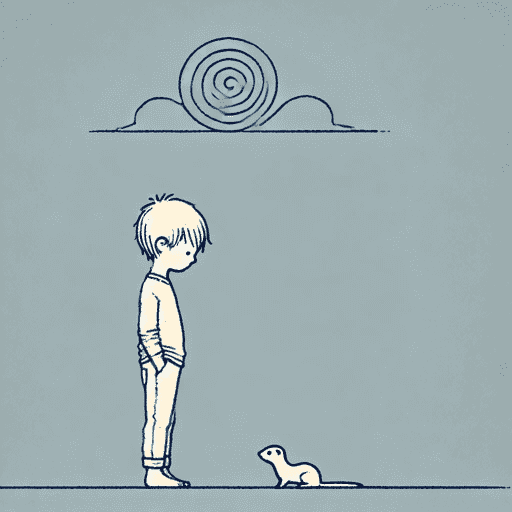
Throughout the book, the boy consistently questions himself. He often looks down, his posture is small against vast landscapes, and he relies on the comfort of his friends. When he admits that he does not feel brave, the horse gently reframes such honesty as bravery. Whenever the boy feels down, his friends remind him of the importance of Optimism amid the Storm. His lowest point occurs when he comes to a forest that seems insurmountable. He sits down and wonders if he should give up. The appearance of the weasel, who voices the boy’s deepest fears that he is unloved, symbolizes intrusive negative thoughts that can lead to despair. While alone, however, the boy begins to challenge those doubts and decides to be a friend to himself, marking the culmination of the theme of Self-Acceptance and Celebrating the Self. This gives the boy newfound courage to confront life’s obstacles.
The boy also learns that vulnerability is strength and experiences Healing Through Unconditional Friendship. When the horse admits that he worries about not having all the answers, the boy comforts him, reversing their prior roles. This mutual exchange shows that love is reciprocal. By the end of the story, the boy is still “messy” inside, but he accepts that messiness as part of being human. His journey is not about becoming fearless; it is about continuing forward despite fear. Along with his friends, he represents hope and the courage required to love both oneself and others.
The Horse
The horse functions as the anchor of the story. He is a steady presence and emotionally wise, making him a symbol of strength and endurance as well as a source of insight. The horse’s large size relative to the others underscores his role, as he is frequently placed protectively beside the boy. There, he encourages the boy to breathe when afraid and reminds him that storms pass, insisting that behind dark clouds, the blue sky never leaves. His wisdom is thus grounded in reassurance and the theme of optimism amid the storm.
The horse’s physical presence also serves as a counterpoint as he challenges traditional ideas of strength. He tells the boy that asking for help is brave and that being honest about not feeling brave is itself courageous. This reframing is central to the book’s message, and the horse himself models this conception of courage when he later reveals his vulnerability, admitting that he worries about not having all the answers. This moment humanizes him and deepens his relationship with the boy.
The image of the horse with wings is highly symbolic. The wings suggest transcendence—the idea that true strength can lift both oneself and others above their “storms.” Carrying the boy through darkness into blue sky also visually reinforces his role as protector and guide. Ultimately, the horse supports the boy in discovering his own inner strength. He represents compassionate leadership that is patient and based in love.
The Mole
The mole is a secondary character who provides humor and encouragement throughout the friends’ journey. In particular, the mole espouses simple joys and living in the present, ideas encapsulated in his love of cake, which becomes a metaphor for seizing today rather than postponing happiness.
Beyond his comedic role, the mole consistently nurtures the boy’s self-worth. Early on, he tells the boy that his greatest skill is kindness. He encourages him to celebrate small steps and to be patient with himself, reinforcing the idea that growth takes time. The mole’s wisdom is practical, and like his friends, he often expresses it through short aphorisms.
In the final pages, the mole admits that being the boy’s friend helped him rediscover wonder in the world. This indicates the reciprocal nature of friendship. He is not simply a teacher of someone younger; he is changed by the relationship as well.
The Fox
The fox is the quietest of the four friends, often depicted silently observing or curled beside the others. He is a constant presence who represents loyalty and attentive listening, along with the theme of healing through unconditional friendship. At one point, he suggests that listening itself can be an act of kindness. Unlike the horse, who speaks in affirmations, or the mole, who offers playful encouragement, the fox supports through quiet companionship.
The fox also urges the boy to love himself and shows his concern in his posture and proximity. When the boy is lost in the storm, it is the fox who finds him first, reinforcing his role as observer and protector. Though he speaks less frequently, the fox symbolizes consistent presence. He reminds the boy that sometimes support is simply staying close.

Unlock analysis of every major character
Get a detailed breakdown of each character’s role, motivations, and development.
- Explore in-depth profiles for every important character
- Trace character arcs, turning points, and relationships
- Connect characters to key themes and plot points