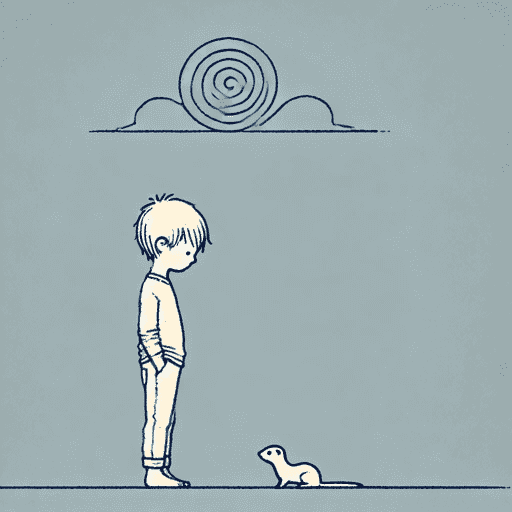
Always Remember: The Boy, the Mole, the Fox, the Horse and the Storm
29 pages • 58-minute read
Charlie MackesyAlways Remember: The Boy, the Mole, the Fox, the Horse and the Storm
A modern alternative to SparkNotes and CliffsNotes, SuperSummary offers high-quality Study Guides with detailed chapter summaries and analysis of major themes, characters, and more.
Pages 91-123Chapter Summaries & Analyses
Content Warning: This section of the guide includes discussion of mental illness.
Pages 91-99 Summary
Pages 100-108 Summary
The mole compares hope to a song in one’s heart. The four friends find the storm has ended, and a vibrant rainbow appears. They nestle under a tree and appreciate every minute together. The mole regrets that he ate the cake he tried to bring for his friends, as it was too heavy to carry. The friends walk along, marveling at how far they have come.
Pages 109-116 Summary
The four friends stand at a valley, admiring the beauty that resulted from the storm. The sun glows in the distance as they cross a snowy forest, and the boy is reminded of the courage needed to love both self and others.
Pages 117-123 Summary
The boy acknowledges that he feels “messy” inside, but the mole thinks all people do. He explains that hope often shines through during the messiest times and that some of the most beautiful flowers take the longest to bloom. He thanks the boy for reminding him how to feel awe at the world, and the friends show their appreciation for one another amid a purple and green meadow.
Pages 91-123 Analysis
In the final section of the book, Mackesy’s artistic style and composition reflect transcendence after intense conflict, affirming the value of Optimism amid the Storm. When the boy climbs onto the horse and they fly through the last dark streaks of storm into a vast blue sky, the contrast between the heavy black brushstrokes and the expansive openness of blue creates a marked visual shift that symbolically evokes clarity after confusion. Similarly, the composition of these pages emphasizes scale and emotional expansion. The small figure of the boy on the horse against an enormous blue sky symbolizes release and hope; the negative space now feels liberating rather than isolating, hinting at the boy’s growing comfort with himself. As they rest on a cloud, blurred dots form distant trees far below them, visually placing the friends above the world’s earlier turmoil. This distance suggests perspective, as their problems have not necessarily disappeared but no longer feel consuming. As the four friends reunite after the boy and horse’s flight, a vibrant rainbow appears among dark trees, interrupting the darkness with color and once again symbolizing promise after suffering. The artwork then settles into a soft blending of colors that replaces not only the harsh streaks of the storm but also the brilliance of the sky and rainbow with gentle gradients; this emphasizes the quiet calm and emotional relief that follow dramatic catharsis. Overall, this section witnesses a tonal shift from the emotional heaviness of doubt and isolation toward gratitude and warmth.
The artwork also develops the theme of Healing Through Unconditional Friendship. The fox is frequently depicted silently in these final pages, often shown curled up or quietly observing rather than speaking. His stillness reinforces his role as a steady, grounding presence, while the minimalistic depiction of his expressions allows his posture and placement to communicate loyalty and quiet companionship. Elsewhere, the four friends are shown nestled together under a wispy, sheltering tree. The curved lines of the tree lean protectively over them, forming a natural canopy that symbolizes safety and unity. Their closeness within the frame reinforces their bond and the idea that companionship provides shelter even after hardship has passed. Another meaningful compositional choice occurs when one page shows only footprints, followed by a page showing the four friends walking together. The footprints act as a reminder of the journey they have taken, while the image of them together affirms that they did not give up on one another or themselves.
Indeed, in these final pages, relationships are mutual and balanced. The mole tells the boy that being his friend has helped him rediscover wonder, showing that support goes both ways. The boy is no longer the only one being comforted; he has comforted his friends as well. The concluding section’s dialogue sheds light on how this shift occurred. The boy admits that he feels “messy” inside, and the mole gently reassures him that everyone does. This frames empathy as something grounded in mutual recognition of vulnerability and fallibility, which the boy has already confronted in himself. It therefore also clarifies the theme of Self-Acceptance and Celebrating the Self, underscoring that such things are not contingent on perfection.
Hope continues to be compared to music, and this idea is reinforced visually with music notes. This connects back to earlier lines such as “You have a song in you no one else can sing” (2), creating continuity and suggesting that self-acceptance is an ongoing process; however “messy” one feels, there is always the possibility of learning and growing. In keeping with this idea, the book ends in quiet appreciation as the friends marvel at how far they have come and choose to walk forward together. The final message is that the journey itself is the victory.

Unlock all 29 pages of this Study Guide
Get in-depth, chapter-by-chapter summaries and analysis from our literary experts.
- Grasp challenging concepts with clear, comprehensive explanations
- Revisit key plot points and ideas without rereading the book
- Share impressive insights in classes and book clubs