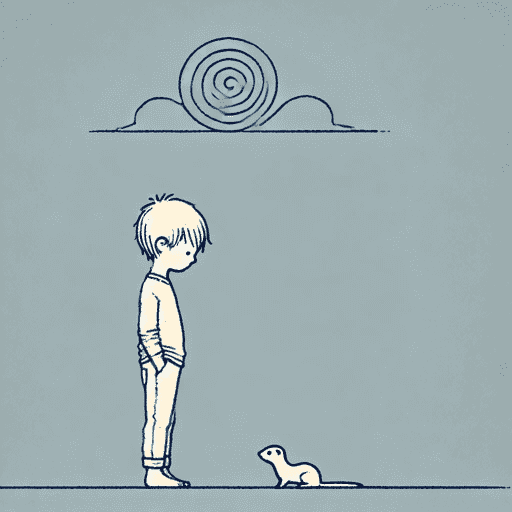
Always Remember: The Boy, the Mole, the Fox, the Horse and the Storm
29 pages • 58-minute read
Charlie MackesyAlways Remember: The Boy, the Mole, the Fox, the Horse and the Storm
A modern alternative to SparkNotes and CliffsNotes, SuperSummary offers high-quality Study Guides with detailed chapter summaries and analysis of major themes, characters, and more.
Symbols & Motifs
Content Warning: This section of the guide includes discussion of mental illness.
Storms
Storms are symbols of emotional turmoil, anxiety, self-doubt, and the overwhelming moments in life that feel impossible to endure. The theme of Optimism amid the Storm encompasses the idea that one must continue stepping forward and holding on to hope to overcome challenges. The horse, for instance, reassures the boy that dark clouds will pass and that behind them the blue sky always exists. The storm therefore teaches resilience and deepens the bonds between the friends.
Visually, the book depicts storms using dark, heavy brushstrokes, swirling lines, and pages almost entirely consumed by black. These artistic choices immerse both the characters and the reader in a sense of chaos and confusion. By contrast, the appearance of a vibrant rainbow after the storm symbolizes renewal and hope.
In particular, the storm symbolizes the boy’s internal struggles and serves as a catalyst for his transformation. Notably, the storm coincides with his separation from his friends, during which he confronts his self-doubt and ultimately “befriends” himself. When he does so, his friends reappear, including the winged horse who carries the boy through darkness into open blue sky, underscoring that the boy has confronted and overcome hardship.
Snow
A motif of snow appears repeatedly throughout the book. On the surface, snow serves as the physical setting of much of the journey, as the friends frequently travel through winter landscapes. Visually, snow creates expanses of white space, reinforcing moods of quietness and introspection; the minimalism of snowy scenes often slows the pace of the narrative to encourage reflection.
Snow also represents both hardship and purity and is part of the storm the friends face. Winter landscapes suggest coldness and isolation and thus match the boy’s moments of loneliness or self-doubt. At the same time, snow also blankets the world in softness, smoothing harsh edges and creating a sense of calm. In scenes where the sunrise touches snow with warm light, the imagery suggests hope emerging even in cold seasons. Snow becomes a reminder that beauty can exist within difficult circumstances.
Additionally, snow functions as a metaphor for emotional pause. Just as winter precedes spring, snowy landscapes suggest that growth may not be immediately visible but is still possible. Through its cyclical presence, snow reinforces the book’s message that life contains periods of stillness and cold, yet these seasons are not permanent.
Trees and Forests
Trees and forests serve as a visual motif throughout the book. They are often drawn towering over the small figures of the friends to emphasize the vastness of the world and the vulnerability of the characters within it. The denseness of the forests also appears overwhelming, especially when the boy stands alone before a massive wall of trees. In these moments, the forest reflects the boy’s fear of being lost both physically and emotionally.
At the same time, trees also represent endurance and shelter from the storm. The friends frequently gather beneath trees, which curve protectively around them. In one scene, a wispy tree forms a natural canopy, visually evoking safety and unity. Trees thus function as both obstacles and a source of refuge, depending on context. This duality mirrors life’s challenges, as what appears intimidating can also foster growth.
Trees also reinforce the importance of patience in personal development, a key facet of Self-Acceptance and Celebrating the Self. Like the metaphor of flowers that take time to bloom, trees grow slowly and steadily. Their deep roots suggest stability, while their upward branches imply aspiration and hope. By repeatedly placing the characters within forests, the book situates their emotional journey within a broader natural cycle of growth.
Rivers
The river introduced early in the book is a symbol of finding purpose in the journey. The mole observes that a river does not know “where it’s going until it reaches the sea,” (11-12), emphasizing that direction is not all important. This line encapsulates one of the book’s central philosophies, which is that it is acceptable not to have all the answers. Just as a river flows forward without knowledge of its destination, individuals move through life step by step. In this vein, Rivers also symbolize movement and continuity. They flow steadily, evoking persistence and resilience. When the friends cross a stony river, they reflect on the challenges inherent in moving forward, yet the water’s ongoing motion implies progress even when the path is unclear. Indeed, the fact that rivers follow the natural contours of the land reinforces the book’s message that one should meet life where it is, accepting uncertainty rather than resisting it. The river’s eventual union with the sea symbolizes fulfillment or understanding, suggesting that life is a steady progression toward meaning, in part thanks to the meaning one makes along the way.

Unlock the meaning behind every key symbol & motif
See how recurring imagery, objects, and ideas shape the narrative.
- Explore how the author builds meaning through symbolism
- Understand what symbols & motifs represent in the text
- Connect recurring ideas to themes, characters, and events